2012-05-02

Tokaido Walk(18) Kanaya-Nissaka:April 30, 2012


It is the third day of my “Golden Week” holidays. I walked from Kanaya to Nissaka.


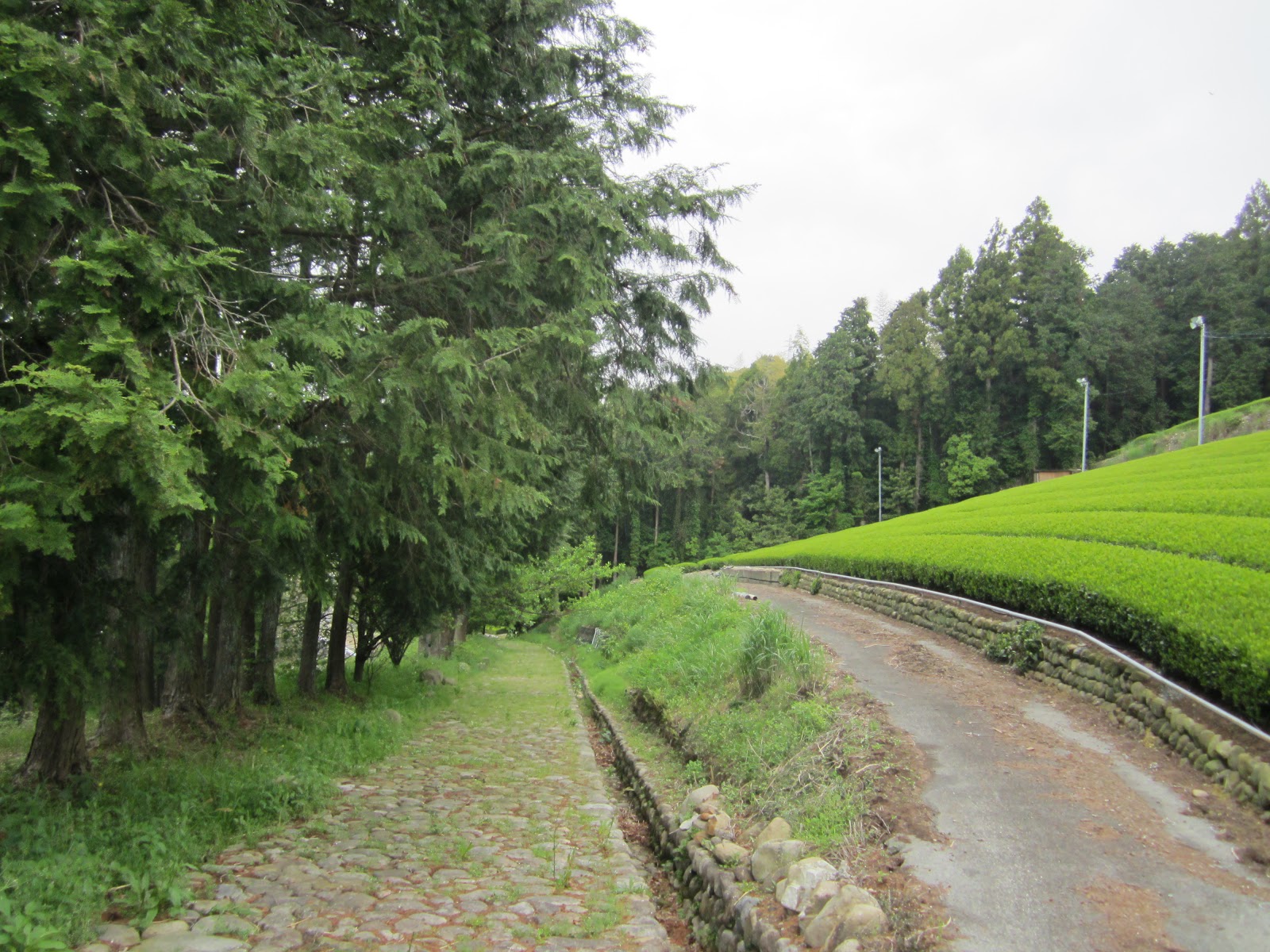
The area is hilly and mountainous. There spread tea fields everywhere in the region. New tea leaves was just grown.  The air was fresh.


People usually start picking up tea leaves in the 88th day from the new year in old calendar (usually Feb. 4th). It is around May 2nd.

The seasonal scene is described in a popular Japanese song Cha-tsumi (tea picking):


-- Natsu mo chikazuku hachiju-hach ya
No nimo yama nimo wakaba ga shigeru …
(It is the 88th day from the new year and
fresh green appears in the fields and mountains … )

It was the first day of tea picking in some fields. I saw many farmers (some of them wore traditional Japanese straw hats) working hard in the fields.

It was fun to exchange words with them taking lunch at the side of their fields.

Oi River flows under tea-field hill near Kanaya station. I found many polls standing in the fields. They have rotating fans on the top, which defend the fields (with their moves and sounds) from birds.


I climbed Nakayama Pass. It was one of three steepest passes in Tokaido (another two are Hakone Pass in Kanagawa Prefecture and Suzuka Pass in Mie Prefecture).

The road was covered with stones. They repaired the road about 10 years ago and the situation in the Edo period was restored.


This area is also famous for a great “waka” poet Saigyo. One of his most famous works was written here.

-- Toshi takete mata koyubeshito omoikiya
inochi narikeri Sayono Nakayama
(I have not even dreamed of returning to this place after getting old
I strongly feel “life” at Sayo no Nakayama)


I arrived in Nissaka, the 25th station. It is a small town in the mountainous area.


Tokaido Walk (17) Okabe-Kanaya: April 29, 2012


I walked more than 20 km from Okabe through Fujieda and Shimada to Kanaya in my 2nd day of my Golden Week holidays.

It was a sunny and warm day. The sky was blue and the light was bright. I saw fresh green everywhere along the street.

I also found flyings carp in many places. People in Japan display the carp to cerebrate the boy’s festival (Children’s day) on May 5th.

I dropped in an old inn at Okabe, the 21st shukuba station from Nihonbashi, Tokyo. The replicas of travelers in the Edo era were placed inside the building. The town is trying to make the best use of their historical resources to activate the area.

Fujieda, the 22nd station, is famous for “Fuji” or Japanese wisteria flowers. The city’s name includes “Fuji”.


They held a Fuji festival at Rengeji-ike Park in the central city. Light purple flowers were fully open and they smelled so nice. Many family were enjoying the flower as well as nice weather.


Tens of flying carp were floating over a pond.


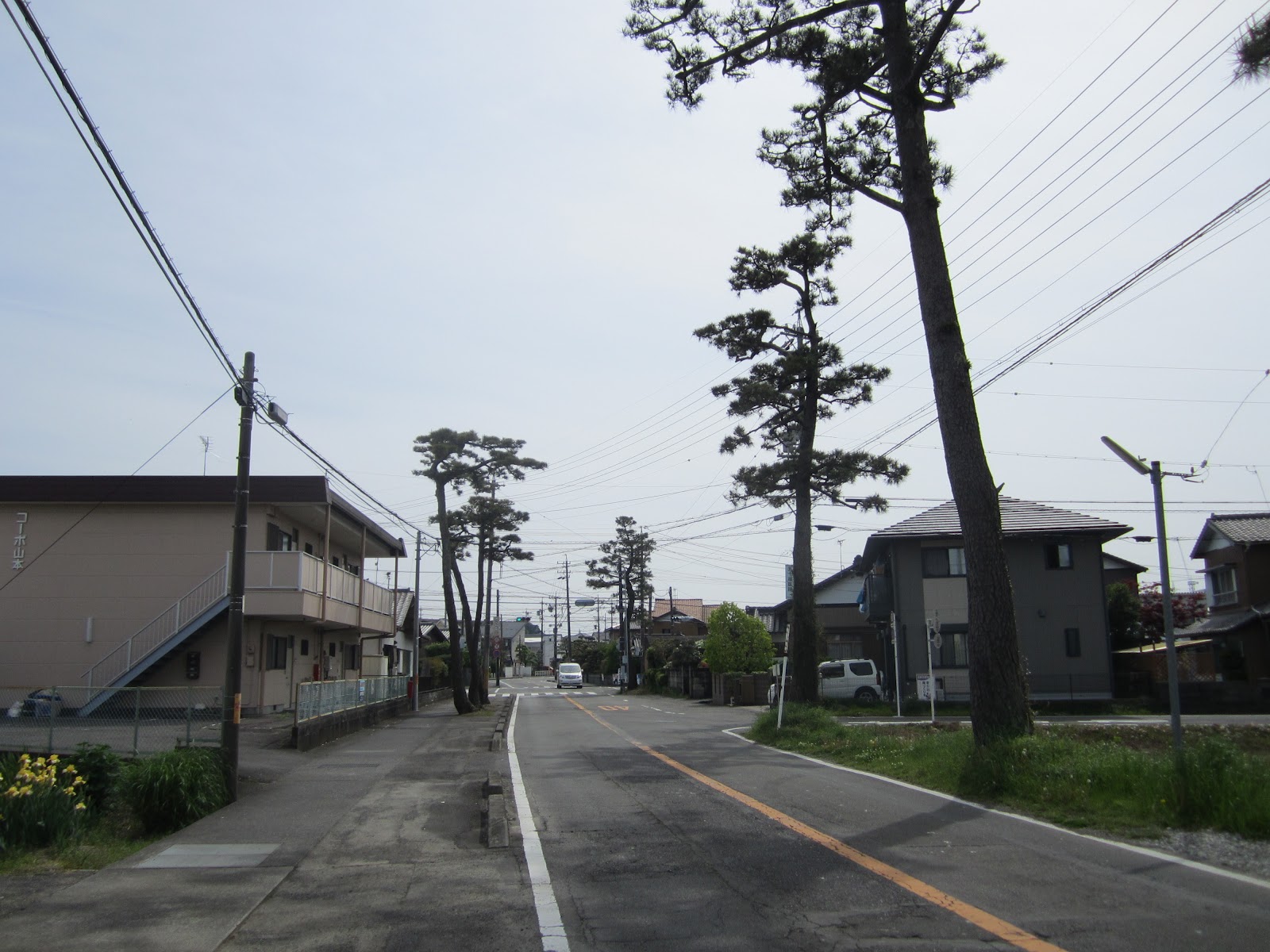
Pine trees remain along Tokaido in Fujieda and Shimada city, the 23rd station.


I passed 200 km point from Tokyo in Shimada ciry.


I found some fields covered with small purple flowers of Chinese milk vetch (Astragalus). It is a scene wedely seen troughout the nation decades ago. The ground will shortly be turned and rice will be planted. The Chines milk vetch will be fertilizer of the field.


I arrived at Oi River. The river is one of the most famous ones in Tokaido.

The river flew so rapid in the Edo era and travelers were forced to wait days when the water was affluent.

Even today, the following phrase is wadely known:
-- Hakone hachiri wa uma demo kosuga
Kosu ni koserenu Oi Gawa,
(We can cross the steep Hakone Pass with a horse,
but we cannot cross Oi River when the condition is not good ...)

I just walked about a kilometer on the bridge and crossed the river.


I arrived in Kanaya, the 24th station. I again found a school of flying carp over a small river in the town.

2012-05-01

Tokaido Walk(16) Fuchu-Okabe: April 28, 2012


“The Golden Week” holidays started. I resumed my Tokaido walk. Today’s course was from Fuchu (Shizuoka City) through Mariko to Okabe (19th to 21st “Shukuba” stations from Nihonbashi, Tokyo).


Tokaido makes zig-zag bend in the central part of Shizuoka City. The first Tokugawa Shogun Ieyasu and other important persons stayed in the castle in the city. The zig-zag road was made to defend  the castle from the enemy's sudden attack.


Old Tokaido has turned into a busuy shopping street in the central part of the city. An Artist was playing street performance.


I crossed Abe River and proceeded to Mariko. The place is famous for Japanese yam soup dish called Tororo. The food is often described in books, including famous "Tokaidochu Hizakurige", in the Edo period.

Choji-ya restaurant is especially famous. I found several monuments around the restaurant.


I crossed over Utsunoya Pass and arrived in Okabe. There were many bamboo trees along the mountain road.


It was a season of bamboo shoots. I saw several farm houses selling the shoots.


2012-04-26

Fresh green @ Gotokuji Temple: April 22, 2012


Following yesterday’s stroll, I had a walk to enjoy spring flowers and fresh green.
I walked along a walking path and visited Gotokuji Temple.


There are maple, pine and other trees in the garden. New leaves have just come out of the trees. These trees appealed fresh green and mountain cherries appealed pink. The plants, tower and graves harmonized well in the sceine.


The temple was calm. Bird songs were sometimes heard.

Spring flower and fresh green @ Baji Park: April 21, 2012


It is getting brighter and warmer. It’s time to enjoy spring.
I visited Baji Park (Equestrian Park) to see spring flowers and fresh green.


Japan’s most popular Someiyoshino cherry blossom has already finished in Tokyo. The blossom of mountain cherry is its peak now.


There are hundreds of mountain cherry trees in the park. The flowers open after new leaves grow. So, the contrast of pink (flower) and green (leaves) was impressive. (In the case of Someiyoshino, flowers open before the leaves grow.)


Tulip, violet and other spring flowers were full open in the flowerbeds.


New leaves have just grown in the tall trees in the woods. Families enjoyed the nature.


2012-04-15

Peach Blossom@Yamanashi: April 15, 2012


Ask me three most popular spring flowers in Japan. They may be Ume (Japanese plum or apricot), Cherry and Peach.

I have already enjoyed Ume and Cherry this spring (as we can find many Ume and Cherry everywhere in Tokyo).

Peach is different. There are few gathering of peach trees in Tokyo. So, I had a short trip to Yamanashi Prefecture (about 100 km west from Shinjuku) today to enjoy peach blossom.


I visited Fuefuki City and Yamanashi City, both are in the central part of Kofu basin. They produce peach, grape, cherry and other fruits.


Tens of thousands of peach trees are planted in many places in and around the cities. The towns were colored pink when I saw them from the hill top.


Mountains lie behind the basin. Only the peak of Mt. Fuji was seen (as clouds covered the sky).


The peach flower’s pink was stronger cherry's.


A legend of the Peach Blossom Land has spread throughout East Asia (trigged by a work by Chinese poet Tao Yuanming in the early 5th century). It is a kind of Utopia. The scene reminded me of the legend.

2012-04-11

Cherry, Cherry, Cherry: April 6-9, 2012


Tokyo had its peak of cherry blossom this weekend. I visited several cherry spots.

Chidorigafuchi, Imperial Palace:  One of most famous cherry spots in Tokyo. (Top)

Ueno Park: Tens of thousands of people gathered. It took ten minutes to move 50 meters in the “cherry street”.

Shinobazu Pond @ Ueno.


Sumida River Bank @ Asakusa:
Tens of thousands of people gathered. The cherries were planted by Shogun Tokugawa Yoshimune about 300 years ago.


Shinjuku: Cherries were planted along Koshu Kaido street


Shinjuku Central Park:
Tokyo Metropolitan Government buildings stand behind cherry trees.


Shiba Park:
Tokyo Tower stands behind the park.


Zojoji Temple @ Shiba
One of most famous temples in Tokyo.


Imperial Palace:
Overview


Imparial Palace moat


British Embassy@ Hanzmon
Kandagawa River:
Many other rivers (such as Meguro River, Nogewa River and Zenpukuji River) have cherry trees in their banks.


Tamgawa Josui Park:
Many othe parks and walking pathes have cherry trees.


Mono rail and canal @ Tamachi


Tamachi Station
Cherry trees are planted in many business streets. Business people enjoy the clossom on their ways to the offices.


A street in a residential area in Kawasaki city
Cherry tunnels are founs in many places in and around Tokyo

2012-04-01

Hanami@ around Yasukuni Shrine: April 1, 2012


It is April. The air is still cold, but the sunshine is getting brighter.


Tokyo’s cherry (finally) began to blossom. I walked Yasukuni Shrine and surrounding areas.


Only a few trees opened flowers in the shrine. The trees were still brown (not pink). People, however, did not wait. Thousands of people were there.


There were hundreds of open-air stalls along the main approach to the shrine. Many people enjoyed drinks and food on the carpets laid on the ground.


The local community held cherry festival in the shrine and music and other performances were played.


Yasukuni is politically controversial because the shrine consoles not only the spirits of ordinary war victims but also the souls of class-A criminals (of World War 2). Most people seemed not caring such controversy. They purely enjoyed the arrival of spring.


I walked along Chidorigafuchi, one of the most famous inner moats of the Imperial Palace. Many people were on the boats.


I walked to Chidorigafuchi National Cemetery where the souls of 2.4 million people killed in the World War 2 are consoled. No political controversy is there (unlike Yasukuni Shrine). There were only a few visitors there.


I also walked along a bank of outer moats the Imperial Palace from Yotsuya to Ichigaya. Young people including foreigners were enjoying Hanami (flower watching) picnic under pre-open cherry trees.