Showing posts with label social issues. Show all posts

2026-09-04

London: Aug. 27-31, 2026


I visited London for the first time in a year. As with my previous visit, I noticed a large number of foreign tourists, urban redevelopment projects, and the growing use of bicycles. In my personal impression, however, the presence of beggars seemed more conspicuous than ever.


Urban redevelopment has been progressing across London for the past few years. I found many skyscrapers throughout the City. The famous "Gherkin" is now surrounded by many skyscrapers, making it difficult to see. The second photo from the top shows the scene of the City from near the Bank of England.


The area around Tottenham Court Road Underground station looked cleaner and smarter than before. I saw people enjoying the visuals in a public space featuring walls and ceilings covered in video screens. Renovation works were underway along Oxford Street.


Large-scale development was in progress in St. John's Wood, near Abbey Road. New restaurants were serving Chinese, Italian and other cuisines in Brick Lane, an eastern district with many Bangladeshi immigrants.


At the same time, beggars were a common sight in various busy areas. Reports indicate that the UK economy is experiencing high inflation (2.9% as of July 2026) and facing challenges such as widening inequality and lagging infrastructure development. The number of "NEETs" (young people not in education, employment, or training) aged 16–24 has surpassed one million, becoming a significant social issue. The street scenes seemed to reflect some of these challenges.


Use of bicycles has become even more widespread. People delivering food and other goods by bicycle were a common sight across the city.


Demonstrations and protests frequently take place in Parliament Square, Westminster. During visits in previous years, I had encountered rallies supporting Ukraine or Palestine. This year, however, I did not come across such activities. Instead, I saw a group protesting against the current Iranian regime in Trafalgar Square.


I visited several museums. The Imperial War Museum presented information on World War I and World War II in a well-organized manner. It offered valuable insights for considering contemporary warfare and security issues. However, the exhibition on post-World War II covered only events up to the Iraq War in the 2000s. It did not cover the war in Ukraine and a conflict involving Iran, or modern warfare involving AI and drones.


The Magna Carta was on display at the British Library. Sacred texts from religions around the world, such as the Bible and the Quran, were also exhibited.


At the British Museum, the displays of ancient Egyptian, including mummies, were even more understandable than the previous year. I enjoyed many master pieces of  painting at the National Gallery.


At the Natural History Museum, I enjoyed the standard dinosaur exhibits and other attractions.


2025-09-07

London: Aug. 29-Sept.1, 2025


I visited London as my last stop of my European trip this time. I've been there many times, but I discover something new each time I visit there. This time, I was impressed with the city's recent developments, revitalization, and continued expansion of bicycle and electric vehicle use.

On August 31st, many people were enjoying a holiday afternoon in Primrose Hills in north London. Looking south from the top of the hill, I saw a row of skyscrapers. The view was completely different from when I lived in London a decade or so ago.


In the City, the financial district in the east of the city, the number of skyscrapers has begun to increase since the 2010s. In 2020, the 278-meter-tall 22 Bishopsgate building was constructed. The building known as The Gherkin (180 meters, completed in 2003), once a prominent symbol of the City, is now not easy to find among the skyscrapers developed later.


I looked upstream (south) along the Thames from Westminster Bridge and found the skyscrapers of Vauxhall and other areas.


Redevelopment is are underway in many towns in London. The barracks in St. John's Wood have been closed, and construction works to develop parks, public facilities, and housing were in progress.


Projects such as hotel renovations are ongoing in Bloomsbury.

I saw many stylish shops on the Brick Lane, where many Bangladeshi immigrants live.


Stations such as Liverpool Street Station, King's Cross Station, and Westminster Underground Station have been renovated and are now clean.

Redevelopment over the past decade reflects London's prosperity. Meanwhile, there are many news reports of regional decline in the UK. I also thought of the issues that are invisible from here, such as the disparity between London and other areas.


When I visited London last year for the first time in about five years, I was struck by the increase in bicycle use. This trend appears to be accelerating.

I saw numerous rental bike parking lots in various locations, including near the Bank of England in the City.


On Westminster Bridge, electric garbage collection vehicles and bicycles were traveling side by side.


The EU flag was rarely seen in London. The distinction between the UK and EU member states (Germany, France, and Belgium) was clear. The Financial Times building held a EU flag and was one of the few exceptions.

Many analyses suggest that Brexit has brought negative effects for the UK economy. More British believe that Brexit was a failure, according to recent opinion poll.


However, with the increasing trend toward cashless shopping, I, as a tourist, rarely felt the division between the EU and the UK due to currency. The exhibits at the Bank of England's Currency Museum, which I visited, also emphasized the advancement of digitalization and a cashless society.


2025-09-05

Paris: Aug 26-29, 2025


It visited Paris for the first time in a year and three months. Once again, I was impressed various developments in the city: numerous tourists from around the world, a rich culture, accelerating shifts to bicycles and electric vehicles, the impact of a rapidly changing world, and the unchanging lifestyles of its people.


Central Paris was overflowing with tourists. Even with a reservation, I had to wait in line at the entrance to the Louvre Museum.


There was a huge crowd in front of the Mona Lisa. (See also the top photo)

The number of visitors had definitely increased since my last visit in 2019.


The exhibits were, of course, amazing. There were so many masterpieces including the Venus de Milo, the Winged Victory of Samothrace, and Delacroix's the Liberty Leading the People. 


I was strongly impressed and almost lost track of time.


Many tourists also flocked to Notre Dame Cathedral, which was destroyed by fire in 2019 and reopened at the end of 2024. (See also the 2nd photo)


I also found many tourists shopping on the Champs-Élysées. I was reminded of Paris's ability to attract so many tourists.


Just like my last visit lasy year, I was impressed with the growing use of bicycles. On the Rue de Rivoli, which runs north of the Seine River, two of the three lanes are bicycle-only, leaving only one lane for cars. 


Bicycle lanes have been installed in various areas, such as the Champs-Élysées and the Gare du Nord area. The number of share bicycle has also increased.


Electric vehicles are becoming more popular. More than half of the tourist buses I saw were electric, and they were labeled as 100% electric.


With the inauguration of President Trump's second term in the U.S., environmental protection efforts are facing headwinds. However, irreversible changes are also underway in European countries, such as the spread of bicycles, the shift to electric vehicles, and the expanded use of renewable energy. I thought about this while walking around Paris.

During my stay, I did not encounter any protests related to the Ukraine war or the Middle East situation. However, at the gate in front of the National Assembly, I saw a poster calling for a release of two French nationals restrained by Iran. Iran claims the two are Israeli spies.


Most kiosks along the Champs-Élysées displayed an advertisement for a magazine feature on how to stop Russian President Putin's actions.


Perhaps due to the impact of last year's Paris Olympics, renovations seemed to be underway throughout the city. The Gare du Nord station has been more clean than before, and transportation signs are now easier to read.


This time, I also visited several places in the northern part of the city. Tourists and locals gathered on Montmartre Hill, home to the Sacré-Coeur Basilica. 


Painters were showing off their skills in Place du Théâtre.


People were enjoying the evening along the


Canal Saint-Martin near Gare de l'Est.


Along Boulevard Magenta near Gare du Nord, suits and other clothing stores lined the streets, creating a distinctive landscape.


Saint-Denis, in the northern suburbs, is famous for its basilica and stadium (Stade de France). At the same time, it is known with huge immigrant population and with many riots in the past. While visiting the basilica, I reflected on France's immigration issues (and politics).

2025-06-18

Noto, Wajima : June 15, 2025


The Noto Peninsula region was severely hit by a large-scale earthquake in January 2024. A seismic intensity of 7 was recorded in Wajima City and other areas. More than 100,000 houses were damaged throughout Ishikawa Prefecture, of which 25,000 were completely or half destroyed. The death toll was more than 500 people throughout the Prefecture. 


Roads were cut off, and infrastructure such as electricity and water supply suffered severe damage.

In addition, a typhoon caused heavy rain damage in the region in September 2024.

A year and a half have passed since the earthquake, and each area of Noto is making efforts for the recovery. However, the damages of the disaster still remain.


I today visited Wajima City, one of the disaster-hit areas. I had originally planned to do some volunteer works, but I only visited there this time as the arrangement was cancelled.

Wajima City is located in the northwest of the Noto Peninsula. It has a population of about 20,000. It took about three hours by express bus from Kanazawa to Wajima.


Wajima was famous for its morning market in the city center. More than 200 stores were lined up along the 360-meter-long Asaichi Street. They sold seafood, vegetables, souvenirs, and other items. It was crowded with tourists.

However, a fire broke out during the earthquake, and all the stores in the area were burned down.


The site is now a vacant land. Some of the stores have started operation in other places, and the morning market association is aiming to reopen the market in its original place. However, no specific plans have been decided yet. (See also the 5th photo from the top)


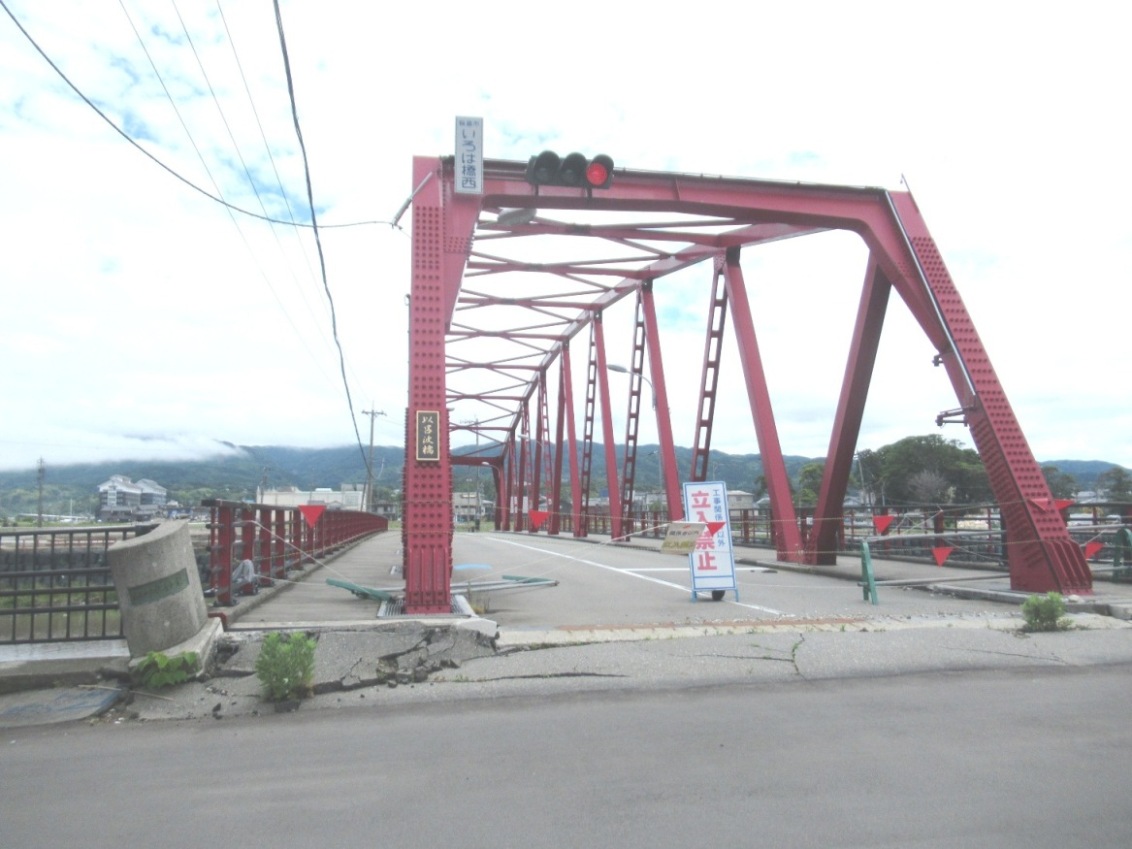
The earthquake caused the land in the Wajima area to rise, by several meters in some places. The foundation of the Iroha Bridge, close to Asaichi Street, has become uneven, making it impassable. (See the top photo)
 

The banks of the Kawarada River, which runs through the city center, were also damaged in various places and are still not repaired.


Wajima Port was temporarily unable to be used after the earthquake due to the rise of the ground. Cranes for dredging and other works are still standing there. (See also the 4th photo)


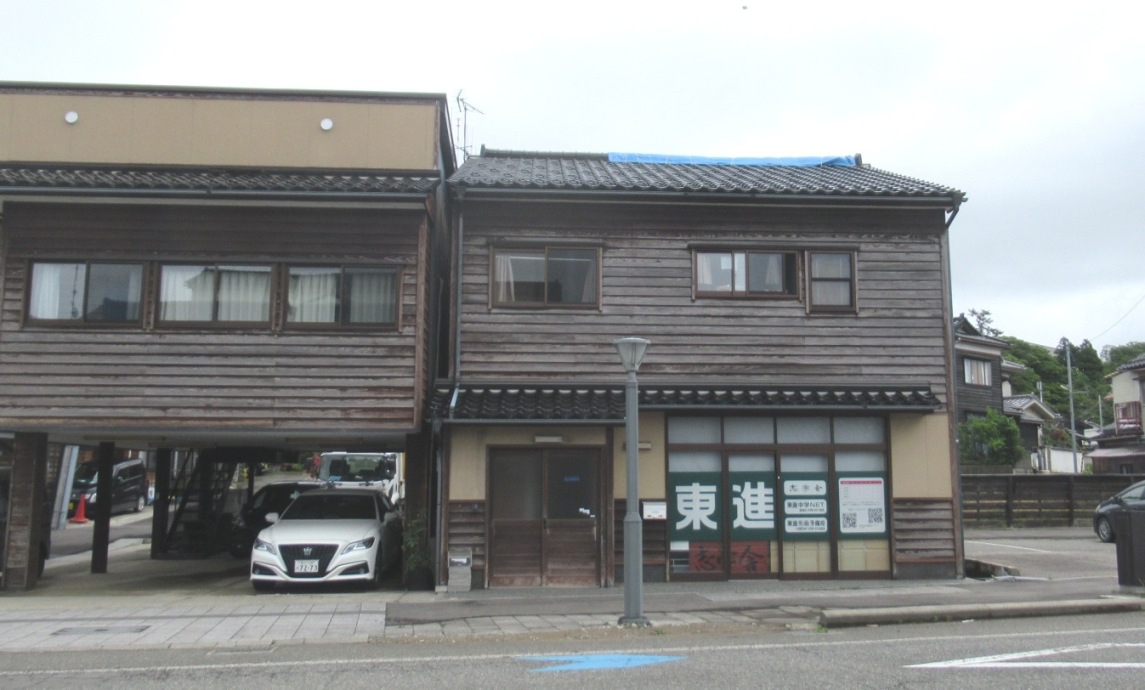
There are still many houses in the city that have tilted and are no longer habitable. (See also the 3rd photo)


I also saw demolition works of houses in various places.


Daily life seems to be gradually returning to normal. There were not many people in the town, but shops and restaurants were open, and I saw people doing yard work.


Cram schools have reopened. I found entrance exam information attached to the windows of a school.


I saw a church that had reopened using a container.


Temporary houses were still used in various places in the city. The houses were used not only by local people who had lost their homes, but also by those who were visiting Wajima for construction works. (See also the 7th photo)


Wajima is famous for its lacquerware, Wajima-nuri. Many Wajima-nuri workshops were lost in the earthquake. Temporary workshops have been set up in various places in the city.


Volunteers are essential for recovery. According to Ishikawa Prefecture, the number of volunteers who gathered in the disaster area has already reached 140,000. The support they provide is varied, including disposing earthquake waste, helping with farmland recovery, farm works, and providing soup kitchens.


I met many volunteers in the city. Temporary housing for volunteers and tents for storing materials were set up in the grounds and parking lot of Juzo Shrine, close to Asaichi Street.  On the day, volunteers came from Hiroshima Prefecture and elsewhere. (See also the 2nd photo)


A little further away, I met volunteers from Shizuoka Prefecture. They said they had planned an event that the local people could enjoy.


Wajima once had a railway line, but it was abolished in 2001. 
The railway station has now become a roadside station or Michi-no-eki, and serves as a departure and arrival point for long-distance buses.


The former platform remains as it was.

The roadside station sells Wajima's specialties and souvenirs. I bought some Wajima wakame seaweed.


On the way from Kanazawa to Wajima, I saw vestiges of the damage in various places. Near Noto Satoyama Airport, I saw traces of a landslide in the mountain along the road. (See the 5th photo)

Driftwood that had been washed down from the mountains still remained in the Kawarada River that flows into Wajima.


Along the road, I found many boards with slogans wishing for the reconstruction of Noto.