2011-07-31
Sunflower@ Zama: July 31, 2011
Sunflower again!
I visited sunflower fields for two consecutive days. Today’s visit was a field in Zama City, Kanagawa Prefecture.
Zama’s field was much larger than the field in Setagaya’s Unane I visited yesterday. There were more than 100 thousands sunflowers there.
A path ran through the flowers. Visitors enjoyed walking in the field.
Zama is about 40 km west from central Tokyo. Sunflower is the city’s flower. It holds sunflower festival since 1993.
Zama is also famous as a hometown of Nissan. Nissan had its main automobile factory here till 1995. The factory was closed as a process of the company’s restructuring plans. The facility is now used as a R&D center.
Japanese automobile companies have days off in weekdays and open their offices and factories in the weekend to cope with the shortage of electricity after the earthquake (and the nuclear plant accident). Zama's center was open today.
Map: Zama
2011-07-30
Sunflower & Tama River Walk: July 30, 2011
Sunflower is more than summer’s flower in Japan now.
Today, I visited a sunflower field in Setagaya ward, western Tokyo. The ward is residential area, but it has many small agricultural fields in its western area (near Tama River).
Butterflies, bees and other insects were flying among the flowers.
I walked along Tamagawa River from Unane to Izumi Tamagawa (about 6 km). The riverside was bushy. Many insects and birds were there.
Children were playing in the water and adults were enjoying fishing. There were ayu (sweetfish), shrimps and other aqua livings in the river.
The water was clean. But many wastes remained in the riverbank.
2011-07-23
Nogawa River Walk (3): July 23, 2011
It was not unbearably hot today. I walked along the upper part of Nogawa River (from Chofu City to the origin of the river in Kokubnji City).
The river runs toward southeast. I walked toward northwest.
I started my walk at Shibasaki area, eastern part of Chofu City. The river runs trough residential area here. The river fields were covered with deep grasses. Dragonflies, butterflies and birds were flying.
There were geese, white herons, carp, turtles and many other livings in the river.
I found children and their parents enjoying walking in the river. Some of them were catching fish and other aqua livings.
It was more nature rich here in this part. They have woods at both sides of the river as many tall trees are planted in the gardens of such facilities. Some farmers still use watermills here.
I found some geese families in the river. It was cute to see the family members swim together.
I walked forward and arrived in Nogawa Park. There are huge grass fields and many pine and tulip trees in the park. I found many joggers and families enjoying their times.
I arrived in Koganei City. The river again runs through residential area here. The riverside walkway is well kept and there are many four o’clock flowers (Mirabilis jalapa) along the river. They smelled so nice.
I walked into Kokubunji City. Nogawa is a concrete river here. The river bank is covered with cement and it runs through residential houses. It is so ugly.
The origin of the river is in the research center of Hitachi Ltd., near JR Kokubunji station. There is a sign board outside of the center.
2011-07-17
Wind bell featival @ Kawasaki Daisha:July 16, 2011
We again had a very hot day today.
I visited Kawasaki Daishi (Heiken-ji Temple) in Kawasaki City (Tokyo's southwest) to attend its Wind Bell Festival.
Kawasaki Daishi has been popular among people to pray for their health since the Edo period. It is one of the most popular visiting places in the new-year season in the country. (Meiji Jingu Shrine in Tokyo, Tsurugaoka Hachiman Shrine in Kamakura and Narita-san in Chiba Prefecture are other popular places in greater Tokyo).
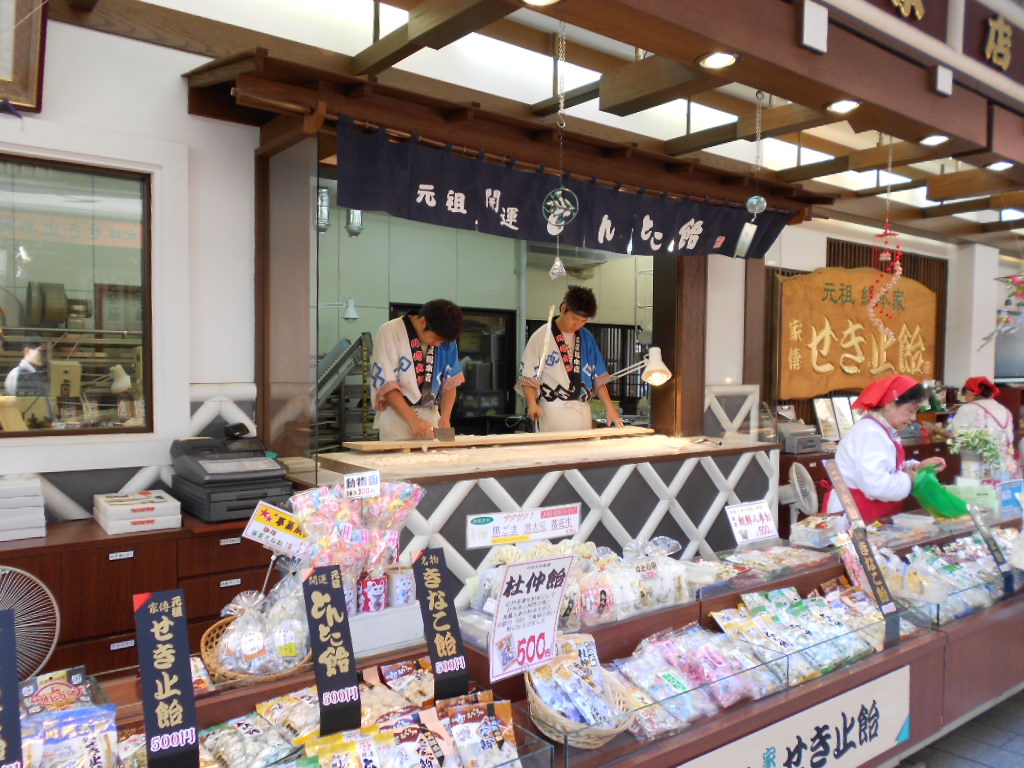
There are many shops along the street to the temple. I found some candy shops where members were playing special performances -- cutting candies from a big bar into small pieces with big cutting knife -- to the guests. Others shops sold Daruma dolls.
Wind Bells from about 100 production places were sold at the Festival. Some bells were made in grass and whereas some were made metal-made.
Some were from places in Tohoku district, which was severely hit by the earthwuake.
I enjoyed various kinds of sounds -- heavy, light, high, low, metallic sounds.
I felt they were sounds of summer.
Fire fly Festival & Bon Dance @Setagaya Daikan House: July 15, 2011
The rainy season was over last week and We have hot days. The temperature goes up more than 35 degrees every day in Tokyo.
I visited Daikan Yashiki in Setagaya ward today. The place was a house of local manager in the Edo era.
It has a straw roof. There are many old and tall trees in the garden.
They held a firefly festival in Daikan Yashiki. Fireflies were kept in several net cages and placed in the gardens.
We could find fireflies in many places in Tokyo (including Setagaya) until the 1950-60s. People enjoyed watching the small lights floating in the dark air in summer. They disappeared after the 1960s because of environment pollution.
People started movements in many places in Tokyo to recover the environment where the fireflies can survive. Setayaga’s firefly festival is organized in such moves.
A bon festival was held in a small local shrine near Daikan Yashiki.
Similar summer feativals and activities are held and planned in many places in Tokyo.
Smart Phone Shop@Shinjuku: July 15, 2011
Bad news dominate the headlines in business news in Japan.
Japan has experienced “the lost two decades” after the 1990s. The nominal GDP remains in the same level (about 500 trillion yen). Many companies face difficult times. The business condition is much worse after the Great East Japan earthquake in March.
It is not correct for all industries. Some business sectors and companies enjoy busy days.
An example is the smart phone market.
I visited Yodobashi Camera in Shinjuku to buy a new smart phone. Major mobile phone companies (NTT DoCoMo, Au, Softbank, Willcom etc.) had their own corners in the shop. I saw tens of people checking the products in each corner.
All staff members were busy in recommending products and answering quest’s questions.
I was asked to get in a line for registration when I decided to purchase one. I had to wait more than 15 minutes.
Some popular products were sold out.
2011-07-03
Sugamo: Juy 3, 2011
The rainy season still continues and we have hot and humid days in early July.
I visited Sugamo, an old town in northern Tokyo.
Sugamo is famous for Togenuki Jizo Temple. Many people (especially old people) visit the temple to pray for their health and long life.
There is a legend behind people’s behavior. The life of a poor wife was saved thanks to a Jizo god in the Edo period. The husband honored the Jizo god in the temple.
There is a shopping street (Jizo street) in front of the temple. The shops are old and the street keeps the atmosphere of the Showa era (before the 1980s).
I saw many visitors walking in the street and found most of them were old.
Some Japanese media called Sugamo “a Harajuku of old moms”. Harajuku is a famous fashion town for young girls.
They held a Morning Glory Festival.
Tokyo’s most famous and largest morning glory festival is usually held in Iriya (near Ueno), but it was suspended this year as the police cannot send its guard staff to the festival. It was because of the Great East Japan earthquake.
I found a raw of solar panels on the roof of the arcade in front of JR Sugamo station. The efforts to introduce renewable energy are accelerating throughout the nation after the earthquake.
2011-06-25
Hydrangea@Hakusan Shrine, Rikugien Gardens: June 25, 2011
Tokyo has a rainy season in June. I could not go out last two weekends because of rain. Today, I walked out although it sometimes rained.
June is also known as a season of hydrangea.
Hakusan Shrine in Bunkyo Ward, about 2 km north of the Imperial Palace, is famous for its hydrangea. The local community held “the Hydrangea Festival”.
There are about 3000 hydrangea plants in the shrine and neighboring garden. Hundreds of flowers were pink, blue, purple and white.I also visited Rikugien Gardens. The gardens were originally a residence of Yanagisawa Yoshiyasu, the most powerful politician in the mid Edo period (from late 17th to early 18th century).
It rained when I visited there. A couple was sitting under an umbrella in front of hydrangea.
The artificial mountain in the garden was partially destroyed by the Great East Japan earthquake in March. So, I could not go up.
2011-06-04
Tokaido Walk(14) Yui-Ejiri (off Tokyo): June 4, 2011
I walked from Yui, the 16th shukuba station from Nihonbashi, through Okitsu to Ejiri.
I visited Yui fishing port before starting my walk today. The port is small, but it lands the largest volume of sakura-ebi (small pink shrimp) in Japan.
Hundreds of small fishing boats were tied up in a small space. There was an open-air restaurant where they served sakura-ebi lunch.
The Tokaidi street went into mountainous area. Bothe sides of the road are steep slopes and loquat and orange trees are planted there. Yui’s loquat is nationwide famopus.
Each loquat fruit was covered with a small paper sack. It is to protect the fruit from craw and other birds. Farmers cover the thousands of fruits with the sacks by themselves.
It was the harvest season. I saw many farmers on the trees and took the ripe loquats. They sold the fruits in front of their houses along the street.
I climbed the steep road and arrived at Satta mountain pass. It is 244 meter high.
The pass is known as one of the hardest places (along with Hakone and Oigawa river) to cross in Tokaido in the Edo era.
The view from the pass was beautiful. There spread green trees (loquats and oranges), the blue sea (Suruga Bay) below. Both the national Route 1 and the Tomei Motor highway ran along the seaside.
It was unfortunate that I could not see Mt. Fuji today because of the cloudy weather.
Down the mountain and I moved into Okitsu, the 17th station. There are historic places in the area. They Include:
- Seikenji Temple: Old large temple. Tokugawa Ieyasu often visited here.
- Zagyoso: Saionji Kinmochi, an influencial political leader in the Meiji period had his 2nd house here.
I moved westward and entered Ejiri, the 18th shukuba station. The area is now the center of Shimizu ward of Shizuoka city. Shimizu has a big port. They have developed such industries as fish food production, wharehouse, transportation and marine related machines.
2011-05-21
Tokaido Walk (13) Yoshiwara-Yui (off Tokyo): May 21, 2011
I walked from Yoshiwara, the 14th shukuba Station in Fuji city, through Kanbara, the 15th station, to Yui, the 16th station.
Fuji city has many factories including paper factories (as I wrote in May 15, 2011 post). I found various factories when I walked Tokaido road in the city.
I also found many creeks and small water ways in the city. All creeks and water ways were affluent. Mt. Fuji is always covered with snow and the meltwater comes from the mountain to the city.
I crossed the Fuji River. The water ran fast.
Tourists had to cross the river by boats or on foot in the Edo period. They had to wait for days when they rain continued.
There stands shrine for the river at the side of the river. Monuments in the shrine showed the history of “the crossing point” in the Edo era.
The scene was beautiful. I found many birds there. It was unfortunate that I could not see Mr. Fuji because of cloudy weather.
The west side of the Fuji River is called Iwabuchi district. There remained a rest house which was used by high-rank samurai in the Edo period. They stayed in the house when they wait the river boats arranged.
The house was inhabited till about 10 years ago. It is open to the public now.
I walked through hilly roads and arrived in Kanbara. The area is now a part of greater Shizuoka city. The houses lie in a narrow place between the mountains and the sea.
It is one of the most famous shukuba stations because of an Ukiyo-e picture drawn by Ando Hiroshige, one of the most famous Ukiyo-e artists in the nation. Kanbara’s winter scene was dawn in his “53 stations of Tokaido” works. Most Japanese know Kanbara’s Ukiyo-e.
The basic structure of the town and the street remain unchanged from the Edo era. Edo-style buildings stand along Tokaido road.
People are eager to attract tourists. They place information boards in front of historically important buildings. People kindly greeted to the tourists even if they do not know them. (I was greeted so often in the town)
The also spend relaxed lives. I saw many groups of old people sitting in the street and chattering. Such gatherings were common throughout the nation decades ago, but we seldom see such gatherings in Tokyo and other big cities now. It seemed that the time flewed slower here.
I walked westwards and arrived in Yui. Yui also keeps the old structure and atmosphere of the town.
The main guest house of the shukuba station has converted into a memorial park. There remains the birthplace of Yui Shosetsu, a famous rebellion against the Tokugawa Government in the Edo era.
He was recorded to be born in a dye shop in fronto of the main guest house. The shop still keeps their business.
Yui is also famous for Sakura-ebi, small pink shrimp. The Yui port lands the largest volume of the Sakura-ebi in the nation. There are many shrimp shops along the Tokaido street.
I enjoyed Sakura-ebi dinner at a local restaurant. It was so nice.
It is about 150 kilometers from Nihonbashi, Tokyo.
map: Kanbara
map: Yui
Subscribe to:
Posts (Atom)