2019-05-24

Nakasendo Walk (31) Samegai(61/69)-Banba(62)-Toriimoto(63): May 4, 2019


I continued my Nakasendo Walk from Samegai, the 61th shukuba station from Nihonbashi. As reported in the previous article, the station is famous for its clean water.

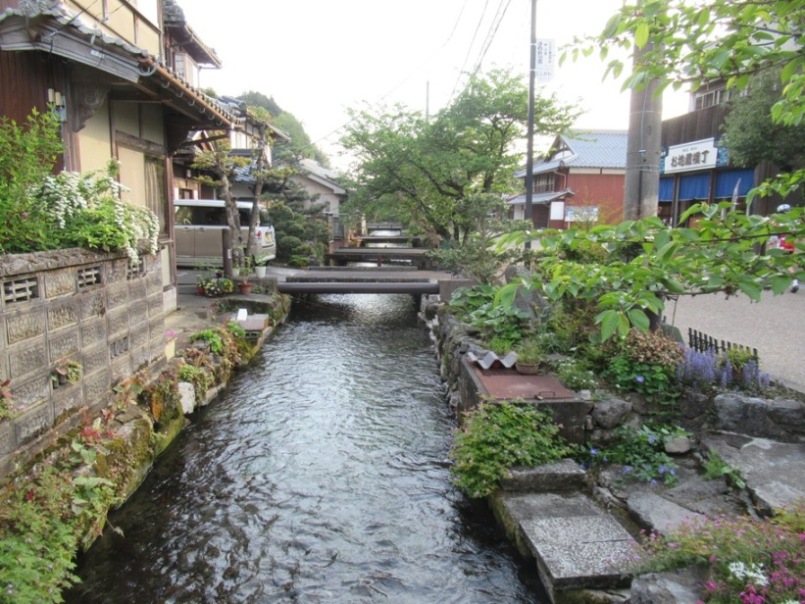
There is a shop of local products next to the railway station building. The found the store stressing Samegai’s clean water. (See the top photo)

Leaving the shukuba station, I moved westwards. I found affluent water flowing in the artificial creeks along Nakasendo.

I passed the crossing point of Meishin and Hokuriku moter Highways; found an industrial zone over a milestone.

I entered Banba, 62th shukuba station.

There stands Rengeji Temple along Nakasendo.

It was established earlier than 13th century (A legend says that it was originally built by Prince Shotoku in the 7th century). It now belongs to Jodo sect.

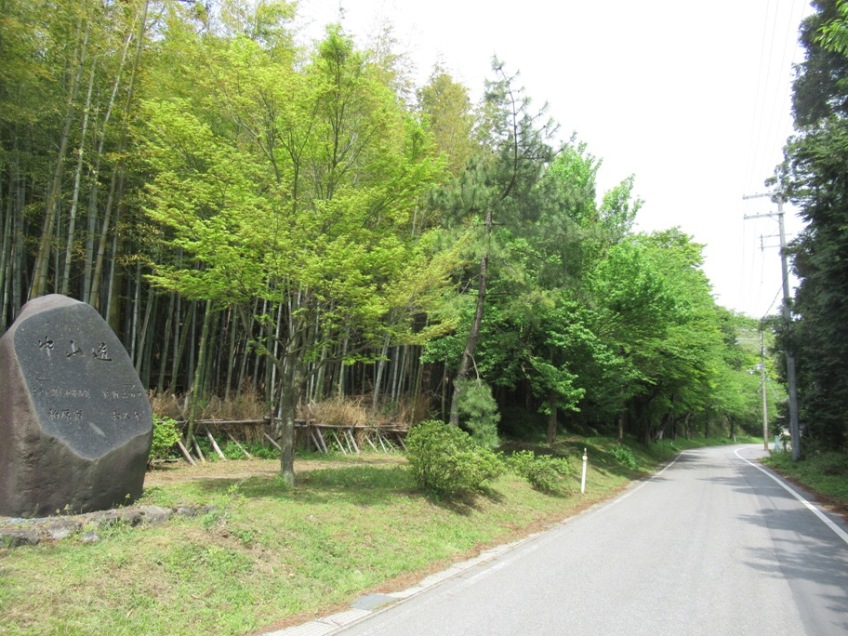
About 430 soldiers of Kamakura shogunate government committed suicide here in 1333 when they lost the war with an anti-shogunate government troops. Memorial monuments were built later to console their spirits. (see also the 2nd photo from the top)

I enjoyed beautiful countryside scenes in the area.

I walked forwards and crossed over a small pass called Surihari Pass.

Old Nakasendo remains in some parts.

I entered Hikone City from Maibara City before arriving in Toriimoto, the 63th station. A welcome monument of Hikone City was waiting me. (See the 3rd photo)

Toriimoto’s drug stores – where they sold medicines for the stomach and intestines – were famous in the Edo era. There still remain some stores. The photo shows an example.


2019-05-05

Nakasendo Walk (30) Sekigahara(58/69)-Imasu(59)-Kashiwabara(60)-Samegai(61): May 3, 2019


I resumed my Nakasendo walk after a year’s pause. Today’s walk was from Sekigahara, the 58th shukuba station from Nihonbashi, to Samegai, the 61th station.

Before starting my Nakasendo walk from Sekigawhara, I moved around the historic place. The Battle of Sekigahara, one of most famous and important battles in Japanese history, took place here in 1600. The photos and an essay are found here.

Only the memories of a main inn (honjin), lower-level inns (waki-honjin and hatago) and other facilities remain along Nakasendo here.

Walking westwards about 10 minutes, I found a ruin of the checkpoint (barrier) of Fuwa. It was built in 673 by the Tenmu Emperor. It was one of the three biggest checkpoints in the ancient history of Japan (other two were checkpoints of Suzuka and Arachi)

The Jinshin War in 672, the biggest war in Japan’s ancient history, took place around here. The photos and information are dound here.

I then found a tomb of Tokiwa, the mother of Minamoto Yoshitsune, one of most popular heroes in Japanese history.

I climbed the Imasu Pass.

Then, I arrived in Imasu, the 59th shukuba station. It is the last of the 16 stations in Mino area (now Gifu Prefecture). Only the memories of old facilities remain here from the Edo era.

Moving westward, I arrived at the border of Mino (now Gifu Prefecture) and Omi (Shiga). The place was called “a village of sleeping story.” It was because the travelers could exchange sleeping stories between two inns which stood different areas. (See also the top photo)

Nakasendo goes along JR Tokaido Line and the Meishin moter highway.

There is a line of maple trees along the street.

I reached Kashiwabara, the 60th shukuba startion. It was a ling station of 1.4 km.

The station stood at the foot of Mr. Ibuki.

They produce good moxa, which is used for moxibustion to relax human body, from Japanese mugwort grown in Mr Ibuki.

There still remain moxa shops. One of them remained traditional style. (See the 3rd photo from the top)

Walking about 6km, I arrived in Samegai, the 61th shukuba station.

Samegai is famous for its clean water. Rich clean water flow throughout the town. (See also the 2nd photo)

There grow groups of water grass called “baikamo” in the creeks. The grass can grow only in very clean water.

There live small fish called hariyo. It is an endangered spiece.

There are several springs in the shukuba station. This photo is called Saigyo spring.

There is a local-product shop next to JR Samegai station. It emphasized clean water.

There are various shops, restaurants and coffee shops in the shukuba station. This coffee shop uses an old house of more than 100 years.

I ate a asset of eel dinner in a restaurant. They keep the eel in the creek for a while to refresh and clean it.

I found many funs in Samegai.


2019-05-04

Sekigahara: May 2, 2019


The Battle of Sekigahara is one of the most famous and important battles in Japanese history.

Total 160-thousand soldiers in two groups – the eastern army lead by Tokugage Ieyasu and the western army lead by Ishida Mitsunari -- crashed here in 1600 for the country’s hegemony. With the victory of the battle, Tokugawa Ieyasu became a ruler of the nation and about 260 years of the Edo era practically began.

I visited Sekigahara during my Nakasendo walk.

Sekigahara is a narrow flat place (about 2 km by 4km) surrounded by hills and mountains. The ground remains as it was 400 years ago. Many history lovers visit the place to review the old battle and to think of the heroes and unknown soldiers who participated in the event.

We can see the panorama of Sekigahara from the hills. This is a scene from Mt. Sasao, where Ishida Mitsunari placed his camp.

 Local people explained tourists battle-related stories. (See the top photo)

Kuroda Nagamasa and Takenaka Shigekado, who belonged to the eastern army, had a camp on Okayama. They shot signal fires from here.

Fierce fights were taken place at the foot of Mt. Sasao. The eastern army finally beat Ishida Mitsunari’s army, which practically ended the battle. Flags of Tokugawa Ieyasu and Ishida Mitsunari are places in the site. (See the 2nd photo from the top)

There spread rice fields in the area. The farmers were busy in planting works.


This is the place where Tokugawa Ieyasu’s final camp was placed and he saw the victory of the battle. Awards and punishments of the participants were decided here. The decisions formed the basic framework of the country from the early 1600 to the 1860s (Edo era).

The ruins of rural rulers who participated in the battle, flags of such rulers, tombs of the dead and other memorials are found in many places in Sekigawaha.

This monument is placed at where Fukushima Masonori's camp, who belonged to the eastern army, located.


The monument of Todo Taketora and Kyogoku Takatomo, both belonged to the eastern army, is in a ground of junior high school.

This is where Shimazu Yoshihiro’s camp, which belonged to the western army, was. Shimazu succeeded to escape from the site after western army’s defeat and survived as a ruler of Satsuma (Kagoshima Prefecture) during the Edo era.

This is a tomb of Otani Yoshitsugu, who dared to join western army despite his sickness to keep his promise with Ishida Mitsunari.

Head mounds were built after the battle to comfort the minds of the dead.

I saw kids playing with local guides in samurai costumes. (See the 3rd photo)

I also found various kinds of signs and graphics displayed in the town. (See also the 4th photo)

Every Japanese people, including me, know something about Sekigahara. But it is just a small part. I have learned quite a lot in Sekigahara.

Sekigahara experienced another important battle in Japanese history. It was Jinshin War in 673 (nearly 1000 years before the Battle of Sekigahara). Prince Oama and Prince Otomo (Emperor Kobun) fought here. Prince Oama won the battle and became the Emperor Tenmu.

Both armies crashed at the Fujiko River.


2019-05-01

Hikone and Nagahama: May 1, 2019


I visited Hikone and Nagahama cities using the “Golden Week” holidays.
Today was the first day of the Reiwa era.

Hikone City locates at the east coast of Lake Biwa. It is famous for the Hikone Castle.

The main tower of the castle has been preserved for more than 400 years. (See also the top and the 2nd photo)

A  famous mascot character "Hikonyan" welcomed the guests at the castle.

It is one of the five castles (main towers) which are registered as national treasuries. Other fours include Himeji castle, Matsumoto Castle, Inuyama Castle and Matsue Castle.

It was built I the early 1600s by the Ii family, one of powerful families in the Tokugawa Shogunate government.


The castle stands on a hill quite near from the Lake Biwa.

Ii Naosuke, who was the head of the family in the 19th century, was one of the important figures in the late Edo era. He was grown up in the castle.

He became the top official of the Tokugawa government in 1858 and decided to open the country after 200 years of isolation policy. He was assassinated in 1860.

They produce good “Omi” beef in the area. There are many good beef restaurant in the street near the castle. People made long queues.

The statue of Is Naosuke stands in front of the railway station of Hikone. 

Nagamhama locates about 15 km north of Hikone. It also faces Lake Biwa.

The original city was built by Toyotomi Hideyoshi in the late 16th century.

The original Nagahama Castle was developed in the late 16th century, but was destroyed in the early 17th century. A new concrete-made castle was made in 1983.

I saw the waves of the lake repeatedly arrived in the shore of the castle site.

I visited an area called “Kurokabe Square” in the city. There are tens of small museums, galleries, gift shops, craft shops, glass workshops and restaurants there. Retro buildings are used.

I found many tourists enjoying shopping and making their own glass works in experience workshops.

The re-development of the area started in the 1980s. It succeeded to attract many visitors. Now, the city accepts 2 million tourist every year. It is regarded as a good example of success story in the local development.

I also visited a railway museum. The country’s oldest railway station building is used as a museum.

At a beer restaurant in the city, I enjoyed local-brand beer and Omi beef.

The weather was not so good today, but I had interesting and meaningful time in the two cities in Shiga Prefecture


1st day of Reiwa era -- scenes in Shiga Prefecture: May 1, 2019


New era of Reiwa started as Prince Naruhito became a new emperor today.

During series of inauguration ceremonies in the first day of Reiwa, he made his first message to Japanese people as an emperor. He stressed that he would do his best as a symbol of the country and of the unity of Japanese people.

He promised to always think of the citizens and to stay with Japanese people.

He also expressed his hope for the happiness of Japanese people, the country’s further development and the peace of the world.

People celebrated the new era throughout the nation.

I was in Shiga Prefecture today.

I visited Hikone Castle in Hikone City. It is one of the five castles which have been registered as national treasuries.

There was a special corner set in the Castle Museum to make signatures to celebrate the new era. I made a signature.

The city’s mascot character “Hikonyan” was making his performances with a board of “Reiwa” in his hands for the visitors. (See also the 2nd photo from the top)


I found many massages of celebration in Hikone, Nagahama and Maibara cities. They were in the flags, boards and in other forms. (See the top photo)