2013-03-24

Hangzhou (off off Tokyo): March 21-22, 2013


I came to Hangzhou, one of China’s best tourism cities, and enjoyed its nature and history.

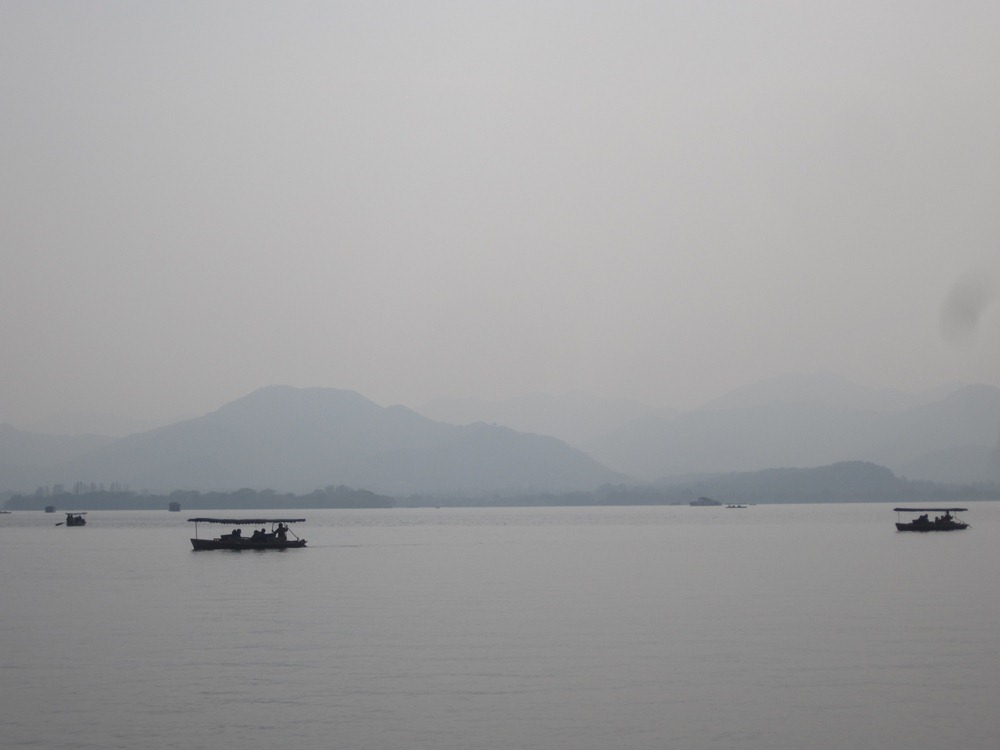
I walked around West Lake in two different occasions – in the afternoon and in the early morning.


It was lightly cloudy in the afternoon of March 21. The willow leaves were fresh green and colorful spring flowers were open. People enjoyed walking around the lake.

There are many historical spots and monuments in and around the lake. Great poets Du Bu and Li Bai (in the Tang era) made poems here. Another great poet Su Shi (in the Song era) was here as a high rank government officer and was engaged in construction works of banks in the lake.
I walked one of the banks in the early morning of March 22. It was rainy. The willow in the rain was mpressive.


People gathered to play T’ai Chi. ch'uan and other excises.


I also visited Lingyin Temple. It is in the mountain and I could walk in the nature.

There were many people. They prayed with burning incense in traditional Chinese style.


Tourists in packed tour wore same caps. Many of them are farmers from other areas.
The temple was clean and people’s manner was not bad (no garbage were found in the ground). It was a big change from decades ago, according to my Chinese friend.


2013-03-17

New Shibuya: March 17, 2013


Shibuya is one of the most popular shopping and cultural area in Tokyo. The town had a dynamic change this weekend.

Old station of Yokyu Toyoko Line, which connects Shibuya and Yokohama, located in the 2nd floor of the terminal building. It was closed on March 16. New station opened under the ground.

I found many people gathering at “closed” old Tokyu station and taking pictures.

The new station was linked to Subway Fukutoshin Line, which connects Shibuya and Wako City, Saitama Prefecture. That means Yokohama and Saitama Prefecture was linked directly. New underground station is, of course, modern.
Shibuya is the terminal of other five lines: JR Yamanote line, Tokyo Denentoshi Line, Inogashira Line, Subway Ginza Line and Subway Hanzomon Line.

Urban developments are taking place in many areas in Tokyo. Shimokitazawa starion, used for Odakyu Line and Inogashira Line, is under renovation works and new station will open next weekend.


Flower season and spring picnics @ Parks: March 16-17, 2013


It is getting warm. The light is becoming brighter.

Tokyo’s cherry started to open on March 16 (Official announcement is made by the Meteorological Agency when it observes first opening of cherry blossom at Yasukuni Shrine).


People enjoyed picnic in Hanegi Park in Umegaoka, Setagaya ward. Ume (Japanese apricot) and Asian origin apricot flowers were still open.
People also enjoyed warm spring afternoon in Yoyogi Park near Shibuya. Open air market of organic foods attracted visitors.


We will have Spring Equinox Day this week.


2013-03-10

Haze in Tokyo:March 10, 2013


Weather changes rapidly at this season this year.


We had a nice and hot morning today. The temperature went up to about 25 degree at 1:00 pm in Tokyo.


After an hour, it turned to haze (a phenomenon where dust, smoke and other small particles float in the air). The temperature went down by about 10 degree in an hour.


The scene from my apartment suddenly turned unclear. The lower part of the sky was gray. The upper part was clearer. I could not see the building 2-3 kilometers from my house.
The difference is clear when today’s picture is compared with one taken in a fine day.


I first thought it was Asian dust. It was reported that the yellow sands flow from China to western Japan today, but not to Tokyo.
I refrained from walking outside.


2013-02-16

Ume blossom @ Hanegi Park: Feb. 16, 2013


We have a cold winter this year. The temperature often went down sub-zero in Tokyo in January. Snow stayed more than a week in mid-January in the city.

It was still cold today, but the light is brighter than a week ago.


I visited Hanegi Park @ Umegaoka. Ume (Japanese plum) blossom had just started.


The sky was so blue. Spring is around the corner.


Tortoise walk@ Nodai Museum: Jan. 26, 2013


It was a cold day. I had a walk to Food and Agriculture Museum of Tokyo University of Agriculture (Nodai Museum). The museum has aquarium (a garden) and there are various plants and animals from Africa, Asia, Australia and the Americas.


Various monkeys in the cages often made sounds to ask foods. Chameleon and other lizards were staying silently just under heating lights and getting warm.


Today’s surprise was an exercise of a tortoise. The tortoise was nearly a meter long. It usually stays in a small cage, but sometimes has walks in the plaxce.


It attracted visitors including a baby. Most people stayed more than 10 minutes around the tortoise.


An open air market was held in front of the museum. Organic foods attracted local visitors.

2013-01-14

Shichi-fukujin @Yanaka:Jan. 13, 2013


Following yesterday, I made another Shichi-fukujin visit. It was in Yanaka area.


Information on Shichi-fukujin is on Jan. 12, 2013 post. Yanaka Shichi-fukujin is the oldest in Tokyo.


I started my walk from JR Tabata station. People attached red papers onto the statues guardian gods in Togakuji Temple. It is believed to be helpful to heal sick of the people. The temple enshrines FUkurokuji, one of shichi-fukujin.


I walked through Nishi-Nippori and Nippori area.


I visited Seiunji Temple (enshrines Ebisu), Shushoin Temple (enshrines Hotei), Tennoji Temple (enshrines Bishamon-ten) and Choanji Temple (enshrines Jurojin).


Pictures of Hotei were drawn on the walls of Shushoin Temple.


There is a slope called Fujimi-zaka near Nippori station. The slope is the last place in Tokyo where we can see whole scope of Mr. Fuji. The opportunity will be lost shortly as a new apartment is planned to be constructed.


I also walked in Yanaka cemetery, one of Tokyo’s largest cemeteries. I found Tokyo Sky Tree behind tomb stones.


I moved to Ueno area and visited Gokokuin Temple (snshrines Daikokuten) and Benten-do (enshrines Benzaiten).


Shichi-fukujin @ Yamanote (Shinjuku) area: Jan.12-13, 2013


Visiting Shichi-fukujin (Seven Gods of Fortune) is traditional Japanese custom at New Year season. Seven Gods include:


- Bishamon-ten (Vaiśravaṇa):Indian origin. Guard the world with three other gods.
- Daikoku-ten (Mahakala): Indian origin. Save poor.
- Benzai-ten (Saraswati): Indian origin. Goddess of water and agriculture
- Fukurokuju: Chinese origin. God of wisdom and longevity
- Jurōjin: Chinese origin. God of longevity
- Hotei (Budai): Chinese monk. Re hold a bag of fortune.
- Ebisu: Japanese old god. Calls prosperity

Some gods are placed at shrines while others are places at temples. Buddhism and Japanese traditional Shinto religion were fused (syncretized) in some aspects in the middle age. The syncretism composes one of features of Japanese culture.


There are groups of Shichi-fukujin in various areas in Tokyo. They include Yamanote Shichi-fukujin (Shinjuku area), Yamaka Shichi-fukujin, Nihonbashi Shichi-ifukujin, Asakusa SHichi-fukujin, Meguro (Yamanote) Shichi-fukujin (and more).


Today, I walked Yamanote SHichi-fukujin in Shinjuku Area.


The picture from above shows:


- Bishamon-ten @ Zenkokuji Templs in Kagurazaka
- Hotei @ Taisoji Temple in Shinjuku
- Ebisu @ Inarikiou Shrine in Shinjuku
- Fukurokuju @ Eifukuji Temple in Shinjuku
- Benzai-ten @ Itsukushima Shrine in Shinjuku
- Jurojin @ Hozenji Temple in Shinjuku
- Daikoku-ten @ Keiouji Temple in Ichigaya Yanagicho

2013-01-06

New Year’s visit to shrines: Jan.1-6, 2013


I spent my New Year days to visit several shrines. There were findings in every shrine.
I visited Meiji Shrine on Jan. 6. The shrine is one of most popular shrines in Japan and attracts millions of people every year.


There were thousands of visitors making long lines in front of the main building. “Haru no Umi” (The sea in spring), was played in the shrine and was making New Year’s atmosphere.


People were writing their hopes in the fortune tablets.


They put sacred paper fortunes they had bought on the wires. New Year’s fortune goods were sold.


Open air markets offered various foods. Blood donation was asked in front of the shrine.


I was in Sengen Shrine in Shizuoka city on January 1st.


I visited Yoyogi Hachiman Shrine on Jan. 2nd. The calligraphy works written by school children were displayed.


I also stopped at a mosque near the shrine.


Old fortune goods are collected at the shrine and are burnt. The custom is called “Otakiage”. Big shrines prepare special boxes for collection.


The situation at small shrines is different. There was a fire to burn such goods at a small shrine (Rokusho Shrine) near my house on Jan. 3rd.


Visitors looked happy in every shrine. It was probably because fortune people usually make new year’s visit to shrines.