2024-02-13

Yaizu: Feb 10, 2024


I visited Yaizu City in Shizuoka Prefecture.

The city is famous for its fishing industry and a legend of Yamato Takeru, a hero of  ancient Japans.


There are several fishing ports in Yaizu city. Many ships and boats stay at the quays.

Yaizu is one of the largest fishing ports in Japan.


Its landing amount in value terms was the largest in 2023. It was the 4th largest in volume. Other large fishing ports include Choshi in Chiba Prefecture, Kushiro in Hokkaido, Hakata in Fukuoka, Nagasaki and Sakai Minato in Tottori.


The view of Mr. Fuji from the port was so beautiful. (See the top and 2nd photo)

Seagulls were flying over the sea. 

People were enjoying fishing. (See also the 3rd photo)


I found several new banks under construction in the ports. It is to prevent tsunami from moving into the city. Most parts of the banks are made of concrete, but toughened glass sheets are used in some parts. We can see the ports through the glasses.


I also found several Tsunami evacuation towers in the ports.

The possibility of a large earthquake is repeatedly discussed in the area.


Yaizu locates along the Suruga Bay.

There is a museum which focuses on the deep sea water of the bay.

The deepest point of the bay is 2500 meter. It is the deepest among hundreds of bays in Japan.


Yaizu has a legend of Yamato Takeru, a hero of ancient Japan.

Yaisu Shrine was built to enshrine him.


Yaizu is also famous for its hot spring. There are several hot-spring hotels in the city.

There is a footbath facility near the railway station. It is open to the public.


2024-01-31

Ume Blossom: Jan. 30, 2024


It is still January, but ume blossom is approaching its peak at Hanegi Park in Umegaoka district in Setagaya City, western Tokyo.

The opening of ume, or Japanese apricot, seems to become earlier as years pass.


Today was a fine day.

There are hundreds of ume trees in the park

I found white, red flowers.


I also found bare gingko trees behind ume trees. (See also the top photo)


Some trees have yellow flowers. The smell well.


People were enjoying the flowers.


2024-01-18

New Year’s visits to shrines and temples: Jan. 1-5, 2024


The year of 2024 started.

Japan had a large earthquake in Ishikawa Prefecture on the first day of the year.


Hundreds of people are estimated to lose ther lives; tens of thousands of people lost their houses; tens of communities are isolated as roads and communications lines are cut.

I visit several shrine and temples to make new year’s prays. I prayed for the safety of the victims and recovery of the disaster-hit people areas.


Meiji Jingu Shrine is one of the largest shrines in Tokyo. It is in an artificial forest. (see also the 2nd photo)

Millions of people visit there on January 1 every year.


There were fewer, but many people in the shrine on Jan. 5.


Yoyogi Hachiman Shrine is also a popular spot for new year’s visit.


They displayed works of calligraphy by elementary-school kids at the sides of the approach to the shrine.


Gotokuiji Temple is famous foe its lucky cats. (See also the top photo)

I found many foreign tourists there on Jan. 1.


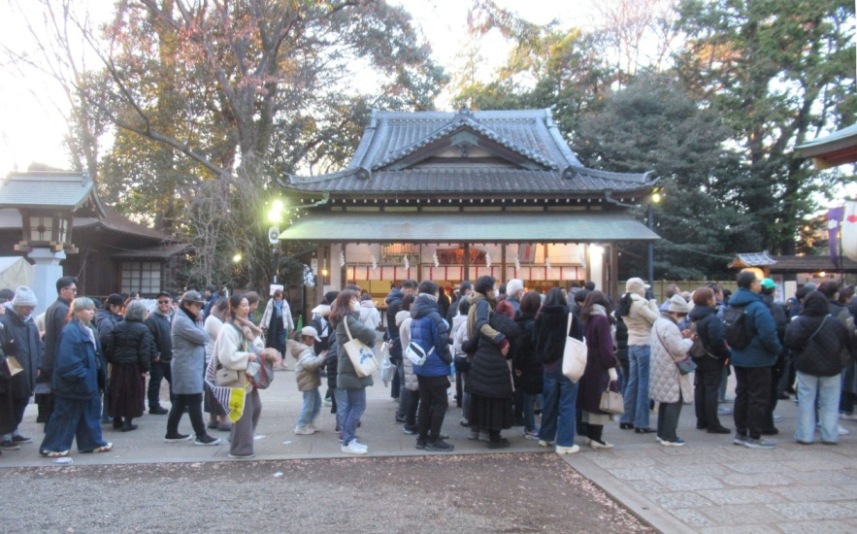
People made a long queue at Setagaya Hachiman Shrine on Jan. 1. The queue continued outside of the shrine. (See also the 3rd photo)


I visited Rokusho Shrine in the evening.


There was a place to burn last year’s good-luck charms.

I burned several items with my gratitude for the safety in the last year.


2023-12-21

“Boro-ichi” open-air market in Setagaya: Dec 16, 2023


I visited “Bori-ichi” open-air market held in Setagaya City. It has 400 years of history and is one of famous open-air market in Tokyo.

The market was held in the areas near Kamimachi and Setagaya stations of the Setagaya Line.


About 600 stalls were open at the sides of streets. They sold foods, clothes, accessories, toys, tableware pieces and many other things.


Old books were also sold there.

They open the market total four days – Dec. 15 and 16 in 2023 as well as January 15 and 16 in 2024 – this winter.


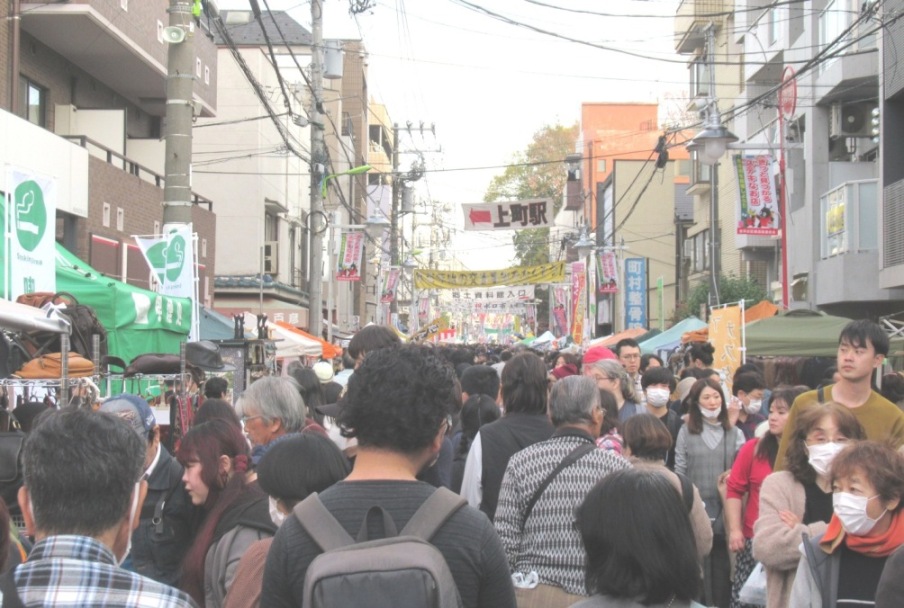
The market was crowded with visitors. Setagaya City estimates that about 200 thousand people visit the market each day. (See also the top and 2nd photos)


The original form of the market started in 1578 under the deregulation policy of Hojo Ujiyasu, the ruler of Kanto area at the time. The style of the market changed after the Edo era; current style started after the World war 2.

The local governor’s house, or daikan yashiki, is preserved in the area.

I enjoyed both Bori-ichi market and Setagay’s history.


2023-12-13

Yellow carpet of gingko leaves: Dec. 10-14, 2023


The season is turning to winter.

The leaves of gingko trees started to fall.

We find yellow carpets of the leaves in many places in Tokyo.


I walked Hanegi Park in Setagaya City,

The carpet was soft. I saw people enjoying walking.

This is a photo taken in a walking path in Setagaya.


2023-11-30

Kofu : Nov. 26, 2023


I visited Kofu City during my Koshu Kaido Walk.

Kofu is a capital of Yamanashi Prefecture with a population of about 190 thousand.


The city is also famous for Takeda Shingen, a ruler of this area in the 16th century. He is still popular and an icon of this area.

The Takeda family perished in 1582, about 10 years after his death.

His statue is places in front of the railway station.


The Takeda shrine was built in the place where Takeda’s castle was. (See also the top photo)


It was a season of shichi-go-san, Japan’s traditional ritual to cerebrate children’s growth, and I found many kids in traditional costumes.


I also visited the ruin of Kofu Castle (Maizuru Castle). The castle was built after the perishment of the Takeda family (after 1580s)/ (See the 2nd photo)

I could see a good view of Mt. Fuji from the castle. (See the 3rd photo)


Many buildings of public services – such as headquarters of Yamanashi Prefectural government and Kofu City office -- stand along a main street downing south from the railroad station.

I found the views of the mountains spread 360 degrees around the city,


Koshu Kaido Walk (13)Isawa-Kofu: Nov. 26, 2023


I had the 2nd day of my late-autumn Koshu Kaido walk. Today’s walked was from Isawa, the 38th shukuba station, to Kofu.


Isawa, a part of Fuefuki City, is famous for its hot spring. It attracts many tourists. But the history of its hot spring is not long. They first found the natural blessings in 1961.

In addition to many hot-spring inns, there are several public facilities. I found people enjoying foot bathing in a public square in front of the railway station.


Isawa area is also famous for its agricultural products such as grape. The agriculture in this area (Fuefuki City, Yamanaashi City including Kurihara, and Koshu City including Katsunuma) is registered as “Globally Important Agricultural Heritage Systems” by the Food and Agriculture Organization of the United Nations.


There were many waterflood disasters taking place in Isawa area as Fuefuki River meets with Hikawa River in the area.


Fuefuki River used to flow in the town, but the route moved south by hundreds of meters after serious waterfloods in 1907 and 1911. Now, a smaller Byodo River flows the place where Fuefuki River used to be. (See also the top photo. The river's name Fuefuki came from a flute player boy. The statue is standing on a bridge of Byodo River)


A bus station is places at a place where a main inn of Isawa shukuba station stood in the Edo era. The bus in the photo was for Shinjuku in Tokyo.


Koshu Kaido goes into Kofu City soon after I passed Isawa (Fuefuki City). I walked westwards.

The Southern Alps mountains lie ahead.


Walking about 6 kilo meters, I arrived at Kofu Yanagicho shukuba station. The main inn was here. There are few monuments of Koshu Kaido there.

The area is now a commercial and entertainment area.

I will write the information of Kofu in another post.