2011-03-12
Tokyo after Earthquake: March 11, 2011
Japan was hit by a series of big earthquakes and Tsunami on March 11th. Miyagi, Iwate and Fukushima Prefectures in Tohoku district, north of Tokyo, were seriously damaged. More than 1000 people were killed and tens of cities and towns were washed out by Tsunami and completely destroyed.
Tokyo was hit by a level 5 quake. I was then in a room at the 19th floor of an office building. The waves continued about 2 minutes and it swung widely and slowly. I felt seasick. There ran cracks in the walls of the room.
Outside the window, the antennas of Japan Meteorological Agency (about 20 meter high) were swinging widely. Highways were closed. There wewe no cars in the highway below me.
Trains and subways stopped operations throughout the day in Tokyo. Many people were forced to stay in the offices and public shelters. Many walked to their home.
I left Otemachi, central Tokyo, at around 9 pm to Setagaya, western Tokyo.
The pedestrian roads were crowded with business persons. I could not walk quickly.
The traffic jam on main roads was so terrible. There were so many cars. I wondered how much gasoline would be used in the night.
I walked through Kasumigaseki (where Japanese ministries are), Akasaka (commercial and but it hhad already stopped receiving new peoples. The staff said that they had already accepted as many people as it could.
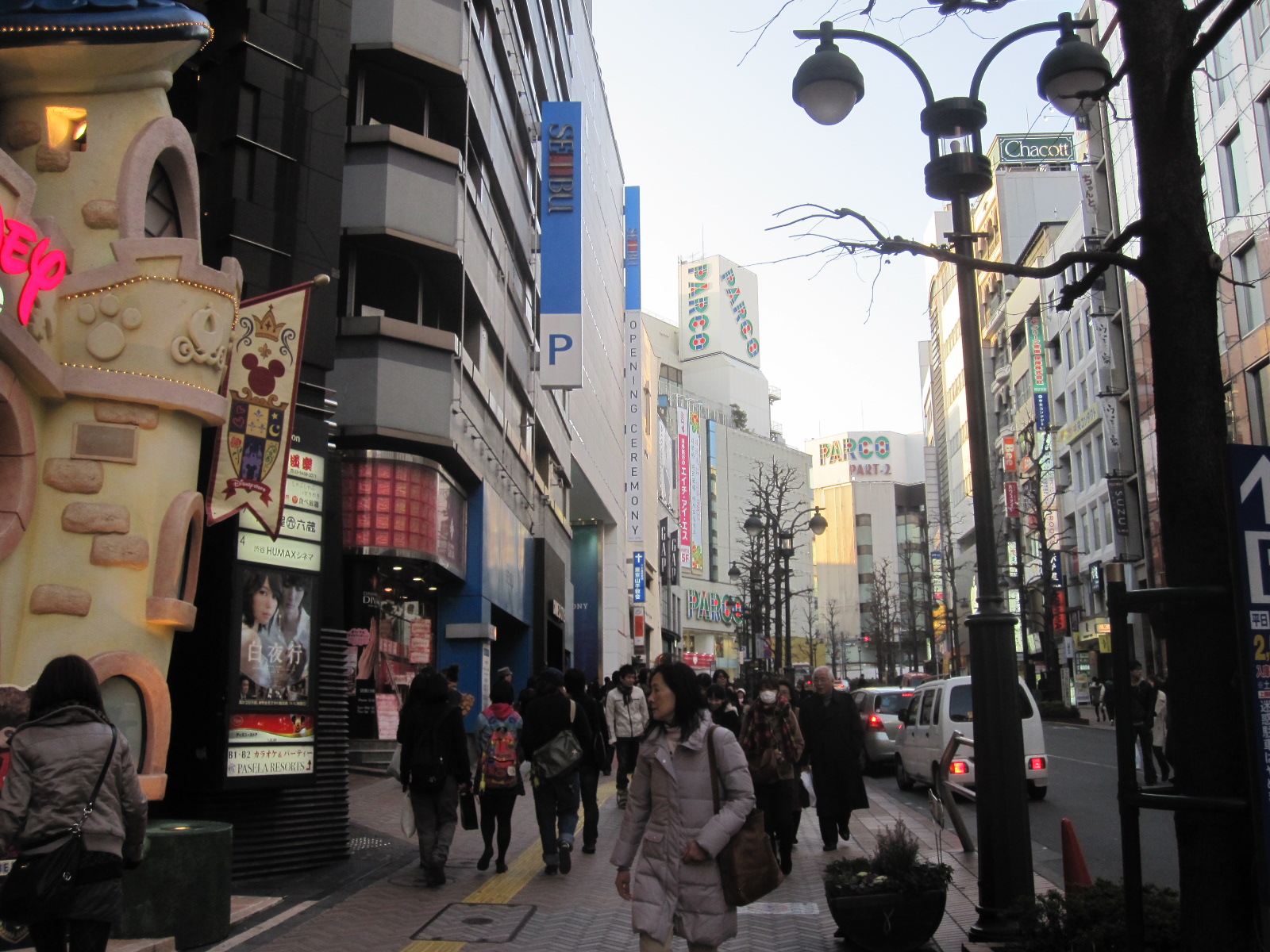
I walked through Shibuya station. There were long queues in front of the public toilet.
There were also long lines at the bus stops.
The ground floor of a department store, banks and other offices were open to the public. Many people abandoned to go back to their homes and stayed in such places. (see the top picture)
I walked westward and arrived in my house midnight. It took about walked 3 hours and half.
No serious confusion was found in towns and streets. Convenience stores and mini super markets were open throughout the night. They opened their toilets to the people. Bread, rice balls and other easy-to-eat foods were all sold out.
The garbage boxes at the convenience stores were overflow. This was one of the differences from usual situation.
Many ambulance cars ran throughout the night.
Tokyo’s damage was limited. I feel big sorrow for the victims in Tohoku.
2011-03-05
Parks & Museum @ Komaba: March 5, 2011
Their works are not so famous outside Japan. (The most well known Japanese literature works may include “The tale of Genji”, waka (tanka) and haiku and Kawabata Yasunari’s novels). However, their influence has been strong inside Japan on the nation’s culture and people's life.
I walked about 500 meters from Kobama park and arrived in another nature-rich park. It is called Komabano Park. The country’s first agricultural school was open here in the Meiji period. The school later developed into the agricultural department of the University of Tokyo. The place was later used by the Tokyo University of Education. It became a public park after the 1980s.
Natural forest remains here. Many birds were flying.
The members of a local community group were making charcoal today. A member explained --
They made instant furnaces using drum cans in the ground this morning. Then they put wood peaces in the furnaces and heat them up at about 300 degrees C. It woul take about eight hours to complete.
The group is trying to grow fireflies in the park. The insect grows only where the nature is clean. So, if they successfully grow fireflies, it means the park keeps clean environment.
The charcoals will be put into the creeks in the park to clean the water. It is an interesting story.
Map: The Museum of Modern Japanese literature
Map: Komabano Park
2011-02-27
Tokaido Walk(6) Fujisawa-Chigasaki (off Tokyo): Feb 27, 2011
I re-started my Tokaido walk after a winter pause (of about 2 months). It was my first Tokaido walk this year.
I walked from Fujisawa to Chigasaki in Kanagawa Prefecture.
Old Tokaido has converted into National Route 1 around Fujisawa.
Shops and houses stand along the road. Some houses are built in traditional style.
JR Tokaido railway runs south of old Tokaido route. The seaside was quite near from Tokaido in the Edo period. But it is several kilometers from the route now (as new lands have been developed after the Meiji period).
A historical road (Oyama road) to Oyama Shrine branches off from Tokaido in Hiratsuka City, about 4 kilometers west from Fujisawa). The shrine was built on Mt. Oyama.
Visiting Oyama was popular among Edo residents in the Edo era. People walked Tokaido westward from Edo, and turned north here to Oyama. It is 20- 30 kilometers from the shrine, but its gate has been built here.
I walked in Chigasaki City.
Pine trees remain along the road here. Many trees are more than several hundred year old and some of them are 2 meter round.
The scene of Tokaido and pine trees at Chigasaki was drawn in Ukiyoe by Ando Hiroshige, a leading Ukiyoe painter in the Edo Period. I felt historical feeling.
2011-02-26
Spring Flowers@ Kitazawa-river Walking Path: Feb. 26, 2011
Spring at the corner and spring flowers began to open.
I walked green walking paths on the way to and from Hanegi Park to enjoy the Ume (Japanese plum) Festival. I found several spring flowers and plants.
They included:
Sasanqua: red flowers, evergreen tree)
Ume (Japanese plum): The impression is different when I see Ume in the parks and in the paths.
Pansy: I found the flower in many flowerbeds in the walking paths.
Cherry: There are special cherry trees which open their flowers earlier than usual cherry in front of Yamashita Station of the Setagaya Line. I enjoyed cherry blossom.
Turip trees: They do not yet have the leaves. New buds are growing.
Kitazawa-river walking path runs in the Shimokitazawa and Umegaoka area. Small creek flows along the path. A white egret was walking in the creek. Flowers were beautiful.
There are temples and shrines along the path.
I often visit a small temple called “Enjo-in” along Kitazawa-river walking path. The garden is well arranged. There is a small pond in the garden and carp swim in it. There are red and white Ume (Japanese plum) trees there. They grow lotus in the pots.
I also visited Ringenji temple and Kitazawa Shrine today. I found various signs of spring there.
Setagaya Ume Festival @Umegaoka:Feb. 26, 2011
Spring is at the corner.
It is getting brighter and the daytime is getting longer. It was very cold a few days ago, but it was rather warm today.
The Ume (Japanese plum) blossom is its peak now at Hanegi Park in Umegaoka, Setagaya ward in western Tokyo. The Setagaya local government and local communities hold Ume Festival now (early February – late February).
There are about 650 Ume trees in the park. Most of them open white and red flowers now. It was so beautiful and it smelled well.
Thousands of people gathered in the park. They included old men and women in the wheelchairs.
There were many open sky stalls of flowers and foods.
Special market was also held at Umegaoka station of the Odakyu Line. Local people (as well as the local community) were enjoying the festival.
2011-02-13
Shibuya:Feb. 13, 2011
We had a very cold long weekend. It snowed and the temperature went down below zero in Feb. 11th (national holiday) in Tokyo. Feb 12th (Saturday) was also cold. I stayed in and around my house.
Today was a bit warmer. I visited Yoyogi Park - Shibuya area.
There were fewer people than usual in the park as the air was still cold. Still, they were enjoying street performances, playing balls, reading etc. The sky was so blue.
I walked several hundred meters from Yoyogi Park to Shibuya. I dropped in some places including Tobacco and Salt Museum and shops on the way.
Shibuya has been said to be “the cultural center of young people” since the 1970s. Many stores and restaurants for young people, including Parco department store in the Shibuya Park Street, opened in the 70s and the town attracted the young generation.
Still, I felt tha.the town getting old as many buildings are more then 30 year old.
The scramble in front of JR Shibuya station is always crowded. Famous royal dog Hachi’s sculpture and the replica of the Easter islands Moai are around the station.
2011-02-12
Winter Scene @ Imperial Palace Gardens: Feb. 5, 2011
Imperial Palace’s East Gardens are one of the must-see places for tourist in Tokyo and I often visit there.
The gardens have many plants. Evergreens include pine and bamboo. Cherry and other trees have no leaves at this season.
The yellow plum (ume) has just opened its flowers. It smelled so nice.
Long-tail carps were swimming slowly in a pond in the Ninomaru Garden. The carp is a hybrid of Japanese and Indonesian carps.
I saw many foreign tourist as well as Japanese visitors in the gardens.
2011-01-30
Shinbashi, Shiodome: Jan. 30, 2011
We have very cold winter here in Tokyo this year. It is not comfortable (and probably not good for my health) to walk long in the strong north wind. So, I had a short walk today.
I visited Shinbashi – Shiodome area near Tokyo station.
Shinbashi is known as the birthplace of Japan’s railway. The country’s first railroad services started between Shinbashi and Yokohama in 1872, five years after the Meiji Revolution.
There is a locomotive in the open space in front of current Shinbashi station. There are many other railway-related monuments and facilities – including railway museum – in the area.
The east side of Shinbashi station is called Shiodome area. The district was used for cargo distribution and parking of the trains until the 1980s.
Business and commercial facilities were redeveloped in the early 2000s. There are more than ten skyscrapers and 60 thousands people work here. The complex is called “siosite”.
I visited Advertising Museum Tokyo (Museum of Advertising and Marketing) in the complex. They held an exhibition of “the best advertisings for consumers in 2010”. It was interesting.
2011-01-09
Winter Scene and the 1st ume blossom @ Hanegi Park: Jan. 8th, 2011
We have had chilly days after the start of a new year. Tokyo’s temperature went down to sub-zero and we had ice in the pond and water pool here and there.
I walked to Hanegi Park in Setagaya ward. The park is famous for its ume (Japanese plum) blossoms.The Ume trees as well as gingko and other trees had no leaves. Brown color dominated the scope and it was typical winter scene.
However, I found white ume flowers open in a few trees. I did not expect to find a flower in new-year season. We usually have the ume blossom in February and March.
The sunset scene over the ume trees was beautiful.
2011-01-03
Hatsumode @ Yoyogi Hachiman, Meiji Shrine: Jan. 3, 2011
Many Japanese people visit shrines at the beginning of a year. It is called Hatsmode.
I visited two shrines today. They were Yoyogi Hachiman Shrine and Meiji Jingu Shrine.
Yoyogi Hachiman celebrate 800 anniversary this year. It is one of Tokyo’s oldest and well known shrines. Several hundreds people were making a line in front of the main building.
Meiji Jingu Shrine has only about 100-year history as it was built by the Meiji government. But it is huge and is one of the most famous shrines in Japan. The shrine is surrounded by deep woods.
Millions of people visit Meiji Shrine for Hatsumode every year.
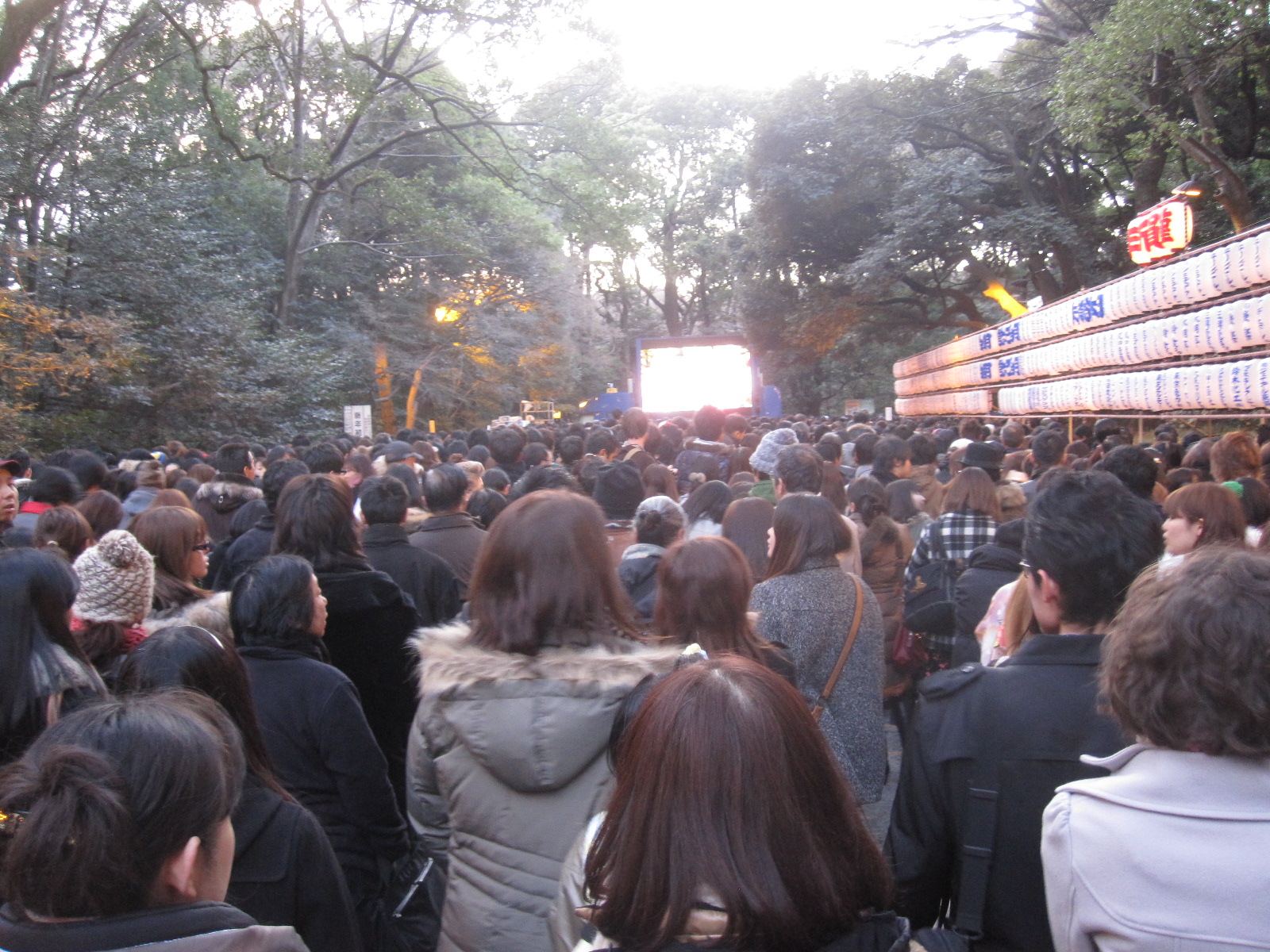
The road to the main road was so crowded. Tens of thousands of people were making a line heading to the main building when I arrived there. Policemen called that it would take at least two hours to proceed to the main building and I gave up.
I passed Yoyogi Park on the way Yoyogi Hachiman to Meiji Jingu Shrine. People enjoyed kiteflying. Two men were making soap bubbles. Many children were enjoying it.
Subscribe to:
Posts (Atom)