2025-05-14

Shimosuwa: May 10, 2025


I visited Shimosuwa for the first time in eight years. (article in May, 2016) On my last visit, I enjoyed walking along the Nakasendo and had the opportunity to see the Onbashira Festival. This time, I stayed there as a base for walking along the Koshu Kaido. 

Shimosuwa is a town with rich history.


There are four shrines in total at Suwa Taisha (Suwa Grand Shrine). The two shrines of Kamisha -- main shrine and front shrine -- are located on the south (southeast) side of Lake Suwa; the two shrines of Shimosha – Harumiya (the spring shrine) and Akimiya (the autumn shrine) -- are located in Shimosuwa Town, which lies on the north side of Lake Suwa. This time I visited Akimiya (the autumn shrine).

As I visited the shrine on a Saturday morning, there were not many visitors and the site was quiet. Shrine maidens were sweeping the grounds.

There are buildings such as the Kaguraden and the Heihaiden. The Kaguraden was decorated with a huge shimenawa rope, and two lion dogs were guarding the building.


Pillars made of giant cedar trees are erected at the four corners of the Heihaiden. The pillars are called Onbashira and are replaced every six years. Giant trees are cut down in the mountains and are transported into the shrines. This ceremony is called the Onbashira Festival and is a famous traditional event in Suwa. ( I saw it eight years ago as described above)


Thethere was a shukuba station town in front of Akimiya developed in the Edo era. Now it is lined with hot spring inns and souvenir shops.

The main inn of the shukuba station in the Edo era is preserved.

Hot springs gushed out from many places along the road.


2025-05-06

Horse Show @ Equestrian Park: May 3-5, 2025


Japan had a Golden Week holiday season from the end of April to the beginning of May. I stayed in Tokyo and went to see the horse show at Baji (Equestrian) Park in Setagaya, western Tokyo.


The park was where the equestrian competitions for the 2021 Tokyo Olympic Games were held. Show jumping competitions, dressage competitions, dressage demonstrations, reprises, horse riding experiences for children, and other events were held over the three days from Many 3rd to May 5th.


Equestrianism has become more popular since Japan's eventing team won a bronze medal at last year's Paris Olympics. Many people visited the site to see the event, and on the final day, several thousand spectators gathered.


Top Japanese athletes, including an Olympic bronze medalist, participated in the jumping competitions. The audience cheered loudly at the impressive jumps.


The photo shows a rehearsal of the reprise by the Metropolitan Police Department's cavalry. It's surprising that some of them have been doing horse riding for only three years.


There were many stalls and kitchen cars at the venue. There were also many visitors with children. I enjoyed many aspects of the event.

Setagaya Line: April 30-May 1, 2025


The Setagaya Line is a short railway line with a total length of 5.0 km。The line runs through Setagaya City, western Tokyo. It mainly runs through residential areas and has 10 stations. The trains have only two-cars, that brings us nostalgic atmosphere.


The Setagaya Line will celebrate its 100th anniversary on May, 2025 since its fully open in 1925.


To mark the 100th anniversary, some trains are running with commemorative plates in this period. 


The most popular train is one with cat illustrations. There are also cat paw prints painted inside the train.


People were waiting for the train to pass in front of a small railroad crossing.

The average number of passengers per day is about 50,000. People use the line for commuting to work, school, shopping, etc.

The line is one of the most striking sights in Setagaya City.

2025-04-16

Seasonal flowers & fresh green: April 12-16, 2025


The cherry blossoms are almost over, and the season is turning from late spring to early summer in Tokyo.

During my walks in western Tokyo, I find various seasonal flowers as well as new green leaves in many places.


Tulips and rapeseed flower were in full bloom on April 12nd in the flowerbeds in Roka Park, Setagaya City. Primary colors such as yellow and red stood out.


I also saw late-blooming cherry blossoms in the park.


Azaleas were beginning to bloom in Hanagi Park on April 16th.


New green leaves were beginning to sprout on the ginkgo and other trees in the park.


New leaves were growing on tulip trees on the nearby walking paths.

It was fine weather today, and the temperature went up to 23°C.

Cherry @ Gotokuji Temple: April 9, 2025


Cherry blossoms started in Tokyo in late March. Since then, the blossoms lasted until today, longer than originally expected, as cold and rainy weather continued through early April.

The beautiful flowers were still in bloom when I visited Gotokuji Temple today.


Many foreign tourists were visiting the temple. They were enjoying the Japanese cherry blossoms and taking photos.


The cherry flower petals were gradually falling and covering the ground.

This year, I was able to enjoy the cherry blossoms for more than 10 days. The season will soon turn from late spring to early summer.

2025-03-31

Cherry blossoms: March 30, 2025


The cherry blossoms are in full bloom today in Tokyo, according to the Japan Meteorological Agency.

I walked in the walking paths and parks near my house and enjoyed the flowers.


It was cold and cloudy today, but many people were enjoying cherry blossom in the parks.

At Hanegi Park in Umegaoka, families and friends spread sheets on the ground and enjoyed drinks and meals.


Pink flowers were fully open in the walking paths and in the shrines.

The cherry blossoms will fall in a few days. It will soon be April.


2025-03-29

Tokaido 57 Walk (3) Yodo-Iwashimizu Hachiman: Mar 29, 2025


I started today’s walking from Yodo shukuba station and proceeded to Iwashimizu Hachimangu Shrine.


It is said that a castle was first built in Yodo around the 15th century and many rulers used it as their base. At the end of the 16th century, it became the residence of Chacha (Yodo-dono), one of the wives of Toyotomi Hideyoshi. In the first half of the 17th century during the Edo period, a new Yodo Castle was built and existed until the Meiji period.


The castle ruins are now preserved as a park. Some stone walls remain.

A shrine has also been built on the site.


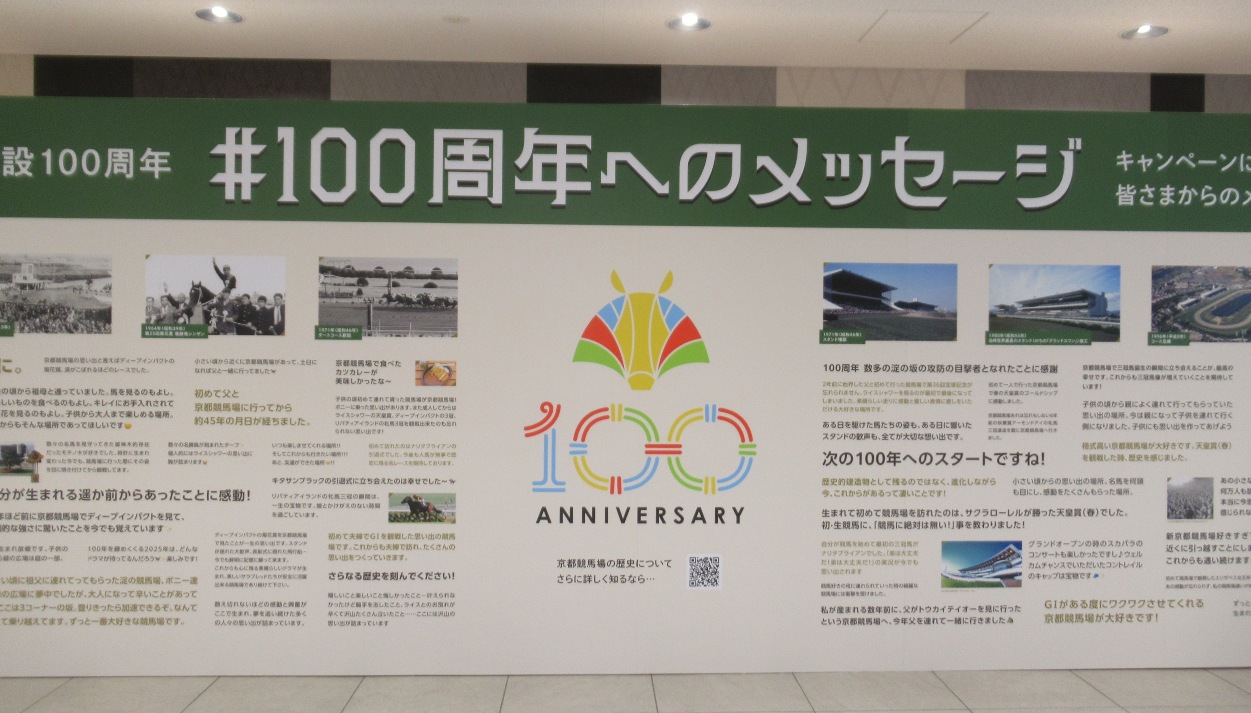
Part of the area where the shukuba station once stood is now the Kyoto Racecourse. It opened in 1925 and is celebrating its 100th anniversary this year.


It is one of Japan's leading racecourses.

It has huge studium seatings, betting booths, theater rooms, restaurants, shops and many other facilities in addition to a horserace course. It can accommodate more than 100,000 spectators.


There were no races today, but quite a few people gathered. Some of them were buying betting tickets for the horse races. Here, horse races from all over the country were broadcast in the form of a public view, and people enjoyed betting while watching.

Others were visiting with their children. Families were enjoying meals, while kids were running around on the grass. (See the 2nd photo)


Many early-blooming Kawachi cherry trees were planted near Yodo, and it is good time to see them. About 200 cherry trees were planted along the waterway, about a 10-minute walk from Keihan Electric Railway Yodo Station. (See also the 4th photo)


The Yodo River (Uji River) and two tributaries (Katsura River and Kizu River) flow close together in this area. The Tokaido road runs along the right bank of the Yodo River, sometimes through towns.


Then, it goes sometimes through fields.


Walking about 3 kilometers from Yodo shukuba, I crossed the Yodo River.
 

Then, I arrived at an observation tower. From there, I could see the view of the Yodo River and the Kizu River merging. (See the top photo)


The Tokaido left Kyoto City (Fushimi Ward) and entered Yawata City when I crossed the Kizu River.


Iwashimizu Hachiman Shrine here was built in the 9th century and is one of Japan's leading Hachiman shrines. It stands on Mt. Otokoyama, which is 143 meters above sea level. Many of its buildings are registered as national treasures. (See also the 3rd photo)


I went up the mountain in a cable car. The panoramic view of Kyoto City was impressive from the observation deck.