2025-03-27

Tokaido 57 Walk (1) Yamashina Oiwake-Fushimi: March 27, 2025


The Tokaido is widely known as a historical road which connected Edo (Tokyo) and Kyoto in the Edo period. As it had 53 shukuba stations between the two cities, it is usually called “the Tokaido 53" (the Tokaido with 53 stations). The road was developed in the early 1600s on the order of Tokugawa Ieyasu, the first Shogun of the Edo Shogunate. The route is about 500 km long. I walked the entire route between 2010 and 2015.


An additional route was built by the orders of Tokugawa Hidetada, the second Shogun, around 1620. The route is about 50 km long, from just before Kyoto to Osaka. Four additional 
shukuba stations were established along this route, making a total of 57 stations, including the 53 stations from Edo to Otsu. For this reason, the road from Edo to Osaka is often called the Tokaido with 57 stations.

Ten years after completing my walks from Tokyo to Kyoto, I decided to walk a part of the Tokaido 57 stations from the junction to Osaka.


The fork in the road to Osaka is on the way from Otsu (the 53rd station on the Tokaido) to Kyoto (the goal of Tokaido 53). It is located at Oiwake in Yamashina Waurd, Kyoto City. There is a sign that says Kyoto if you go right, and Osaka if you go left. (See also the top photo)


On the road to Osaka, I first walked through Yamashina Ward. The surrounding area is mostly residential, but there are also vegetable fields.

As today is a weekday, I saw scenes of daily life such as people working in stores, nursery teachers taking care of children at a kindergarten, and elderly people taking a walk.


Along the road, I found signposts from the Edo period. 


I also found a ruin of milestone.


There are also many temples and shrines around the road. Zuishin-in Temple is famous for the legend of Ono no Komachi, a beautiful poet and famous in Japanese history, and for its plum blossoms. (See also the 2nd photo)


After walking for about two hours, I entered Fushimi Ward in Kyoto City. There is Fushimi Inari Shrine, which is worldly famous among tourists, in the area.

After a total of about four hours of walking, I arrived at the site of Fushimi-juku, the 54th shukuba station from Edo (Tokyo). Parrs of the area has been converted into a shopping arcade.


2025-03-24

Camp Zama in Kanagawa Prefecture: March 22, 2025


There are more than 130 U.S. Military bases and facilities in Japan. Many of them (more than 70% in area) are in Okinawa Prefecture, but some of them are in Tokyo and Kanto district. 

They include Fleet Activities (navy facilities) in Yokosuka (Kanagawa), Navy air facility in Atsugi (Kanagawa), Yokota Air Base (in Tokyo), and U.S. Army’s Zama Camp.

I visited Camp Zama as it was open to the public today. (They had a cherry blossom festival, although cherry was not yet open this year).

The camp locates in Zama and Sagamihara cities in Kanagawa prefecture. The headquarters of the US Army, Japan (USARJ) is here. Troopes are not usually deployed here.

The camp is about 2.3 square km. They have residential houses, schools, shops and other living facilities in addition to military facilities here. 

I entered the camp through the main gate (See the 3rd photo).

Many open-air stalls were set in the streets. They sold foods and souvenirs. 


A children's play area was set up


Many people – both visitors from outside and the camp’s residents – attended the festival. (See also the 2nd photo)


Japanese people are also working here in the camp. I found a desk to recruit Japanese people to work here.


Visitors can use only cash and credit cards and cannot use mobile cash and other digital moneys. I found such information on a board at the end of a line to the restaurants and shops.

I visited military bases in Okinawa and Yokota Air Base in the past. I found many things when in such bases.


2025-02-08

Ume Festival @ Umegaoka: February 8, 2025


Japan is being hit this week by the coldest wave of this winter. Heavy snow is reported in many parts of Japan, including Hokuriku, Tohoku and Hokkaido areas.

Tokyo also has had cold days, but no snow has been recorded so far.


The ume (Japanese apricot) festival started today in Hanegi Park in Umegaoka area, Setagaya City, and I visited there. There are about 600 ume trees in the park.


The ume trees were about 30 % in bloom.

It was a fine day. The sky was blue. I found a halfmoon in the sky。(See the top photo)


There were many people in the park.


Japanese white-eye birds were flying over the trees to collect honey.

Spring is around the corner.

2025-01-16

Imperial Palace, Tokyo Station: Jan.10, 2025


The year of 2025 started. 

I had business in the central part of Tokyo and walked around the Imperial Palace. It was a beautiful day.


I enjoyed the senary of the Outer Gardens of the palace. There are hundreds of pine trees there. Skyscrapers stand beyond the trees.

Many people visit the Imperial Palace, including the Outer Gardens, in the first days of year. The places were not so crowded today.


I met some joggers, foreign tourist and Japanese visitors.


A group of foreign visitors were taking photos with the bridge (Nijubashi) to the main gate.


The Tokyo Station area was not so crowded either.


The new year holidays officially ended on January 7th in Tokyo. However, I found signs to celebrate the year here and there.


2024-12-28

Hakone: Dec 26-27, 2024


I visited Hakone to relax my year-end days in the hot spring.

I stayed in the Moto-Hakone district, which locates in the south-east side of Lake Ashi (Ashinoko).


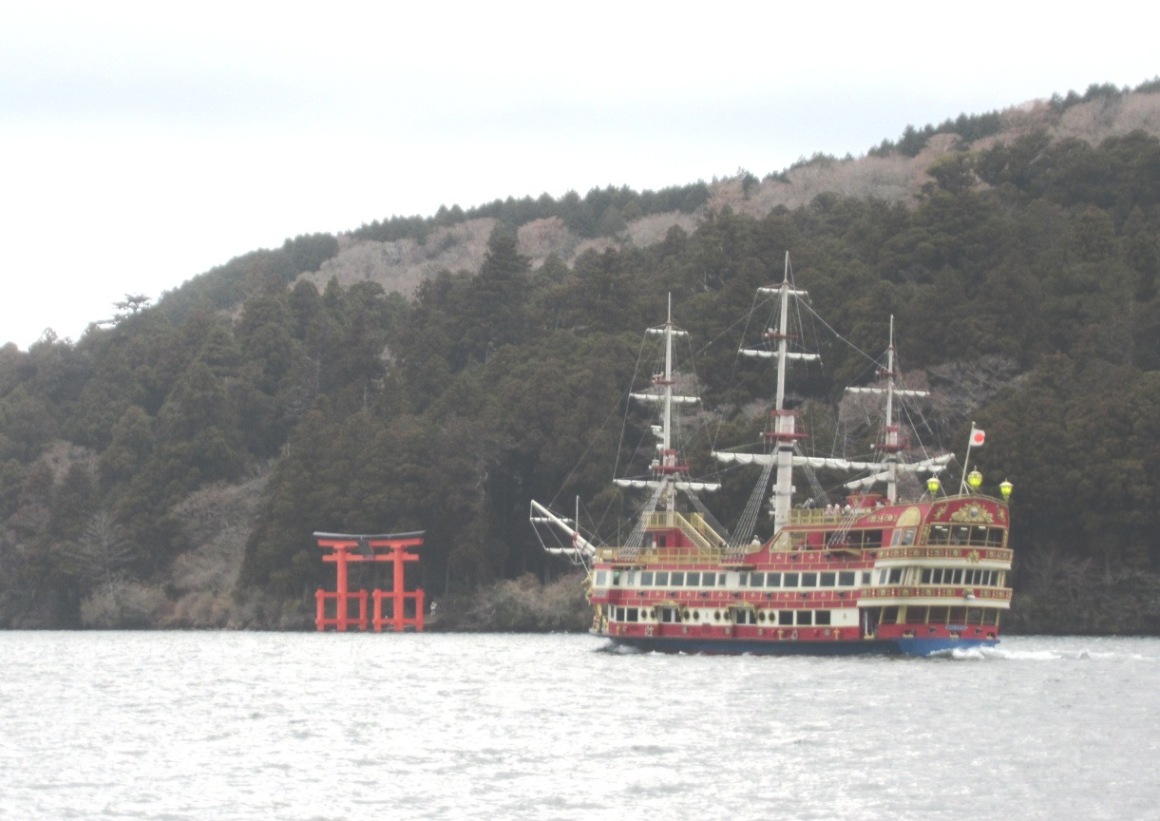
There is Hakone Shrine in the district. The main gate of the shrine is built on the lake. (See the top photo)

I found many people making a queue to take good photos.


People walk up steep stairs from the lake to the main shrine on a hill. There are tall cedar trees at the sides of the stairs.


There is another approach to the shrine. Several gates stand on the approach.


Preparation for a new year was underway in the main building on a hill.


The dragon-shaped sculptures at the shrine fountain were impressive.


There remains an old Tokaido street of the Edo era in this area. Cedar trees are preserved on both sides of the street. (See also the 2nd photo)

Old atmosphere remains in this part.

Old street has been converted to modern national route in this part. Ceder trees stand at the sided of the road. (See the 3rd photo)


I visited Hakone several times. One of my visits was made in 2011 as a part of my Tokaido Walk from Tokyo to Kyoto. (See Tokaido Walk's Hakone page on May, 2011

I found some changes in Hakone in the last 13 years. One of them was increasing number of foreign tourists. I saw many visitors waiting a  tour boat.


We can expect good views of Mt. Fuji from Hakone.

I was not fortunate enough to see a clear view of the mountain. There were some clouds covering the mountain. (see the 4th photo)

I, however, saw a good vies of Mt. Fuji from Sako River district, about 20km east from Hakone, on my way back from Hakone to Tokyo.


2024-12-22

Special horse event @Equestrian Park: Dec. 21, 2024


In the eventing (horse trials) competition of equestrian sports in the 2024 Olympic Games in Paris, 
Japanese team acquired a bronze medal. It was the first Olympic medal for the country in the equestrian sports in 92 years.


The team was called “shoro Japan” or Japanese team with elder members. The team became popular in the country after the Olympic Games, partially helped by the friendliness of the nickname.


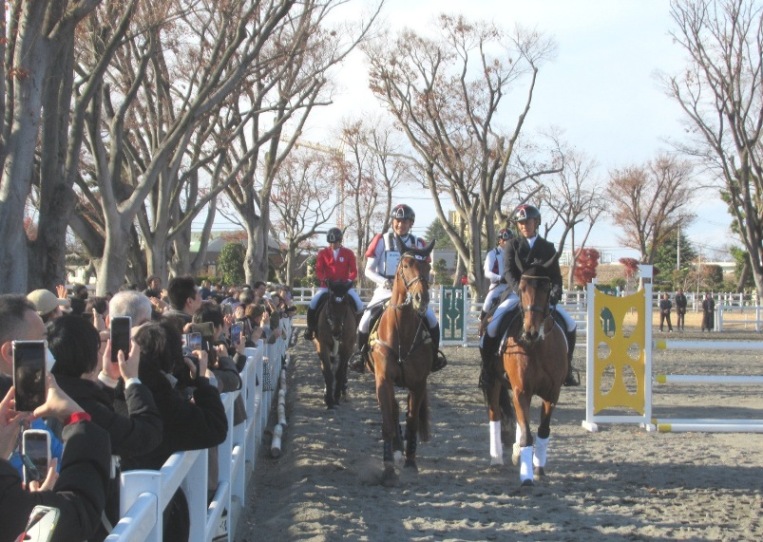
There was a special event with the team members held in the Equestrian Park in Tokyo. The weather was good and the autumn color was beautiful today.

They played model performances in the three events -- dressage, cross-country and jumping.


Hundreds of audiences welcomed four members of the team.


Mr. Kazuma Tomoto performed dressage. It was so elegant. (See also the 2nd photo)


Mr. Yoshiaki Oiwa performed jumping. He rode the horse for the first time today, but he easily crossed the bars. (See also the 3rd photo)


Mr. Ryuzo Kitajima and Mr. Toshiyuki Tanaka played cross-country riding. They ran fast, jumped over various objects including a automobile, and jumped into the water. (See also the top photo)

I enjoyed the event very much.


2024-11-17

Autumn Color: Nov. 17, 2024


It is reported that autumn is getting shorter year by year affected by the global warming in Japan.

People in Tokyo felt the start of autumn in September decades ago. Now, many people feel it starts in October. The season of autumn color is also getting later.

The autumn color started part by part in Tokyo in these days.


I visited Gotokuji Temple in Setagaya City, western Tokyo. Parts of maple trees were red while others were green.

The temple was crowded with foreign tourists (as usual).


The gingko trees began to change to yellow in Hanegi Park in Segtagaya.

 The leaves of tulip trees were also turning to yellow in a walking path in the area.