I
walked old Tokaido route in Yokohama for the first time since 2010.
Tokaido
was a road which connected Edo (Tokyo) and Kyoto in the Edo era. It was about
550 km. It had 53 shukuba stations, where accommodations were ready.
I
walked whole route of Tokaido and visited 53 stations, including Yokohama,
between between 2010 and 2015.
The
historical sites are preserved as they were about ten years ago. Still, I found
some changes in the town.
There spread Kanagawa shukuba station in the area near JR Yokohama station in the Edo
era. The shukuba station was about 3km long.
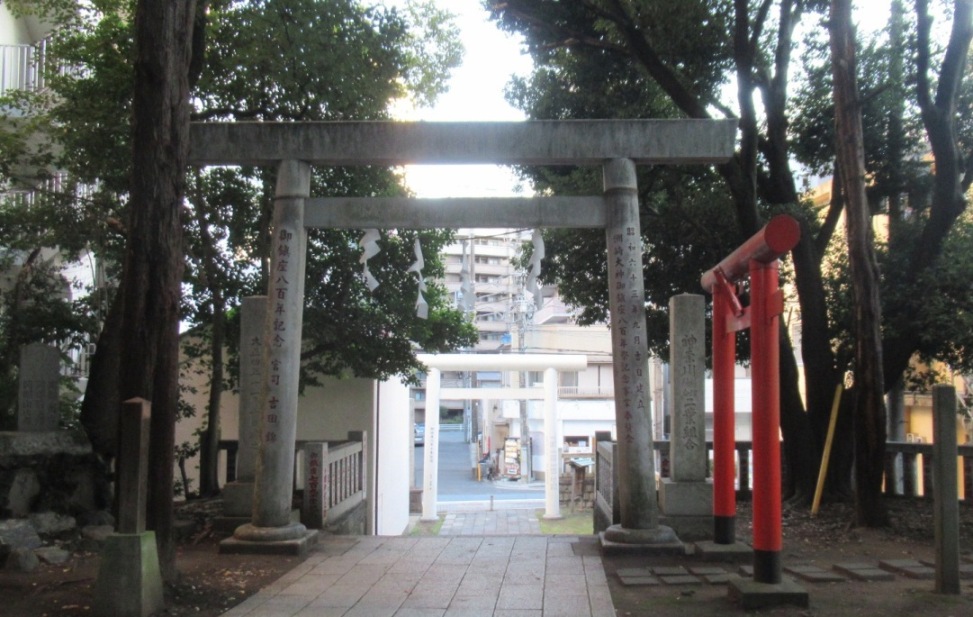
Main
inns were built around Takinogawa River in the Edo era. (See the top photo) The
buildings have been disappeared. Only the sign boards remain today.
Many
temples remain along aold Tokaido.
Some
of the temples were used as residential sited of foreign peoples, who visited
Japan from Europe and the U.S. in the late Edo era and early Meiji era (late 19th
century).
James
Curtis Hepburn, an American missionary who introduces Hepburn-style Latin
alphabet to Japan, once stayed Jobutsuji Temple.
Old
Tokaido has been converted into residential roads, shopping streets and wide
main roads. JR Tokaido Line and other railways run along Tokaido. (see also the 4th photo)
The
Kanagawa port located in front of Susaki Shrine. New lands have been made after
the Meiji era. So, we cannot see the sea today from the shrine. (see the 2nd photo)
Tokaido
runs on a hill in some part. The landscape of the port from the hill was
beautiful in the Edo era and many Ukiyo-e were drawn from the place.
Many
apartment houses stand here today.(see the 3rd photo) Some memories remain along along the road.
A
traditional Japanese-style restaurants remains along the street. Oryo, the wife
od Sakamoto Ryoma (Japanese hero in the Meiji Revolution ear) once worked here.
Nearly
3 million people use JR Yokohama station every day in 2022. It is the 3rd
largest number after Shinjuku and Ikebukuro in Tokyo respectively.


%EF%BD%B3%EF%BD%B8%EF%BE%97%EF%BD%B2%EF%BE%85.JPG)






.JPG)