2012-04-15

Peach Blossom@Yamanashi: April 15, 2012


Ask me three most popular spring flowers in Japan. They may be Ume (Japanese plum or apricot), Cherry and Peach.

I have already enjoyed Ume and Cherry this spring (as we can find many Ume and Cherry everywhere in Tokyo).

Peach is different. There are few gathering of peach trees in Tokyo. So, I had a short trip to Yamanashi Prefecture (about 100 km west from Shinjuku) today to enjoy peach blossom.


I visited Fuefuki City and Yamanashi City, both are in the central part of Kofu basin. They produce peach, grape, cherry and other fruits.


Tens of thousands of peach trees are planted in many places in and around the cities. The towns were colored pink when I saw them from the hill top.


Mountains lie behind the basin. Only the peak of Mt. Fuji was seen (as clouds covered the sky).


The peach flower’s pink was stronger cherry's.


A legend of the Peach Blossom Land has spread throughout East Asia (trigged by a work by Chinese poet Tao Yuanming in the early 5th century). It is a kind of Utopia. The scene reminded me of the legend.

2012-04-11

Cherry, Cherry, Cherry: April 6-9, 2012


Tokyo had its peak of cherry blossom this weekend. I visited several cherry spots.

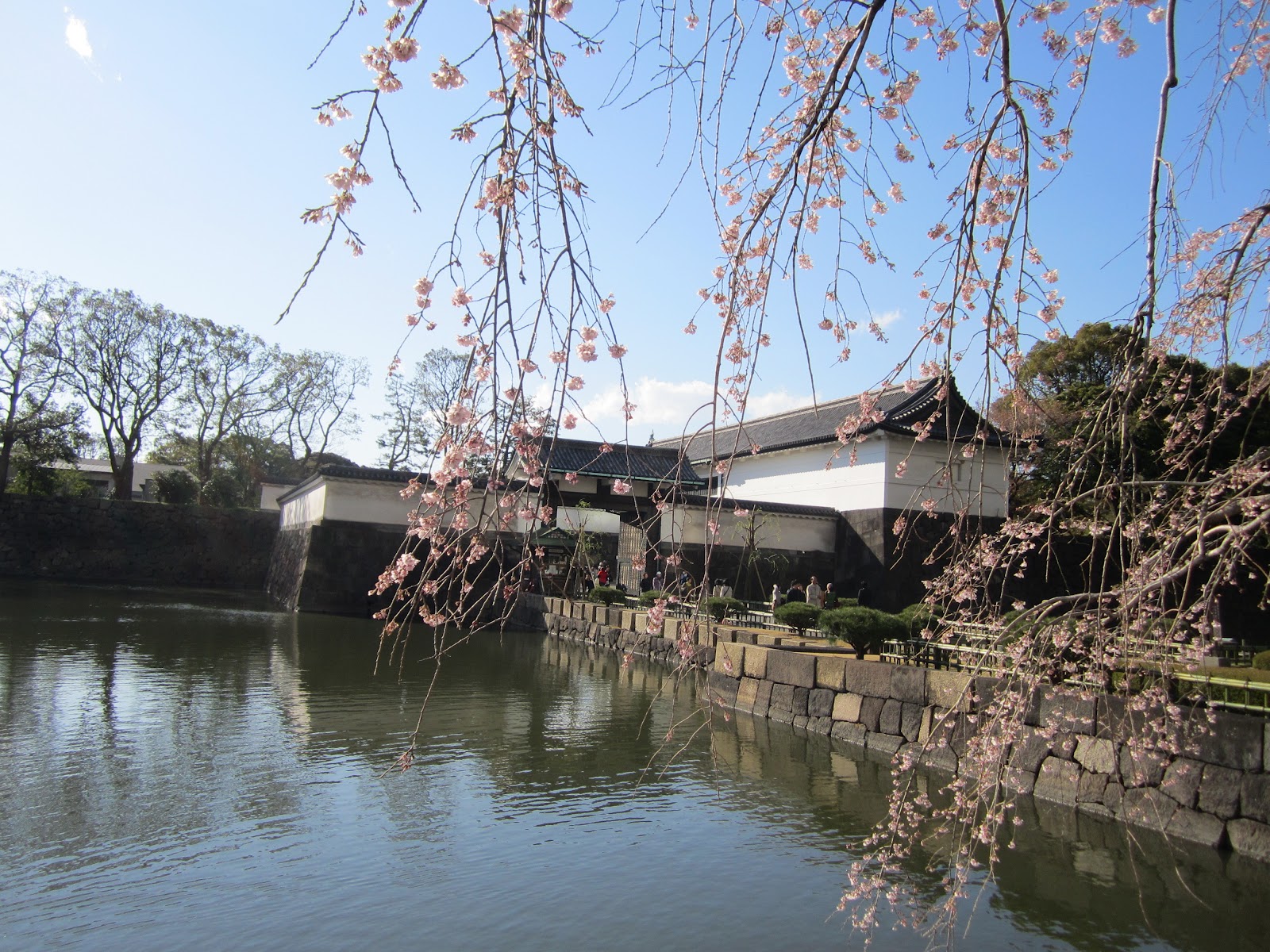
Chidorigafuchi, Imperial Palace:  One of most famous cherry spots in Tokyo. (Top)

Ueno Park: Tens of thousands of people gathered. It took ten minutes to move 50 meters in the “cherry street”.

Shinobazu Pond @ Ueno.


Sumida River Bank @ Asakusa:
Tens of thousands of people gathered. The cherries were planted by Shogun Tokugawa Yoshimune about 300 years ago.


Shinjuku: Cherries were planted along Koshu Kaido street


Shinjuku Central Park:
Tokyo Metropolitan Government buildings stand behind cherry trees.


Shiba Park:
Tokyo Tower stands behind the park.


Zojoji Temple @ Shiba
One of most famous temples in Tokyo.


Imperial Palace:
Overview


Imparial Palace moat


British Embassy@ Hanzmon
Kandagawa River:
Many other rivers (such as Meguro River, Nogewa River and Zenpukuji River) have cherry trees in their banks.


Tamgawa Josui Park:
Many othe parks and walking pathes have cherry trees.


Mono rail and canal @ Tamachi


Tamachi Station
Cherry trees are planted in many business streets. Business people enjoy the clossom on their ways to the offices.


A street in a residential area in Kawasaki city
Cherry tunnels are founs in many places in and around Tokyo

2012-04-01

Hanami@ around Yasukuni Shrine: April 1, 2012


It is April. The air is still cold, but the sunshine is getting brighter.


Tokyo’s cherry (finally) began to blossom. I walked Yasukuni Shrine and surrounding areas.


Only a few trees opened flowers in the shrine. The trees were still brown (not pink). People, however, did not wait. Thousands of people were there.


There were hundreds of open-air stalls along the main approach to the shrine. Many people enjoyed drinks and food on the carpets laid on the ground.


The local community held cherry festival in the shrine and music and other performances were played.


Yasukuni is politically controversial because the shrine consoles not only the spirits of ordinary war victims but also the souls of class-A criminals (of World War 2). Most people seemed not caring such controversy. They purely enjoyed the arrival of spring.


I walked along Chidorigafuchi, one of the most famous inner moats of the Imperial Palace. Many people were on the boats.


I walked to Chidorigafuchi National Cemetery where the souls of 2.4 million people killed in the World War 2 are consoled. No political controversy is there (unlike Yasukuni Shrine). There were only a few visitors there.


I also walked along a bank of outer moats the Imperial Palace from Yotsuya to Ichigaya. Young people including foreigners were enjoying Hanami (flower watching) picnic under pre-open cherry trees.

2012-03-25

Tama Zoo: March 25, 2012


Visiting zoo is my seasonal activity. I visited Tama Zoo in western Tokyo today.


It was a cold but fine day. Many families were there. Volunteers were working there to provide visitors information about animal and zoo facilities.


The corners of big cats, elephants, and rhino attracted many people as usual. Monkey corners were also popular.


Children were facing with orangutans and chimpanzees over glass walls.

2012-03-24

Shanghai (Off off Tokyo): March 22-24, 2012


I was in Shanghai for three days. It was my 3rd visit of the city in last 12 months. I again found new and old aspects as well as dynamic changes of the city.
Tianzifang is a newly-developing fashion & cultural area. Tens of small shops are open along narrow passages in a block (about 200m x 200m). They sell clothes, art products and many other small goods.


Playful minds and jokes were found in many places in the area. US President Obama in Mao jacket was printed in bags and purses. A fake certificate to allow drink drive (authorized by Chinese authority) was sold. I felt the mood was similar to Camden Market in London (sub-cultural atmosphere, cynical jokes).


The place was not so crowded as my visit wan on Friday. The situation is quite different in weekend according to a local person. Thousands of people visit the market and it is hard to move smoothly. They have to be careful to pickpockets.
Xintiandi (quite near from Tianzifang) is a symbol of Shanghai modern. The area was redeveloped in the last 20 years and turned into a smart night spot (It is, of course, interesting in the daytime, too). Most of the visitors on the Friday evening were foreigners and non-Shanghainese Chinese.


I walked around a cultural area in the northern part of the city. There remain many early 20-century buildings in the area. The main street (Duolunlu) was redeveloped and several sculptures were placed at the street’s sides. The buildings were renovated and turned into shops and cafe rooms.


I walked a block from the cultural area and found an outdoor market on the road. They were old fashioed. The fish dealers had no cold storage showcases and there were no good-looking package services.
The contrast of modern and old faces of the city was impressive.

2012-03-20

Higan@ Saifukuji Temple: March 20, 2012


Today is the mid-day of higan or equinoctial week. It is believed in Japanese tradition that the spirits of our ancestors return to our world this week. So, people visit their family graves and give their prays to their forefathers and mothers.


I visited a small temple (Saifukuji) in Setagatya ward. It was still cold but a fine day.

Many people visited the temple’s cemetery and devoted flowers to the graves.


Flowers were also devoted to Jizo sculptures.


Various spring flowers, such as ume (Japanese apricot) and violet, were fully open in the garden.


The flavor from flowers and incense (at the grave) was impressive.

Jindaiji Botanical Gardens: March 20, 2012


Today is Spring Equinox Day and is a national holiday. I visited Botanical Gardens at Jindaiji in Chofu City, western Tokyo, to enjoy spring flowers.

There were more than 200 Ume (Japanese apricot) trees in the Ume garden. Four colors of Ume – white, red, pink and yellow -- were fully open. It was the most beautiful Ume blossom I saw this year.


There were many families and couples. Elder people in wheel chairs were also enjoying the blossom.


A painter was painting the view in a big camvas.


I also found many spring flowers including Cornus officinalis (dogwood, sanshu), Far East Amur adonis (fukujusou), and Oriental paper bush (mitsumata).


I also visited Jindaiji Temple next to the gardens. The temple as well as the approach toi it was crowded with many visitors. I took a bowl of soba (Japanese noodle) at a restaurant along the approach. Jindaiji is famous as a place to offer good soba.

2012-03-18

Ume@ Enjoin, Hanegi Park: March18, 2012


Ume (Japanese plum) blossom usually finishes in early March in Tokyo. The situation is quite different this year. We had a peak of blossom today in many places.


I had a walk along Kitazawa-gawa walking path in Setagaya ward, western Tokyo. There were several places -- including Enjoin Temple and Hanegi Park – where I could enjoy the flower.


Enjoin is a small Shingon school (Buddhism) temple. There are several ume trees in the garden and the trees are well cared.


It was my forth time to visit Hanegi Park for ume blossom this year. Hundreds of trees opened their flowers today. I enjoyed both vise and flavor of ume.

Some cherry trees start to open their flowers in mid-March in Tokyo when the winter is warm. This year is different. We need to wait another two or three weeks for cherry season.

2012-03-11

A year after: March 11, 2012


A year has passed after the East Japan Great Earthquake and Fukushima Nuclear Plant accident.


Memorial events were held at many places throughout the nation.
People had silent prays in their houses, public facilities and at street corners at 14:46, when the earthquake occurred.


The railroad company (Tokyu) stopped their trains at the Setagaya Line to make prays.


I visited Shinjuku, Tokyo’s busiest commercial district. The town was as busy as ordinal weekend.
I walked through Shinjuku Gyoen Park.


It was still cold and the plum (ume) was not yet fully open. (A few weeks slower than usual). Daffodils were open. The lawn was brown.