2011-10-10

Showa Memorial Park@ Tachikawa : Oct. 10, 2011


It is autumn and today is the Sports Day (national holiday).


I visited Showa Memorial Park in Tachikawa city, about 30 km west from central Tokyo, to see cosmos blossom.


The Park opened in 1983 commemorating the 50th anniversary of Emperor Showa’s inauguration. The site was originally used by U.S. Air Force till the 1960s and returned to Japan.


The park is huge. It has large playing fields, ponds, flower fields and bird sanctuaries.


There are three cosmos flower fields in the park. The largest one has 2 million flowers. Pink, violet and white flowers were full open. Hundreds of visitors enjoy the blossom.


Yellow cosmos was planted in another field. Bees flied from a flower to others.


There are bases of Japan’s Self Defense Force and rescue operation organizations outside the park. Helicopters and small airplanes were parked. Many helicopters flew from here to Tohoku district after the Great East Japan Earthquake in March.

2011-10-08

Tokyo Bay Walk (1) Shinagawa-Oi: Oct. 8, 2011


Six of Tokyo’s 23 wards – Ota, Shinagawa, Minato, Chuo, Koto and Edogawa -- have seashore areas and they have developed Tokyo Port there. They have various types of terminals in the port.


I walked southern part of Tokyo Port -- from Shinagawa to Oi -- today.


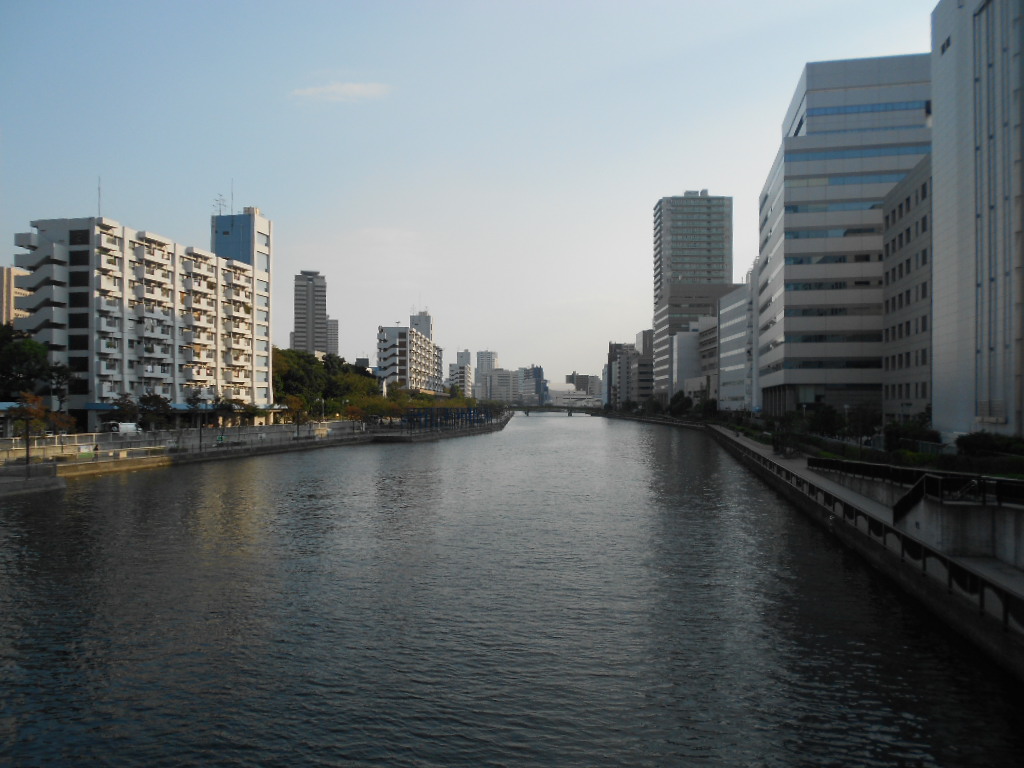
I left JR (Japan railway) Shinagawa station, crossed the Keihin Canal, and arrived at Shinagawa terminal. There are container terminals as well as automobile shipping places. They also have Tokyo Electric Co.’s power stations.


The area was very artificial. Only warehouses, distribution centers and other industrial facilities spread in the area. The roads are wide (so that trucks can move easily) and the industrial railways run in the area. I did not feel the atmosphere of daily life (of the people) there.


The lands are artificial made (by landfill after the Edo era). Artificial waterways ran through the areas.


I passed a bridge and moved into Oi Area. There are large container terminals in the area.


Japan’s 3 major sea line companies have their terminals here.


Tens of thousands of containers were piled in the yards. Huge crane machined boasted their existences.


Some of container ships are more than 300 meter long and carry nearly 10 thousands containers in each voyage. Cutting edge computer system is necessary to control millions of containers.


Container Tracks were waiting in lines to enter the terminals even in Saturday.


I attach a picture taken inside the terminal at another occasion in this blog post.


There are several natural parks in the area. Bird sanctuaries are there.

2011-10-02

Korean town @ Okubo: Oct 2, 2011


Tokyo has several foreigners’ towns. Okubo area has Tokyo's biggest Korean town. I visited theere.


Okubo area lies north of Shinjuku, Tokyo’s largest shopping and amusement area.


There are two main streets of Korean town – Shokuan-dori street and Okubo-dori street – and many small streets. About 70% (58 out of 85) of all food stores and restaurant at the two main streets were Korean (if my count is correct).


Most restaurants serve Korean BBQ. There are Korean food supermarkets, too. I saw girls made long queues at Korean-food takeout shops.

Video and CD shops are also popular. Korean actors and singers have became popular in the last decade in Japan.

Both Korean (1st -4th generations) and Japanese were there. I heard both Korean and Japanese languages when I walked the streets.


Narita: Oct.1, 2011


The name of Narita is known as a home town of the New Tokyo International Airport. But it has more than that.


The city hosts Narita-san Shinsho-ji, one of nation’s popular and important temples.


There are hundreds of restaurants and gift shops along the road from JR Narita railway station to the temple. Tens of restaurants serve unadon or eel rice bowl.


Visiting Narita-san became popular in the Edo era as it was only about 50 kilometers between Edo (Tokyo) and Narita and was easier than other famous shrines or temples (such as Ise Shrine) to visit. Temple town also developed.


Narita-san has a huge place. There are many buildings including the main building and towers in the area. There spread a nature-rich park behind the temple. Sculptures, stone monument and tombs spreads in the woods.


The temple was built in the 10th century and developed as one of the main temple of Shingon Buddhism.
Millions of people visit here in the new-year season.


Narita Airport is about five kilometers from the central city. The area is called Sanrizuka and Shibayama.


Strong resistance movement occurred when the government announced its plan to open a new airport in the mid 1960s. Far left extremists joined the movement and it took more than 10 years before the airport opened in 1978.


Sanrizuka was farming area and the royal family’s stock farm was there. Now, a memorial park keeps the Imperial farm’s history.


Airplanes fly over the houses in Sanrizuka.

2011-09-28

Urayasu:Sept 24, 2011


Urayasu City, eastern neighbor of Tokyo, is famous as a home town of Tokyo Disney Land.
But the city made headlines in different sense. Many places in the city were liquefied, which made headlines after the Great East Japan Earthquake in March.

About three quarters of the city’s land were reclaimed after the 1960s. That was the cause of wide liquefaction.


The damages of the earthquake still remain here and there.

I found many holes, gaps and cracks in the pavements when I walk around the city. The grounds in the city sports center were still out of use as repair works were still necessary.


Old Edo River flows between Tokyo and Urayasu. Buildings stand at both side of the river. Fishing boats went up and down.

2011-09-18

Sendai, Ishinomaki@Tohoku; Sept 17-18, 2011


Six months have passed after the Great East Japan Earthquake and tsunami disaster. I visited Sendai, Ishinomaki and other hard hit places in Miyagi Prefecture, Tohoku district. It was a painful visit.


People’s life seemed to have returned normal in the central part of Sendai, Tohoku’s largest city with a population of one million. The damages of the buildings and roads are being repaired. I saw people enjoying shopping in the malls.


The coastal areas were quite different. I walked about 10 kilometers from Sendai railroad station to Arahama area, which was washed out by tsunami.


Destroyed cars and other rubbles remained in the fields. Crane cars and other construction vehicles were working to dispose them.

They grew rice in the fields lasy year. They were covered by Japanese silver grass today. The rice is not expected to grow for several years as the soil is still salty.


Only the cement bases left at the places where houses stood before the disasters.

There stood a destroyed gas station along a main road. The inclined polls showed the strong power of tsunami.

I visited Arahama elementary school which licates about 300 m from the sea. Anout 200 people escaped onto the roof of the school just before the tsunami. They were rescued day after.


Now, the school is closed and motor bicycles and other things left behind were placed in the ground.


Ishinomaki is about 40 kilometers east from Sendai. The city was most seriously hit by the quake and tsunami. More than 5000 people were killed or missing.

Many houses in the coastal area and riverside were washed out. Some boats were still on the ground.


The city hospital in the harbor area was abandoned. The neighboring drugstore was in the water.

No one was there. Only the sound of wind the singings of insects were heard.


The land sank down by maxmum 80 centimeters after the quake. Many parts are under the water. Sandbags were piled up here and there.
Thousands of abandoned automobiles were plied up. A mountain of rubbles was also seen.

Many shops and restaurants were seriously damaged and closed. Traffic policemen controlled the cars in the corners as the signals were still out of order.


People's lives seemed to be hard. I was a bit released when I saw people having walks with their dogs and having chattering on the bank of old Kitakami River.


I also visited Matsushima and Shiogama, both locate east of Sendai.

Matsushima is famous for its beautiful seaside scene. The town itself was not so seriously hit by tsunami as the island in front of the town prevented the waves (The islands were heavily damaged). Many tourists were here.


The sea moss and oyster were seriously damaged in the Matsushima and Shiogama bay.

2011-09-16

Kabuki@Shinbashi Enbujo Theater: Sept 11, 2011


I


 usually visited Kabuki-za Theater in Ginza to see Kabuki. (see July 22, 2009 article)

Today, I visited Shinbashi Enbu-jo theater as Kabuki-za is now under construction.


The theater is three-story structure and has 1428 seats. Music, dance show and other performances are played besides Kabuki in the theater.


Today’s programs included a succession ceremony of traditional Kabuki names (Nakamura Matagoro and Nakamura Kasho). Leading Kabuki actors including “living national treasure” Nakamura Kichi-emon and Sakata Tojuro attended the ceremony.

Belgium Beer Weekend @ Roppongi Hills: Sept. 9, 2011


I used to live in Belgium, so Belgium Beer weekend is a “must go” event for me.

This year’s event is held from September 8th to11th at Roppongi Hills.
They serve various kind of Belgium beer and some Belgium foods such as frits. Belgium beer is becoming more and more popular in Japan in last 10 to 20 years.

The terrace was crowded with hundreds of people when I arrived. I needed to wait more than 10 minutes to buy tokens (which is used to buy beer and foods in the event area) and another 5 minutes to get my beer.


Japanese as well as foreigners were there. Most of them looked young. It was Friday night.


The organizer expected to attract more than 18 thousands visitors in four days.

2011-08-27

Tokaido Walk(15) Ejiri-Fuchu: August 27, 2011


Hot summer will soon be over (hopefully). I restarted my Tokaido Walk.


I walked from Ejiri, the 18th shukuba station from Nihonbashi, to Fuchu, the 19th.


Ejiri is in Shimizu Ward in Shizuoka city. The town is famous for its port. They have developed such industries as fish food production, wharehouse, transportation and marine related machines. It also boasts its football team (Shimizu S-Pulse), Jirocho, one of the nation’s most famous chivalrous heroes in the 19th century, and Chibi Maruko, a cute manga heroine.

Some buses are painted with Chibi Maruko-related characters.


Kusanagi, between Ejiri and Fuchu, is historically famous. Yamato Takeru, Japan’s legendary hero in the country’s founding era (about 2000 years ago), had a famous fight here. A shrine is built to commemorate the event.


Houses spread along Tokaido here. I also found many horticulture farms here.


2011-08-13

Sri Lanka(3) Nature & Animals (off off Tokyo): August 7-12, 2011


I always find animals during my 1 week stay in Sri Lanka.

I enjoyed safari 3 times.


My first safari was at Minneriya National Park near Polonnaruwa in central Sri Lanka. The park is famous for elephants.


I found about 100 elephants gathering around water pools (for drinking water and taking bath).

Some group came out of bushes and moved through safari jeeps into green fields.  Baby elephants ran hard to follow adults.

It was so impressive.


My second safari was at Yala National Park in south east coast. It was famous for peacocks. Hundreds of them were walking elegantly.


I also saw buffaloes, wild hugs, deer, crocodiles, mongooses and other animals and birds.


I also enjoyed a boat safari at Ahungalla, south west coast. My small boat moved through a mangrove jungle. Birds flied over the trees. I was surprised when I found big water lizards, which were around 1.5 meter long, swimming in the water.


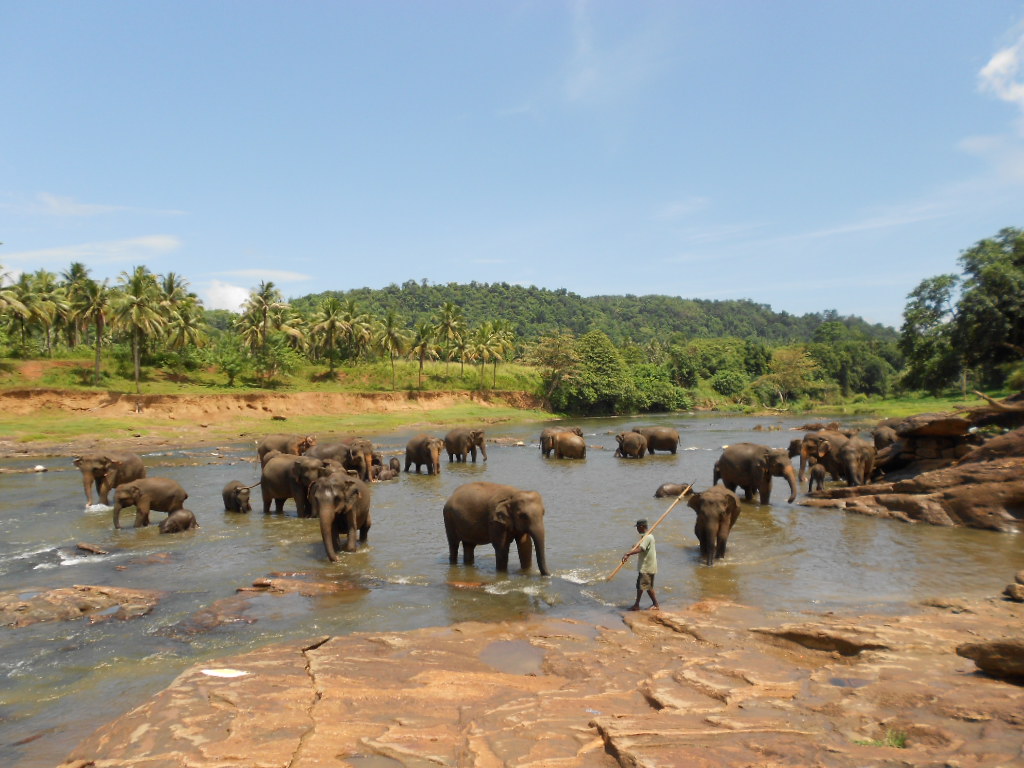
Another impressive experience was a visit to elephant’s orphanage at Pinnawala near Kandy. Around 100 elephants are cared at the center.


The elephants are taken to a nearby river twice a day for bathing. They walk in a public road on the way to and from the river.

People and dogs were also on the road when I arrived there.


Marine turtles are also cared in a protection center near Bentota, east coast city. Baby turtles were swimming in pools. Children enjoyed seeing (and sometimes touching) them.

They will be released to the Indian Ocean soon.
Only one turtlr out of 100 will grow up and return to the coast, acording to a staff member.

I saw dogs and cows everywhere (including in the public roads and fields) in the country. Even elephants walkes in the road.


I also found monkeys and squirrels in some places.


The Indian Ocian was beautiful. The sea was blue and the palm trees covered the coasts.


The waves made heavy sounds and I felt vibrations when I was sleeping in a sea-coast hotel.