2011-05-07

Tokaido Walk(9) Odawara-Hakone (off Tokyo): May 3, 2011


Hakone was known as the hardest place to pass in Tokaido. People had to walk steep roads to across the Hakone Mountains. Many tourists lost their lives here.


Japan’s old folk song says – “Mt. Hakone is a nationwide-famous hard place…”


I used the Golden week holidays to across the Hakone Mountains.

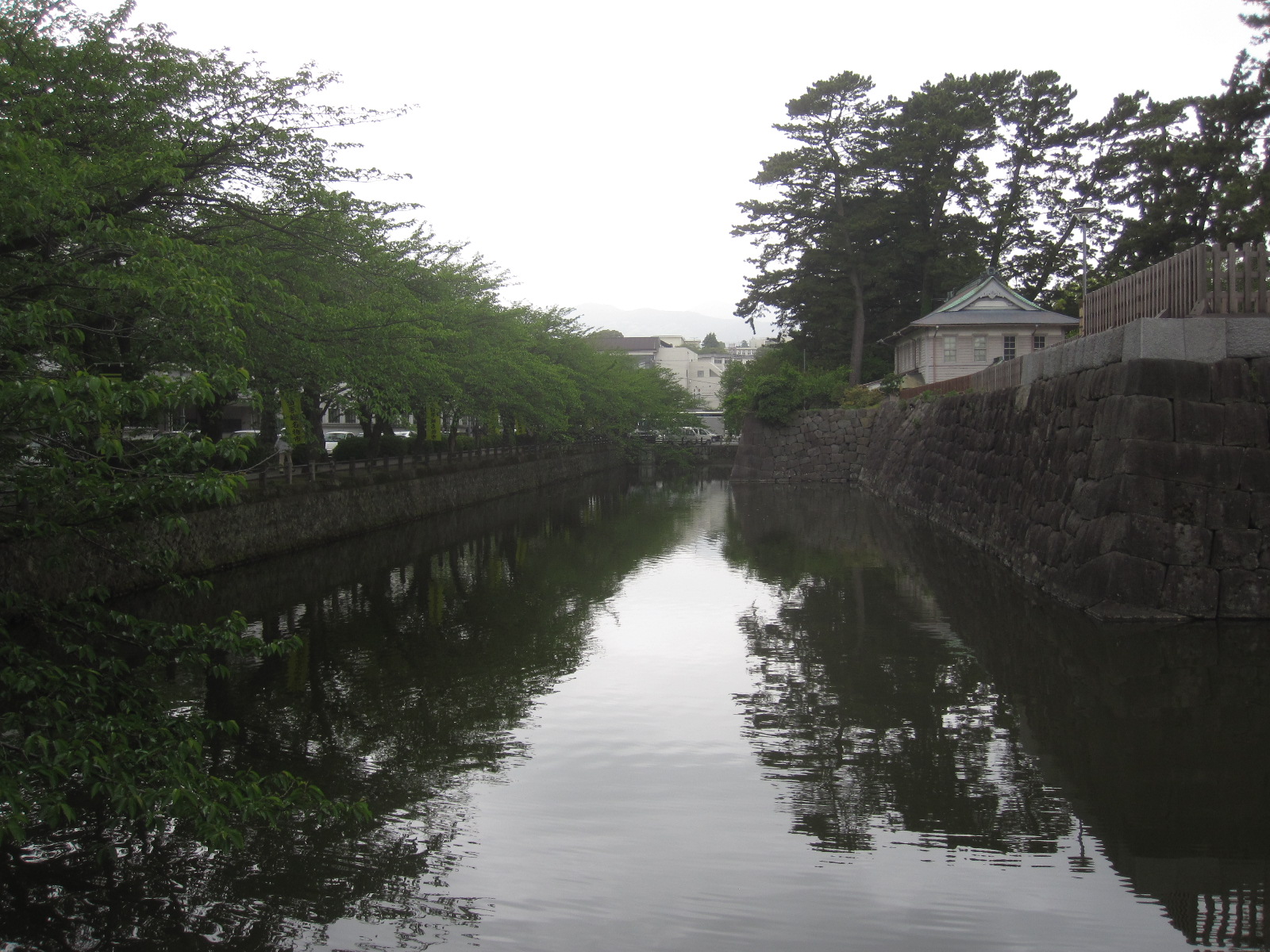
I started the walk from Odawara. They had a festival in Odawara Castle to honor the glory days of the Hojo family, the ruler of the region in the 16th century. Many people gathered there.


Hakone is now a National Park. There are modern roads and railways for the tourists. The old Tokaido remains as it was in some parts. Some parts have been converted into new roads. Other parts have returned to bushes and woods.


I walked about 5 kilometers on National Route 1 from Odawara. The road was steep. There were so many cars in the road.
The Hayakawa River runs along the road. I arrived at Hokone Yumito, the most popular hot spring resort in the region.

The old road appeared. It was covered with stones. The construction works were done by the Tokugawa government more than 300 years ago to keep the safety of the travellers.


The old road went through the woods in some parts. The air was fresh and the creeks were beautiful. Various birds sang. It was confortable to walk in the wood, but it was also hectic as the slopes were so steep.


The bushes were deep. It is recorded that rubbers were behind the bushes and some travellers were attacked in the Edo period. It is also recorded that many palanquin carriers worked here. Palanquin is a portable seat carried by 2-4 drivers.

The automobile roads were also steep. There were many u-turn curves.


I arrived at the coast of Lake Ashi after climbing the mountain nearly five hours. The lake was made by the eruption of Mr. Fuji. It was beautiful. It was a pity that I could not see Mt. Fuji as the weather was cloudy.
I walked the famous “cider street” along the lake. More than 400 old cider trees remain there. The trees are about 30 meter high and 3 meters in diameter. There were not so many tourists walking today (but many tourist were walking in the following day = May 4th).


I moved to the old checking station (Sekisho). The Tokugawa Government checked the people coming in and going out from the Edo area. Current buildings were reconstructed in the Showa era. The place was used in many novels and dramas.


The Hakone Shukuba station was around here. It is the 10th station from Nihonbashi in Edo (Tokyo).


Hakone is crowded in the Golden week every year. But it was more crowded than usual this year. It is because people prefer to visit places around Tokyo rather than having long-distance travel affected by the Great Tohoku Earthquake in March. I saw so many people in every viewing point and terminal, but I found not so many people in the old Tokaido trails in the woods.

Tokaido Walk (8)Ninomiya-Odawara (off Tokyo): April 29, 2011


I walked the last part of Kanagawa Prefecture’s coast area today. It was from Ninomiya to Odawara.

Most parts of old Tokaido have turned into National Rout 1 around here. The road runs through a narrow space between the sea and the mountains. Houses and shops continue (without any spaces) along the street throughout the area.


It is only 10-20 meters from the road to the sea in some parts. It seemed that they were not free from tsunami and other natural disasters. I found in many places the board signs which showed the height of the points from the sea level.


The sunshine was mild and the air was fresh. It was wonderful to see the sea and the mountains at a same time. Oranges and other fruits were planted in the mountains.


I visited a shrine in the middle of a mountain. There spread the Sagami Bay was just below. It was so beautiful.


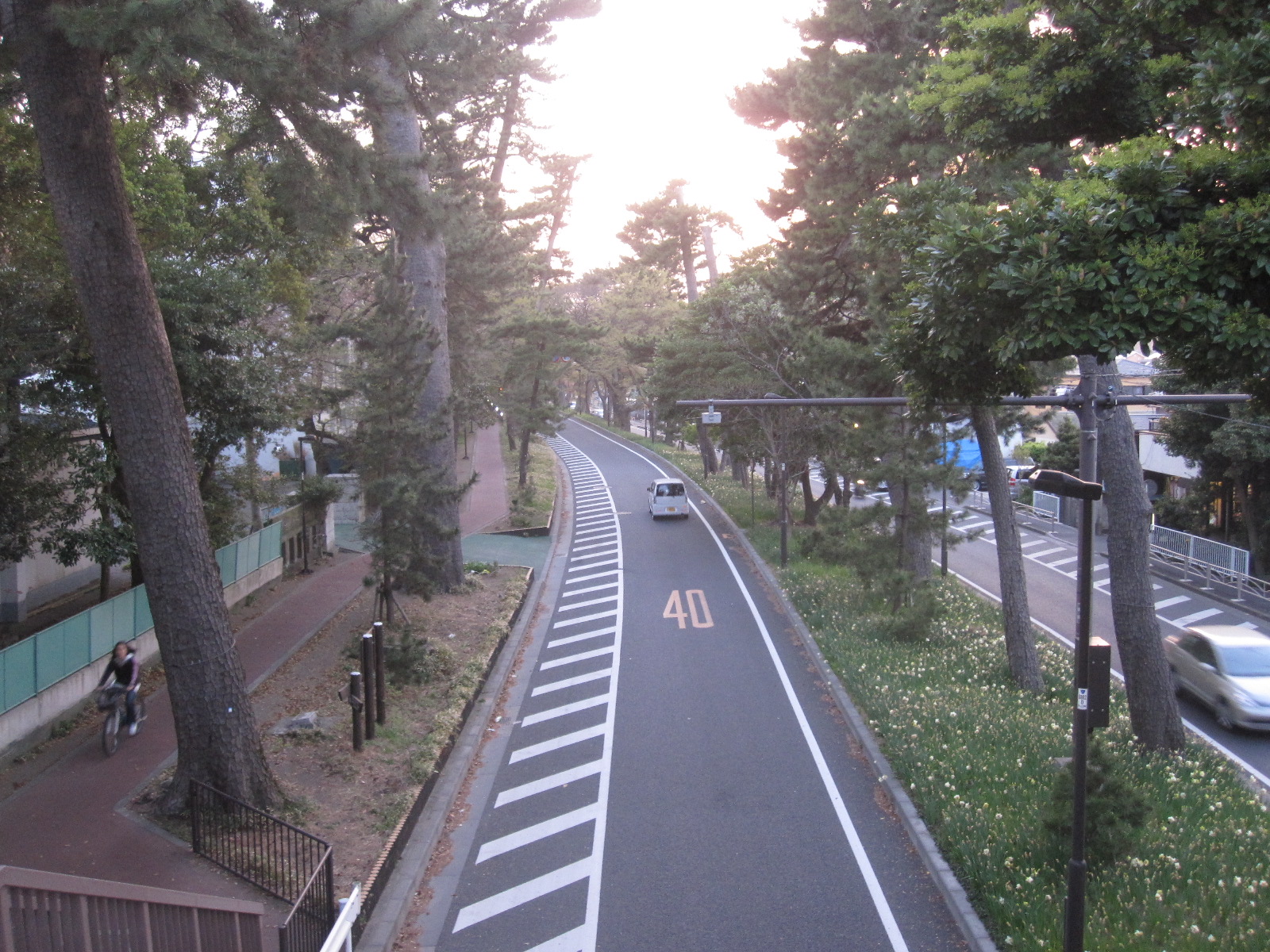
There remained pine trees in some parts of the street.


I walked westwards and moved into Odawara, the 9th shukuba station.


The city has been the center of the region (current west Kanagawa Prefecture) for hundreds years. Odawara Castle lies in the center of the city. The castle was developed by the Hojo Family, one of the famous 16th century daimyo (regional rulers).
The castle (reconstructed in the postwar period) attracts many tourists.
The city flourished as one of Tokaido’s terminals in the Edo period. It also developed handcrafts and food industries.

There are handcraft centers as well as tourist information centers in the city. One of them is along old Tokaido.

2011-04-26

Shanghai (off off Tokyo): April 25-26, 2011


I had early morning walks during my business travel in Shanghai.

I walked nearly 10 km each day. I visited Hongqiao Central Park and Soong Ching-Ling’s Mausoleum in the first day and Shanghai Zoo in the second day during my walks. All three places are in Hongqiao area, western part of Shanghai. They are also surrounded by tall buildings.


I found many people were playing Tai Chi and/or other exercises in the parks.


Hongqiao Central Park was developed about 10 years ago. The park was green rich and clean. A press center was set here during the Shanghai Expo in 2010.


Many sculptures of historical figures are placed. They include Charlie Chaplin, Mahatma Gandhi, and Roger Federer.


Soong Ching-Ling was a wife of Sun Yat-sen, a figure regarded as a founding father of Republic China. She is also known as one of the famous three Soong sisters. She later became vice president of China.


She was buried in a cemetery, which is now turned into a public place. People were playing Tai Chi.


Shanghai zoo opens at 6:30 every morning. Many elder people come to the zoo as it is free for them.


Some of them were playing Tai Chi while others were playing badminton. I also saw people dancing (jazz dance) and walking along the walk path.


Animals and birds were awake.
There are popular animals such as giant pandas, tigers, monkeys.
Collection of goldfish was unique and impressive.


The streets were getting busier while I was walking. Business people hurried to their offices. The traffic jam was heavy.


2011-04-20

Tokaido Walk (7): Chigasaki-Ninomiya (off Tokyo): April 16, 2011


More than one month has passed after the great earthquake and tsunami disaster. Series of nuclear accidents at Fukushima plants followed. I had not been so willing to go around outside in the first few weeks. But I restarted long-distance walk today.

I took part seven of my Tokaido walk. It was from Chigasaki to Ninomiya (about 15 km).

The weather was fine. The sunshine was bright and the temperature went up more than 20 degrees. We had unseasonable cold days in March (the temperature went down below zero). It seemed that the season changed from winter to summer in a week.

Chigasaki is about 10 km west of Fujisawa,the 6th station from Nihonbashi. I walked through residential areas and reached Sagami River. I found people enjoying sailing.

I entered into Hiratsuka, the 7th station (shukuba). Only the monuments (of old inns and gates) remain.


I walked westward and found a mountain in the right side. It is called Mt. Koma. The name originally meant a country (Koguryo) existed in Korean Peninsula more than 1000 years ago. Some people escaped from Korean Peninsula when their country was conquered and arrived here.

A shrine is built at the foot of the mountain. A festival was held when I visited.


I went into Oiso, the 8th station from Edo’s Nihonbashi.

Oiso is a small but famous town.

Japan’s first public beach was developed in the Meiji period here (Some other beaches insist the position). Many famous politicians, business tycoons and novelists built their summer houses in the town. They include Ito Hirofumi, Japan’s first PM in the Meiji period, and Yoshida Shigeru, PM and post-war leader.


Pine trees remain along Tokaido here.

I went down to the beach. Many surfers were waiting a big wave in the sea.

I moved westward and arrived at JR Ninomiya station. It is about 72 km from Nihonbashi.

2011-04-03

Cherry & flowers @west Tokyo: April 3, 2011


I walked walking paths in Setagaya ward, west Tokyo, to see cherry blossom and other spring flowers.


It was far colder than yesterday. Only 30-40% of cherry flower was open.


Many people were walking along the path and enjoying cherry blossom. Some were walking with their dogs.

Others were enjoying hanami (flower watching) picnics under the cherry trees. There wewrte fewer people than usual because of earthquake and tsunami disaster in March. They were also quieter than usual.


Many cherry trees have fait pink flowers (the trees are called Somei-Yoshino) while others have strong pink flowers.


I also saw Thunberg's meadowsweet, peach flower, pansy violet and other flowers.


Animals, birds, and fish also became active. I found a rat, egrets, geese, turtle and other animals. I also saw carps in a pond in a temple along the path.

2011-04-02

Cherry blossom: April 2, 2011


Three weeks have passed after the earthquake and tsunami disaster. The accident at Fukushima nuclear plant is still serious and quake-hit people are still spending hard time in Tohoku area.

Tokyo has been quieter. There have been fewer people in the streets, shops and restaurants (both in weekdays and weekend).

This is partly because of rolling blackouts and fewer-than-usual operation of trains. But there are other reasons, too.

People have had a fear that they might be exposed to radiations from Fukushima nuclear plant (about 200 km from Tokyo).

People have also shared a feeling that they should refrain from having fun ("it is not time to have fun").

I have refrained from having long-distance walks in last three weeks.

Season has changed in the meantime.


Cherry blossom started in Tokyo.


I visited Baji Park (Equestrian Park) and Kinuta Park, both are in Setagaya ward in west Tokyo) to see cherry blossom and other flowers. The blossom just started.

Swans were swimming in a pond, which was surrounded by cherry trees,  in Baji Park. I also dound a halcyon around a pond.

Number of people were enjoying picnic under the cherry trees. The number was fewer than usual and it seemed quieter than usual. People were talking about the quake and tsunami hire and there.


Map: Baji Park
Map: Kinuta Park

Tokyo scenes after earthquake: March-April, 2011


The earthquake and tsunami disaster hit Japan seriously. Nearly 30,000 people were washed out. Hundreds of thousand of people have lost their houses. More than 200,000 people are spending hard times in evacuation centers in Tohoku and north Kanto areas (Iwate, Miyagi, Fukushima and Ibaraki prefectures).

The nuclear trouble at Fukushima Dai-ichi plant has been serious. Factories, roads and railways were seriously damaged. Business activities stopped in some fields.


Tokyo is also affected. Rolling blackouts of electricity started after the quake. The number of trains was reduced at most of the lines. Some goods were sold out at shops.

The operation of escalators in railway stations was suspended.

There were fewer people walking in Tokyo station's underground passage. The lighes in the showwindows were off.

The damagas of the quake are also found in many places in Tokyo(though they are not so serious).

2011-03-12

Tokyo after Earthquake: March 11, 2011


Japan was hit by a series of big earthquakes and Tsunami on March 11th. Miyagi, Iwate and Fukushima Prefectures in Tohoku district, north of Tokyo, were seriously damaged. More than 1000 people were killed and tens of cities and towns were washed out by Tsunami and completely destroyed.

Tokyo was hit by a level 5 quake. I was then in a room at the 19th floor of an office building. The waves continued about 2 minutes and it swung widely and slowly. I felt seasick. There ran cracks in the walls of the room.

Outside the window, the antennas of Japan Meteorological Agency (about 20 meter high) were swinging widely. Highways were closed. There wewe no cars in the highway below me.


Trains and subways stopped operations throughout the day in Tokyo. Many people were forced to stay in the offices and public shelters. Many walked to their home.

I left Otemachi, central Tokyo, at around 9 pm to Setagaya, western Tokyo.

The pedestrian roads were crowded with business persons. I could not walk quickly.

The traffic jam on main roads was so terrible. There were so many cars. I wondered how much gasoline would be used in the night.

I walked through Kasumigaseki (where Japanese ministries are), Akasaka (commercial and but it hhad already stopped receiving new peoples. The staff said that they had already accepted as many people as it could.

I walked through Shibuya station. There were long queues in front of the public toilet.


There were also long lines at the bus stops.

The ground floor of a department store, banks and other offices were open to the public. Many people abandoned to go back to their homes and stayed in such places. (see the top picture)

I walked westward and arrived in my house midnight. It took about walked 3 hours and half.

No serious confusion was found in towns and streets. Convenience stores and mini super markets were open throughout the night. They opened their toilets to the people. Bread, rice balls and other easy-to-eat foods were all sold out.

The garbage boxes at the convenience stores were overflow. This was one of the differences from usual situation.

Many ambulance cars ran throughout the night.

Tokyo’s damage was limited. I feel big sorrow for the victims in Tohoku.

2011-03-05

Parks & Museum @ Komaba: March 5, 2011


I visited the Museum of Modern Japanese Literature in Komaba.

The museum is in Komaba Park, which has been developed on former Marda family’s house. Maeda family was the ruler of Kaga region (today's Ishikawa Prefecture) in the Edo era.


A special exhibition on Japanese literature in the Meiji period was held at the museum. The works of Japan’s great novelists including Natsume Soseki and Mori Ogai were displayed.


Their works are not so famous outside Japan. (The most well known Japanese literature works may include “The tale of Genji”, waka (tanka) and haiku and Kawabata Yasunari’s novels). However, their influence has been strong inside Japan on the nation’s culture and people's life.


I walked about 500 meters from Kobama park and arrived in another nature-rich park. It is called Komabano Park. The country’s first agricultural school was open here in the Meiji period. The school later developed into the agricultural department of the University of Tokyo. The place was later used by the Tokyo University of Education. It became a public park after the 1980s.

Natural forest remains here. Many birds were flying.

The members of a local community group were making charcoal today. A member explained --

They made instant furnaces using drum cans in the ground this morning. Then they put wood peaces in the furnaces and heat them up at about 300 degrees C. It woul take about eight hours to complete.

The group is trying to grow fireflies in the park. The insect grows only where the nature is clean. So, if they successfully grow fireflies, it means the park keeps clean environment.

The charcoals will be put into the creeks in the park to clean the water. It is an interesting story.

Map: The Museum of Modern Japanese literature

Map: Komabano Park