Showing posts sorted by relevance for query meiji Shrine. Sort by date Show all posts
2011-01-03
Hatsumode @ Yoyogi Hachiman, Meiji Shrine: Jan. 3, 2011
Many Japanese people visit shrines at the beginning of a year. It is called Hatsmode.
I visited two shrines today. They were Yoyogi Hachiman Shrine and Meiji Jingu Shrine.
Yoyogi Hachiman celebrate 800 anniversary this year. It is one of Tokyo’s oldest and well known shrines. Several hundreds people were making a line in front of the main building.
Meiji Jingu Shrine has only about 100-year history as it was built by the Meiji government. But it is huge and is one of the most famous shrines in Japan. The shrine is surrounded by deep woods.
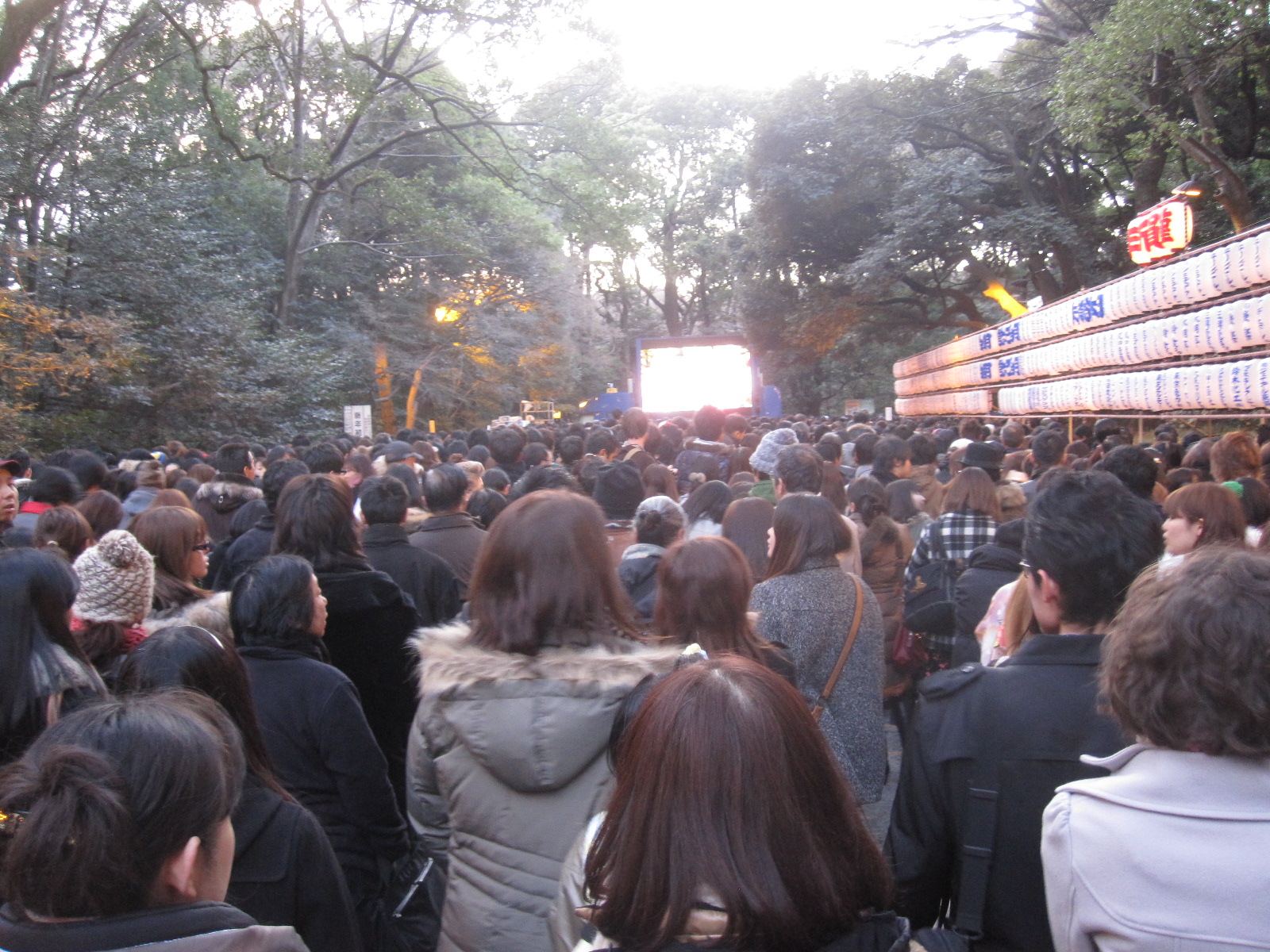
Millions of people visit Meiji Shrine for Hatsumode every year.
The road to the main road was so crowded. Tens of thousands of people were making a line heading to the main building when I arrived there. Policemen called that it would take at least two hours to proceed to the main building and I gave up.
I passed Yoyogi Park on the way Yoyogi Hachiman to Meiji Jingu Shrine. People enjoyed kiteflying. Two men were making soap bubbles. Many children were enjoying it.
2010-03-14
Shoin Shrine & Setagaya Castle: March 14, 2010
Japanese Shinto, the country’s natural spirituality, has long history. However, the shrines are not always old. Some famous shrines were built after the Meiji era. Such examples include Meiji Shrine, which honors the Meiji Emperor, and Shoin Jinja (Shrine).
Shoin Shrine is in Setagaya-ward, western Tokyo. The shrine honors Yoshida Shoin, a spiritual leader of the Meiji Revolution. He was born in Choshu, Yamaguchi Prefecture and became a teacher when the country was in turmoil at the end of the Tokugawa era.

He was executed by the Tokugawa Government just before the Meiji Revolution. But his students carried out the Revolution and became the leaders of the Meiji Government. They included Ito Hirobumi, Japan’s first prime minister, Yamagata Aritomo, powerful conservative politician who served several times as premier, and Takasugi Shinsaku, military leader of anti-Tokugawa Choshu local government.
Shoin is still respected by many people. I found a visitor who prayed at Shoin and his students’ tombs in very serious manner.
The copy of his school building “Shokason Juku” is in the shrine. The original is in Hagi City, Yamaguchi Prefecture.

I also visited the ruin of Setagaya Castle. The castle was built in the 15th century. Now the place is a park. There remain moats and mounds.
Shoin Shrine is in Setagaya-ward, western Tokyo. The shrine honors Yoshida Shoin, a spiritual leader of the Meiji Revolution. He was born in Choshu, Yamaguchi Prefecture and became a teacher when the country was in turmoil at the end of the Tokugawa era.
Shoin is still respected by many people. I found a visitor who prayed at Shoin and his students’ tombs in very serious manner.
The copy of his school building “Shokason Juku” is in the shrine. The original is in Hagi City, Yamaguchi Prefecture.
2012-06-10
Iris Fields @ Meiji Shrine: June 10, 2012
Rainy season began in Tokyo.
Japanese people traditionally enjoy iris in this season the season. I visited Meiji Shrine’s iris fields.
Hundreds of purple, light purple and white flowers were open in the wet fields.
There are three kinds of iris flowers in the fields. They are Ayame (Iris sanguine), Hana-shobu (Iris ensata var. ensata) and Kakitsubata (Iris laevigata).
It is easy for professionals to make difference between the three, but not for me.
The fields were made in the order of the Meiji Emperor. Many visitors enjoyed the flower.
I also walked around Meiji Shrine. There were many foreign and Japanese visitors as usual. It was also usual to see a wedding ceremony. They held a special Bonsai exhibition in the entrance space of the main shrine.
2009-09-17
Meiji Shrine 2009.9.13

Most Japanese people are influenced by Shintoism even though it is not clearly recognized by themselves. Nature worship lies at the center of Shintoism. Ancient Japanese saw the spirits of their ancestors in the mountains and deep forests and this worship developed into Shitoism.
The best place to share this feeling in central Tokyo is Meiji Shrine. It is relatively new (built in 1920), but is the largest and is the only shrine with deep woods in central Tokyo.
The paved road turns to a gravel path when you walk in the shrine through a big entrance gate (torii). Then, you may feel that you are in the different world. Twenty meter-high cedar trees block the sunshine. Only the footsteps and birdsongs are heard.
The best place to share this feeling in central Tokyo is Meiji Shrine. It is relatively new (built in 1920), but is the largest and is the only shrine with deep woods in central Tokyo.
The paved road turns to a gravel path when you walk in the shrine through a big entrance gate (torii). Then, you may feel that you are in the different world. Twenty meter-high cedar trees block the sunshine. Only the footsteps and birdsongs are heard.
The shrine was build to commemorate the Meiji Emperor and Empress. There are more than 80 thousand shrines in Japan and some of them have more than 1000 years history.
2013-01-06
New Year’s visit to shrines: Jan.1-6, 2013
I spent my New Year days to visit several shrines. There were findings in every shrine.
I visited Meiji Shrine on Jan. 6. The shrine is one of most popular shrines in Japan and attracts millions of people every year.
There were thousands of visitors making long lines in front of the main building. “Haru no Umi” (The sea in spring), was played in the shrine and was making New Year’s atmosphere.
People were writing their hopes in the fortune tablets.
They put sacred paper fortunes they had bought on the wires. New Year’s fortune goods were sold.
Open air markets offered various foods. Blood donation was asked in front of the shrine.
I was in Sengen Shrine in Shizuoka city on January 1st.
I visited Yoyogi Hachiman Shrine on Jan. 2nd. The calligraphy works written by school children were displayed.
I also stopped at a mosque near the shrine.
Old fortune goods are collected at the shrine and are burnt. The custom is called “Otakiage”. Big shrines prepare special boxes for collection.
The situation at small shrines is different. There was a fire to burn such goods at a small shrine (Rokusho Shrine) near my house on Jan. 3rd.
Visitors looked happy in every shrine. It was probably because fortune people usually make new year’s visit to shrines.
2023-09-18
Meiji Shrine: Sept. 17, 2023
Meiji Shrine is one of my frequent-visit places.
Some
information on the shrine is described in other posts. (e.g. an article ofSept. 13, 2022)
The shrine was crowded with many visitors, especially foreign tourists.
We got in the shrine through an entrance gate. (See also the top photo)
Then, we walked some 10 minutes before arriving at the main shrine buildings.
There are another gate standing just in front of the main buildings.
Many visitors were writing their wishes on a small tablet called ema, and hang them on a special boards.
The visitors’ wishes were written not only in Japanese, but also in many foreign languages. (see also the 2nd photo)
2010-07-05
Meiji Shrine, Omotesando@summer: July 3, 2010
Those who live in the western part of Tokyo often visit Meiji Shrine, Yoyogi Park and Omotesando area. I visited the area again to enjoy the shrine’s green and Omotesando’s busy shopping streets.
The shrine was crowded with foreign tourists. Many Chinese as well as westerners were there. It is summer holiday season.
The scene reminded me of the decision of the Japanese government to open its border for more Chinese tourists. The government on July 1st changed its border control rules, which enabled more Chinese tourists visit Japan without visa.
There was a wedding ceremony took place in the shrine. Many foreign tourists were taking pictures of a bride.

There were many votive tablets called “Ema” hung on several boards. Many wished were written in foreign languages.
A sports shop attracted more customers than usual at Omotesando Street. The Netherland beat Brazil last night in the FIFA World Cup in South Africa. They displayed the picture of Sneijder and other Dutch players in their large electronic panel. It was obvious that they quickly changed from (probably) Brazilian players.
I also visited Ukiyo-e Ota Memorial Museum of Art off Omotesando Street. They had a special exhibition of Hokusai’s famous “Thirty-six Views of Mount Fuji”. “The Great Wave off Kanagawa” and other excellent pictures were displayed.
The shrine was crowded with foreign tourists. Many Chinese as well as westerners were there. It is summer holiday season.
The scene reminded me of the decision of the Japanese government to open its border for more Chinese tourists. The government on July 1st changed its border control rules, which enabled more Chinese tourists visit Japan without visa.
There was a wedding ceremony took place in the shrine. Many foreign tourists were taking pictures of a bride.
There were many votive tablets called “Ema” hung on several boards. Many wished were written in foreign languages.
A sports shop attracted more customers than usual at Omotesando Street. The Netherland beat Brazil last night in the FIFA World Cup in South Africa. They displayed the picture of Sneijder and other Dutch players in their large electronic panel. It was obvious that they quickly changed from (probably) Brazilian players.
2012-12-31
New Year's Eve @ Meiji Shrine: Dec. 31, 2012
Today is New Year’s Eve. I walked around the city and found people were preparing for New Year’s events.
Meiji Shrine attracts more than millions of visitors every year. Huge wooden box was places in front of the main building. New year's tablets were put in the entrance gate of the main building.
Green trees were put around the shrine gates.
People enjoy special foods (Osechi ryori) in the New Year days. Stores were crowded with shoppers, some of them seek Osechi.
2013-06-16
Iris @ Meiji Shrine: June 8, 2013
Here again came the season of Japanese iris. I visited Meiji iris field in Meiji Shrine.
The field is in the wood. Thousands of purple and white flowers were open. Butterflies were floating and birds were singing.
Many visitors were taking pictures.
Rainy season will start shortly.
2009-09-17
Omotesando 2009.9.13

It’s too much to say that it’s like Champs-Elysees, but Omotesando is one of the most fashionable streets in Tokyo.Famous fashion brand companies open their shops there. Young people enjoy window shopping (and sometimes real shopping). The street was so crowded in the weekend it’s hard to walk fast. We hear English, Chinese, Korean and other foreign languages here.
Omotesando Hills is a new landmark in the area. The building is a bit queer. The floors are sloping and visitors walk upward or downward.The street was originally developed as a pass to the Meiji Shrine, one of the country’s most famous shrines build in the Taisho era (1912-26). It has turned into the shopping district in the post war era.
About 30 minutes slow walk from the subway Omote sando (space included in this case) station took me to the entrance of Meiji Shrine (see other blog post).
Subscribe to:
Posts (Atom)
