2020-03-24

Cherry Blossom @ Kitazawagawa walking path: March 22, 2020


The cherry blossom started in Tokyo.

It is about two weeks earlier than usual.

The coronavirus is spreading throughout the world now. The situation in Tokyo is better than Europe and the U.S., but the government asks the citizens to avoid having gatherings.

I visited Hanegi Park in Setagaya City.

I also walked along the Kitazawagawa walking path in Setagaya City, western Tokyo.

People usually enjoy cherry blossom picnics under the cherry trees.

I found some groups enjoying picnic under the cherry trees (neglecting the government's advises). Still, the number of such groups were fewer than usual,.


2020-03-21

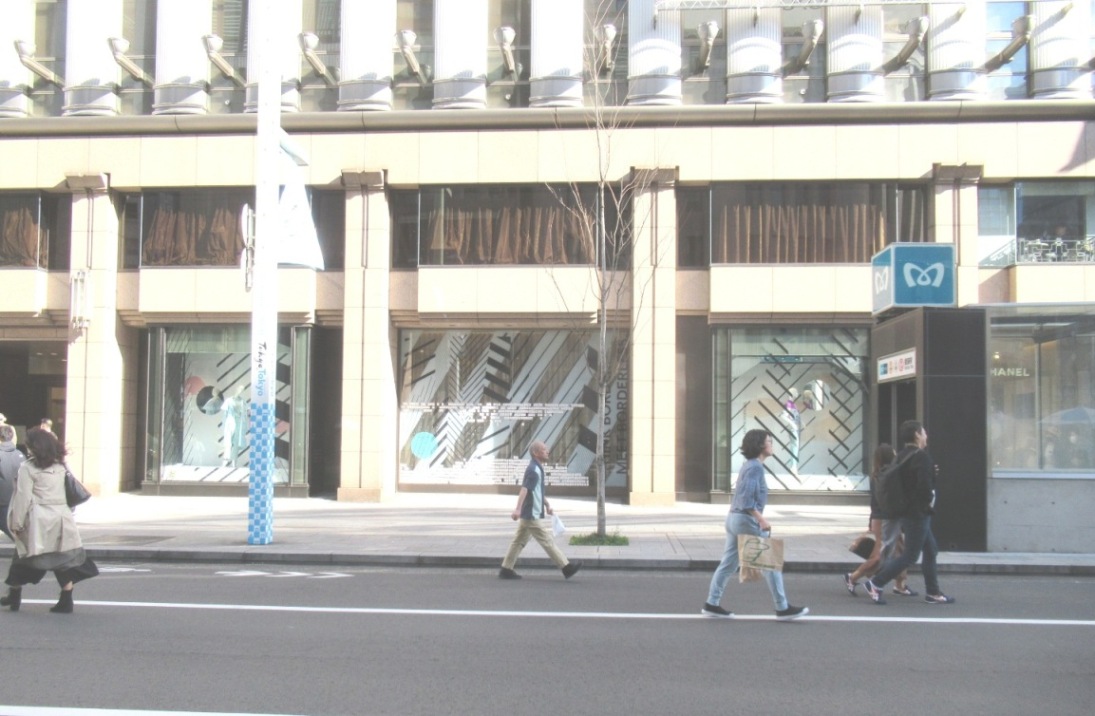
Ginza under corona shock: March 20, 2020


More than two months have passed since the coronavirus started spreading worldwide.
Japan’s situation is better than European countries and U.S. for now. The reported patients are less than 1,000 and the victims are about 30.

In Italy, nearly 50,000 patients have been reported and more than 4,000 have been dead.

It is a national holiday in Japan today. I visited Ginza.

The roads were vehicle-free today. They were less crowded than before, but were not empty.

There were fewer guests than usual in the shops.


Most people I found were Japanese. The area had been crowded with foreign tourists before the corona shock.

The promotion signs of the Tokyo Olympic and Paralympic Games were displayed here and there. I found many sign poles on the street (see the top photo). The parasols were printed with Tokyo Games information.

It is not sure when the situation will return normal.


2020-02-29

Tokyo on the alert for the coronavirus, Feb 28, 2020


With a spread of the coronavirus diseases, the lives of people in Tokyo have significantly changed.

There are fewer people walking in the towns. Trains are less crowded.

Many companies have asked their employees to work from home.

People have rushed to buy masks and other necessities. We do not find masks in the drugstores.

There were fewer people walking in the underground shopping centers and passways around Tokyo Station, I found.

This is a photo taken at an underground passway in Marunouchi, in the west of Tokyo Station. (See also the 2nd photo from the top)

The Character street in the Yaesu underground shopping area, which locates in the east side of Tokyo station, is usually crowded with Chinese and other foreign tourists. Today, I found only a few tourists.

The passways in Yaes underground shopping area were also quiet.

The situation on the ground was same. Only limited number of people were walking in the business streets in Otemachi close to Tokyo Station.

Most people were masks in Tokyo today. The photo shows a scene at Tokyo station. (See also the top photo)


2020-02-08

Ume Festival @ Hanegi Park: Feb. 8, 2020


The Ume (Japanese apricot) blossom began.

They started Ume Festival at Hanegi Park in Setagaya City, Western Tokyo.

It is still cold -- we had the chilliest day yesterday in this winter in Tokyo. Still, the days are getting longer and the sun light is getting brighter.

I enjoyed red, white and pink flowers of Ume with blue sky behind.


There were many people enjoying Ume blossom in the park

I found many of them wore masks to keep them out of infection of corona virus and other diseases.

Masks are out of stock in drugstores in Tokyo at the moment.

This is a photo taken a week ago in the Hanegi Park. I found the moon and Venus over the ume trees. 

Impressive!


2020-01-06

New year’s visits to shrines and temples: Jan 1-4, 2020


The year of 2020 started.

I made a series of visits to shrines and temples (hatsumode) to pray a happiness in this year.

There were long queues in most places, I found.

Here are scenes of hatsumode:

Setagaya Hachiman Shrine (See also the top photo). 

I visited there on Jan. 1.


Gotokuji Temple (Jan. 1) (See also the 2nd photo)


Rokusho Shrine (Jan. 3)

It is a small local shrine in Setagaya City. A Shinto priest was walking in a traditional costume.

Kanda Myojin Shrine (Jan. 4) (See also the 3rd photo)

It is one of popular shrines in Tokyo. People needed to wait two hours in a line to make their prays.

Lucky cards were tied on special shelves.

I found people enjoying their drinks after making prays. 

Yoyogi Hachiman Shrine (Jan. 4)

I had the impression that the queues of new- year's shrine and temple visits (hatsumode) are getting longer every year. Which may reflect the changes of life styles of Japanese people. Aging of the society may lie behind.


2019-12-30

History of Christians and churches in Nagasaki Prefecture: Dec. 28-29


It is not possible to talk about the history of Christianity in Japan without referring to the stories in Nagasaki Prefecture.

Many people in the area accepted Christianity in the 16th century; Nagasaki became a center of Christianity in Japan.

Then, the period of repression came. The Edo shogunate government banned the religion in the middle of the 17th century. Foreign priests were forced to leave the country and Japanese Christians were compelled to abandon their believes.

Some people did not follow the order and kept their believes secretly.

The existence of the hidden Christians was found when the European and American priests returned to Japan in the Meiji era, about 250 years after the religious ban.

There were many underground Christians in Urakami district in the Edo era. The place was later destroyed by the atomic bomb in 1945. (Visit “Memoriesof atomic bomb disasters in Nagasaki”)

Reconstructed Urakami Cathderal is now a center of religious activities.

Oura Church locates in the southern part of Nagasaki City. It was first built in 1865 by French priests. The discovery of the hidden Christians took place here. (See also the 2nd photo from the top)

Many hidden Christians lived in small villages in the mountainous areas in the Edo period. Priests were sent to these villages in the Meiji era. These areas included Shitsu, Ono and Kurosaki. 

They locate in the coastal area about 15 km from central Nagasaki City. The left photo is a scene of Shitsu settlement.

The Shitsu Church was built by a French priest Marc Marie de Rotz in 1882.

He also opened social-welfare facilities to improve people’s lives in the village.

The Ono Church was also built by priest de Rotz. (see also the top photo)

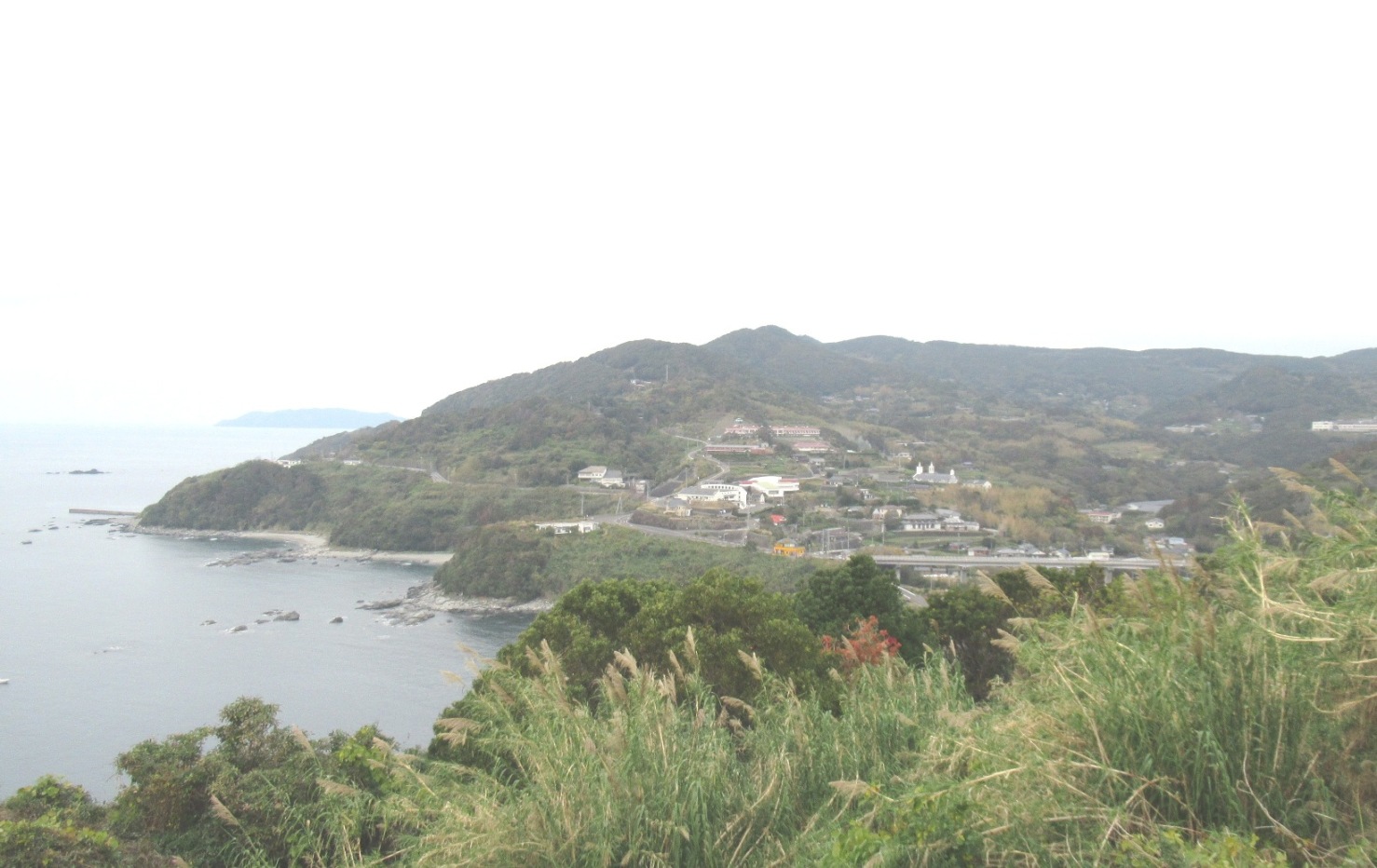
The 3rd photo from the top shows the scene of the sea from Ono.

The settlements of Shitsu and Ono are registered as the World Heritage sites.


Japanese novelist Endo Shusaku wrote a story titled “the Silence,” which focused on the repression on Christianity and hidden Christians. The monument is places in Shitsu.

Hidden Christians made prays using various camouflage measures. This Karematsu shrine in Kurosaki is used to make gatherings of the Christians.

The Kurosaki Church was planned by priest de Rotz and completes after his death.

Total 26 Christians were executed by crucifixion in 1597 in Nishizaka district in the central Nagasaki City. They are called the 26 Martyrs of Japan. A memorial and a museum were built in 1962.

Pope Francisco visited Nagasaki on Nov. 24, 2019. He visited several places including Urakami Cathedral, Oura Church and the Twenty-Six Martyrs Museum. Former Pope John Paul II as well as Saint Teresa of Calcutta also visited the museum.


Memories of Atomic Bomb Disasters in Nagasaki: Dec. 28-29, 2019


Arriving in Nagasaki City, I immediately visited the sites related to atomic bomb. (Other Nagasaki-related posts: “Nagasaki, Hirado, Sasebo and Huis Ten Bosch” and “History of Christians and Churches in Nagasaki Prefecture”)

Nagasaki was destroyed by an atomic bomb on Aug. 9, 1945, during the World War 2. It was three days after Hiroshima’s disasters.

The bomb explored at about 500 meters above Urakami district, northern part of Nagasaki City. About 74-thousand people were killed.

Nagasaki Peace Park was later made in the area. The Peace Statue was created in 1955 to dedicate to the victims of the bomb. (See also the top photo)

A cenotaph stands at the hypocenter. The sky was blue over the ground zero when I visited. (See also the 2nd photo)

The exhibitions in the Nagasaki Atomic Bomb Museum were very impressive and meaningful.
The exhibitions include: a clock which stopped at the time of the atomic-bomb exploration, replica of the atomic bomb, a model of the city to explain the disasters, destroyed walls, and many photos. (See also the 4th photo)

The original Urakami Cathedral stood about 500 meters from the hypocenter. It was completely destroyed. A new church was built in 1959. (See the 3rd photo)

A destroyed bell tower is preserved.

Pope Francisco visited Nagasaki on Nov. 24th this year. He called for abolishing nuclear weapons in his speeches.

Special exhibition on his visit was held in the Atomic Bomb Museum.