2019-03-24

Construction works in central Tokyo: March 25, 2019


When I was talking with my friends from Asian countries early this year, one of them said: “There are so many construction works underway in Tokyo. It is impressive.” Another one echoed: “The town is changing every year.”

Indeed, the changes of Tokyo are accelerating with the Tokyo Olympic Games scheduled in 2020. New public transportation system and other infrastructure projects are ongoing. Many new buildings are being constructed.

I walked around Tokyo station and Otemachi areas, both are in central Tokyo, to find such projects.

Mitsui Co. and other Mitsui group companies are building their new headquarters in Otemachi. The site is quite near from the Imperial Palace.

They start the works in 2016. Two buildings of 30 floors and 41 floors will complete by March 2020. (See also the top and 3rd photos) 


Marubeni’s new headquarters building, with 22 floors and 111 meter-high, is in Takebashi, next to Otemachi. It will be complete by November, 2020.

The “Marunouchi 1-3” project is underway near Tokyo railway station. A 29-floor building and an annex building will be built by September, 2020. 


There used to be buildings of the Japanese Bankers Association and of Mizuho Bank.

This is a scene of Otemachi area in March 2019. The 2nd photo from the top a scene taken taken near  Tokyo station.


2019-02-16

Buds and flowers: Feb 16, 2019


We have cycles of cold days and warm days in this season.

Today was warm and I walked around Setagaya area in western Tokyo.

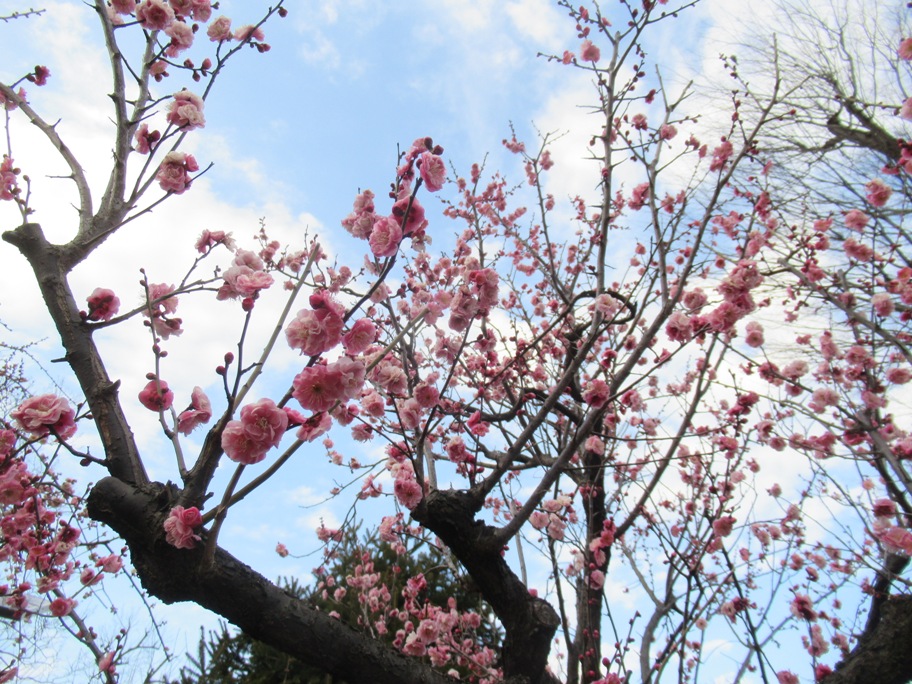
The ume (Japanese apricot) blossom is at peak now in Tokyo. They opened ume festival in Hanegi Park in Umegaoka.
There are about 600 ume trees there. (see also the top photo)

Open-air flower shops were open.

The buds of cherry trees began to grow. I walked under the rows of cherry trees along the Kitazawa walk path. We will enjoy cherry blossom in a month or two. (see also the 2nd photo from the top)

I also found catkins of pussy willow.

The season is turning from winter to spring.


2019-01-19

Ume season starts @ Umegaoka: Jan. 19, 2019


Three weeks have passed since the beginning of 2019.

It is still cold, but, but the day is getting longer. The sunshine is becoming brighter.

I walked in Hanegi Park in Umegaoka, where about 650 ume (Japanese apricot) trees stand.

Some trees opened flowers.

I found red (top), white (2nd and 3rd), pink (4th) and yellow (left) flowers.

Cats spent their times in the park.

Crows and other birds were singing.

The park will hold Ume festival in early February.


2018-12-30

Fukuoka City: Dec 29-30. 2018


I visited Fukuoka City in northern Kyushu. The city has about 1.6 million people, the 6th largest population in Japan and the biggest in Kyushu.

It has been a gateway between Japan and Asian countries for thousands of years.

Tenjin is the busiest commercial and business district of the city. Large shopping malls as well as office buildings stand in the area.

Nishitetsu Fukuoka (Tenjin) station locates in the center of the area.

Underground shipping areas have also been developed. The design is chic.

Nakasu is another busy shopping and entertainment area. It is on an island in the Nakagawa River.

There stands a huge commercial complex on JR Hakata Station.

The ruin of Fukuoka Castle locates in the western part of central Fukuoka.

There were two separate towns – Fukuoka in the western part and Hakata in the eastern part of the area – in the Edo era. Bushi or soldiers lived in the former and merchants lived in the latter. The two towns merged into Fukuoka City in the Meiji period.

The developments of the bay area are accelerating. I visited Yafuoku baseball dome. There are commercial complex facilities near the dome. The construction of residential apartment is underway, I found.

I saw many foreign tourists, including Chinese and Koreans, in the city. There were about 3 million foreign tourists arrived in Fukuoka in 2017, according to the city. The number increased by 3.7 times in 5 years.

The traffic and other signs are written in Japanese, English, Chinese and Korean. I saw the occasions that drug store stuff attracting Chinese tourists.

The area has been a gateway between Japan and Asia from the ancient era. Small countries in ancient Japan brought tributes to Chinese dynasties, including Later Han dynasty (1st-early 3rd century) and Wei dynasty (3rd century). The exchanges were made through northern Kyushu. A gold seal was presented from Han emperor to a king of small country in Fukuoka area in the 1st century. The seal was found in the 18th century in a small island near the city.

Many Korean people came to Japan through Kyushu between 4th and 7th century through northern Kyushu. Japan joined the Battle of Baekgangsent in the Southwest part of Korean Peninsula in 663. The ships were sent from northern Kyushu.

The area received two waves of raids by the Yuan dynasty of China (under Mongolian rule) in the 13th century. Toyotomi Hideyoshi sent troops to Korean Peninsula in the 16th century. The defense walls against the raids remain in some part of the city.

Now the city is connected with Busan of South Korea, Shanghai of China and other cities in Asia by ship. There are many flights from Fukuoka to foreign cities. The airport locates quite near from the central city.

They enjoy good foods. There are many open-air food stalls in the city.


Dazaifu: Dec. 29. 2018


Dazaifu locates about 16 kilometers southeast from central Fukuoka City. It is famous for Tenmangu Shrine.

I visited there for the first time in about four decades.

The shrine was first built in the early 10th century to enshrine Sugawara Michizane. He died here after being forced to move from Kyoto to Kyushu as a result of political conflict with the ruling Fujiwara family.

As he was a brilliant man, he was later regarded as a god of wisdom. Many students visit here to pray their success in studies.

There is an approach from Nishitetsu station to the shrine. It is about 200 meters. Tens of shops and restaurants stand along the street.

It is the year-end season. The shrine staff members were doing their preparation works for the new year. They receive millions of visitors every year.


Iki Island: Dec. 27-28, 2018


Japan has 4 major islands – Honshu, Hokkaido, Kyushu and Shikoku – and about 6800 smaller islands. People live in about 400 islands.


I visited Iki Island, one of small islands which is about 60 kilometers west from Fukuoka City. There lie Tsushima Islands in the west of Iki Island. Both Iki and Tsushima Islands locate between Kyushu and Korean Peninsula.

The island is about 17 km form north to south and 14 km from east to west. The population is about 26 thousand. There are four towns – Gonoura, Katsumoto, Ashibe, and Ishida – under Iki City. The major industries are fishery and agriculture

It took about an hour by a jet wheel ship from Fukuoka to Gonoura port, in the southwest part of Iki. The sky was blue and the air was fresh when I arrived there in the morning of Dec. 27.

There are many beautiful spots in the coasts. Saru-iwa, in the west coast of the island, is one of the examples. I could see the Tsushima Islands behind a monkey-shape rock. (See also the 3ed photo from the top)

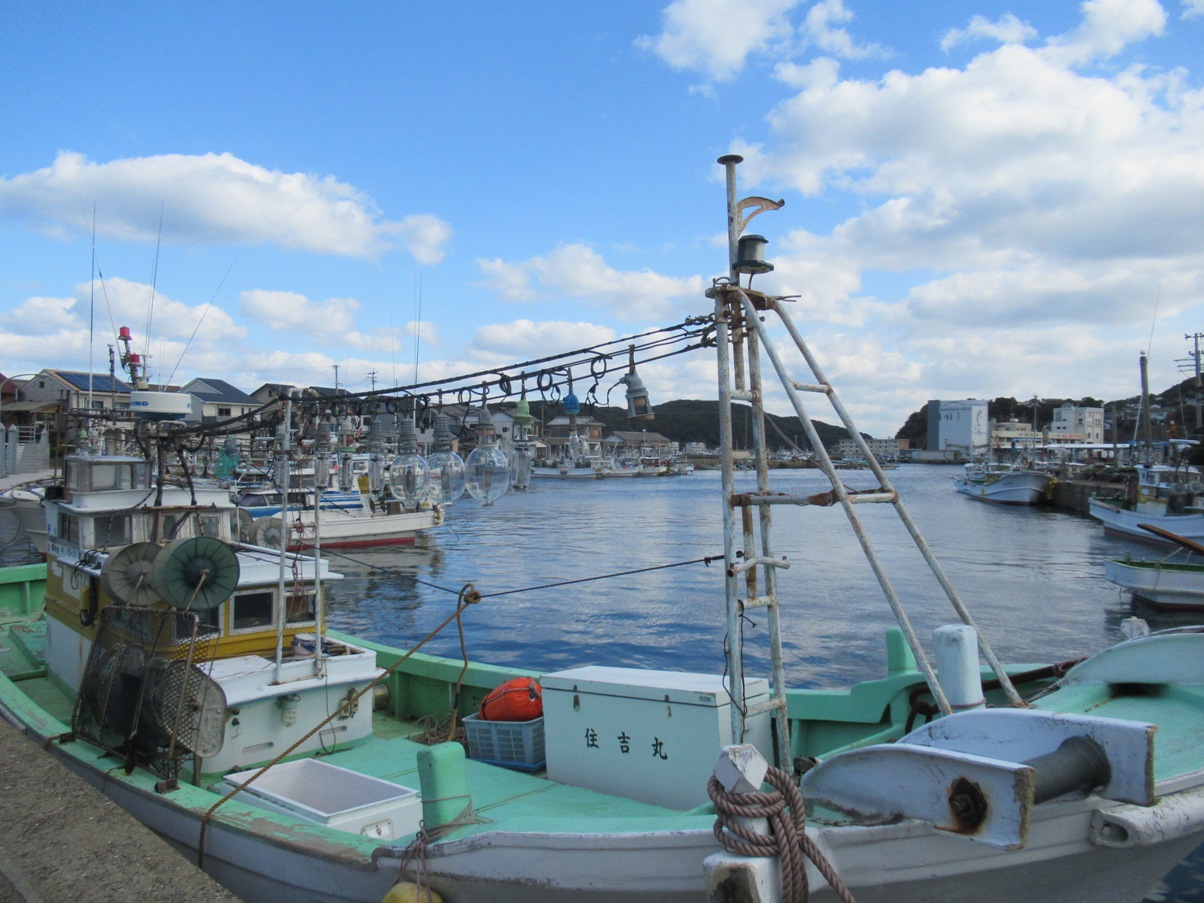
Many people live with the sea. There are many fish boats in the port of Katsumoto Town, in the northwest part of the island. Many of the boats are used to catch squids. They use electric lamps to attract squids in the night. (See the 2nd photo from the top)


I saw old women selling marine products and vegetables on the streets near Katsumoto fishery port. I also found people making ans selling dry fish products in Gonoura. (See the 4th photo)  

Six small statues of Jizo, guardian gods, stand at the seacoast of Yahata in Ashibe Town, in the eastern part of the island. They are called Harahoge Jizo. There is no official record on when and by whom the status were made, but it is said that Jizo statues were built to console the spirits of the dead in the sea. (See the top photo)


The island has many shrines. Some are in the mountainous areas.

Some are in the sea.

The island has been a gateway to Asia. There was a small country in the island in the 3rd century (1800 years ago) and the Chinese people sometimes visit here, according to historical record in China.

The ruin of the capital of the small country is now called Harunotsuji Iseki. It locates in the southeast part of the island.

The island experienced harsh raids by Yuan dynasty in the 13th century. Most of the residents were killed. Some monuments remain.

Roads and other infrastructure are well arranged. Foods are delicious. There are many things to talk about in Iki.