2018-11-10

Phnom Penh and Killing Fields in Cambodia: Nov 9-11, 2018


I visited Phnom Penh for the first time. It was the second journey to Cambodia as I stayed in Angkor Wat about 20 years ago,

I visited the Killing Fields in Choeung Ek, a small village about 17 km southwest of Phnom Penh. Nearly 20,000 people were killed here between 1975 and 1979 during the Pol Pot regime.

There were more than 100 grave halls here. Tens to hundreds of people were buried in each hole. The dents show where the grave halls were made. (See the 2nd Photo) 

Some grave halls are covered with a roof to preserve. About 450 bodies were buried here.

More than 100 bodies of mothers and babies were buried here. Babies were killed struck to a tree nearby.

A memorial tower was built in 1988 to console the spirits of the victims. (see the 5th photo)

About 5000 human skulls are places in the tower. (See also the top photo)

There were about 300 concentration camps throughout the country during the Khmers rouges period. About 3 million out of total population of 8 million were believed to have been killed.

The visitors listened the explanations of the tour guide or the audio tape seriously in Choeung Ek memorial park. I heard no laugher there.

I also visited a genocide museum in Phnom Penh. The site was uses as a detention center n the Pol Pot era. It was known as S21. Total 20 thousand people were carried in; only 7 survived. The site was formerly a high school.

Various kinds of torture were conducted here. Barbed-wire nets were installed in the outside corridor to prevent suicide. (See the 3rd photo from the top)


A quarter of a century have passed since the end of Cambodia civil war in 1993 The country is now in the process of reconstruction.

The economy is developing rapidly. There are many constructions of buildings and roads in the city. This photo is from southern outskirt of Phnom Penh.

The Monivong Blvd., one of mains streets of the city, was busy

The rainy season has just finished and the dry season has come. I found people enjoying their time outside.

Many families gathered in front of the royal palace. (See the 4th photo)

A firework show was played on the Tonle Sap River.


Jakarta: Nov.3-8, 2018


I visited Jakarta for the firs time in a year. I found many changes.

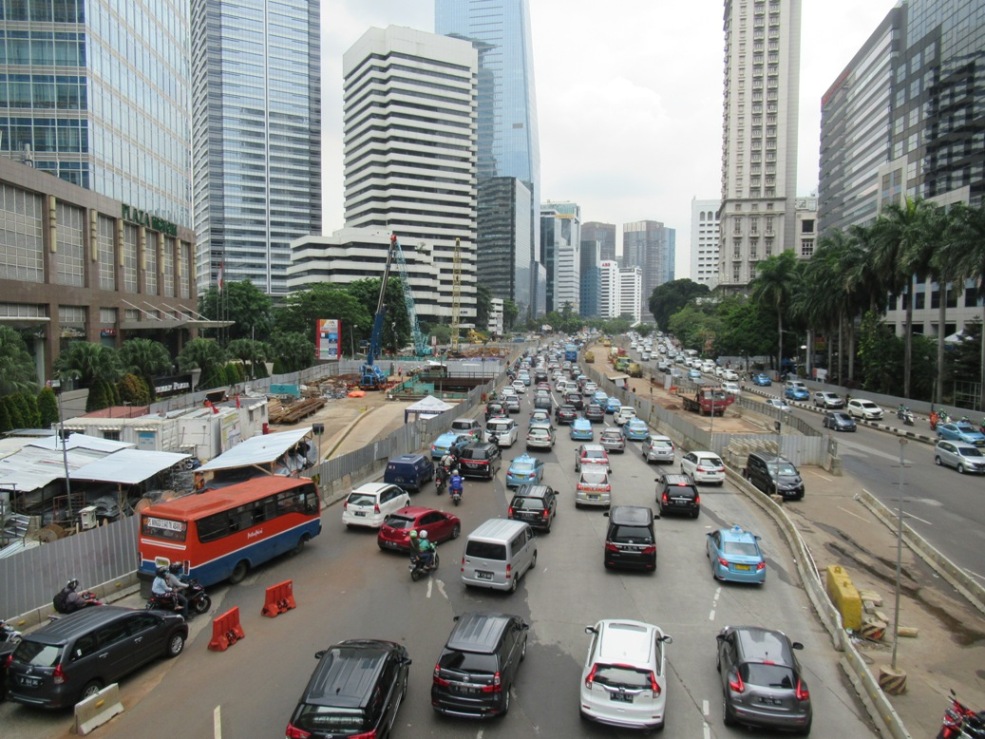
The constructions of MRT (massive rapid transport), roads, and other infrastructure projects have proceeded significantly in central Jakarta.

The works to make tunnels and rails of MRT have almost completed. Now, they are busy in building stations. The left photo is a new  Bunderan HI station under construction.

Works were on process on the road around Bunderan HI a year ago (left photo). Now, the road is cleaned up. (top photo)

The walkways have been cleanly arranged along the Sudirman Road, about 1 km south from Bunderan HI.

It was messy a hear ago. 

The construction works in Senayan, a few kilometers south from Sudirman, have also been almost completed. (See the 2nd photo from the top).

The railroad between Soekarno–Hatta International Airport and central Jakarta started operation at the end of last year. BNI City station is open as a city-center terminal.

The waterway in front of Plaza Indonesia in Thamrin, central city, was dirty a year ago. Now, it is covered with greens.  

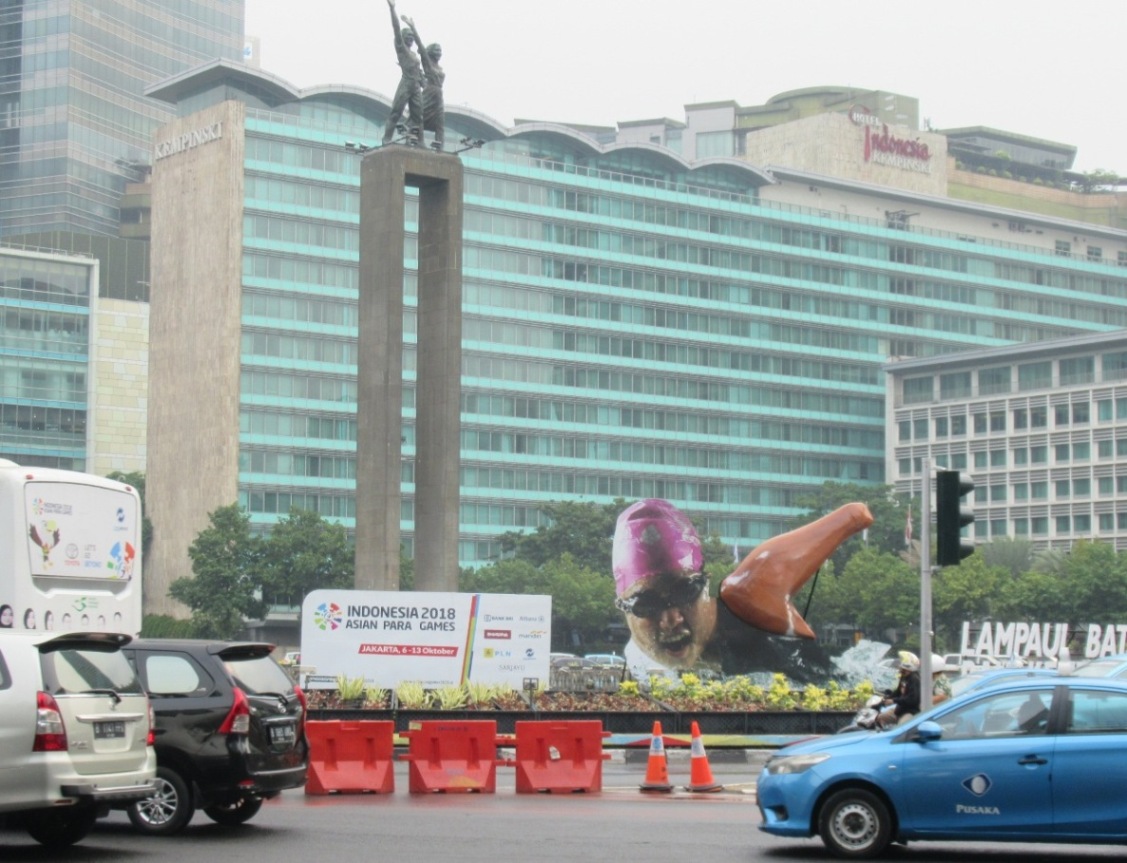
The Asian Games and Asian Para Games in August and September brought big impacts on Indonesian, according to a local journalist. 

It was concerned that they could not complete the facilities for the games.  In fact, they worked out in the last minute. 

The country gained much more-than-expected number of gold medals in Asian Games – the 4th place after China, Japan and South Korea – and people increased confidence as Indonesians

They become more interested in the disables persons through the Pare Games. The posters of the Games are still displayed in many places.

A big picture of a female swimmer with one arm is displayed in a traffic circle at Bunderan HI. (see the 2nd photo from the top)

Old (and traditional) aspects remain. But the society and economy are surely changing.


2018-10-23

London (including Brexit demonstration), Northern England: Oct. 15-22, 2018


I stayed in England (in the Britain Island) several days during my visit to Europe. It was my first stay in England in two years.

There was a big demonstration in London on Sat. Oct. 20 to demand the second referendum on Brexit. About 700,000 people were reported to join it. It was the second largest demonstration in the U.K.’s post-war history after the anti-Iraq war demonstration in 2003, which 2 million people joined.

Various people participated in the event. They included men and women, the old and young.

They also included: 

Kids ans babies, (See also the top photo)


disabled people,


dogs,


and Superman(s).


It was not organized by the Remainers, but most participants were pro EU. The slogans included:

"Stop Tory Brexit,"


"We demand a vote on the final Brexit deal,"


"Liars" and "Enemies of the people."


Supporters of Conservative, Labor and Liberal Democratic parties joined the march.
There were flags and signs of the U.K., EU,  Ireland, several regions of the U.K. 

After looking the demonstrators passing by about 2 hours, I joined the parade. I walked from the Green Park through Trafalgar Square and the Dawning Street to the Parliament. (See also the 2nd photo).

The Brexit negotiations between EU and the U.K. are not going well and the concerns over no-deal Brexit is increasing. Newspapers write articles on Brexit every day (mainly on the conflicts in the ruling Conservative Party).

Once I visited bookshops, however, I found the publications on Brexit and Europe matters were less notable than two years ago.

There were many books related to Brexit and the relations with EU in 2016 in the Waterstone bookstore in the Bloomsbury district, where the Britih Museum (Photo) as well as the University Collage London and other university gather. Now, they have less books on such topics. Much attention was payed to the books on AI and the impacts of innovation I found.

The situation on Brexit is complicated and it is difficult to foresee the future developments.

I found many changes in London in the past two years.

The renovation works began in the Big Ben.

Winston Churchill' s statue looked the construction. (See the 3rd photo) 

Huge blocs were installed in the sidewalks of the Westminster Bridge, where a terrorist attack happened in March 2017.

I also visited New Castle (left photo) and Sunderland in the North East area (in the northern England). My train moved from London through the East area (cities include Peterborough), East Midlands, Yorkshire and the Humber (cities include York), and arrived in the North East. These five areas all voted for “leave” in the 2016 referendum. Vote for leave gathered nearly 60% in East Midland, Yorkshire and
North East.

Coal and textile industries flourished in the past in these areas. Now, many cities and towns in these areas face economic difficulties.

There spread meadows and agricultural fields alongside the railway. The farms employed many immigrants from the Eastern Europe. The number is decreasing after Brexit decision.

The streets were quiet near the Sunderland railroad station.

The shopping mall was, however, crowded with people.

I found no political campaign posters on Brexit in both Sunderland and Newcastle.


2018-10-20

Brussels: Oct. 18-20, 2018


More than two years have passed since the U.K.’s decision to leave EU. I visited Brussels this time on the day when the EU summit meeting was held. No progress was made on Brexit negotiation. ASEN (Asia-Europe) summit was also held.

The scenes around EU is gradually changing, I found.

There is a big curtain placed in the headquarters buildings of European Commission.

The Berlin wall was places in front of the headquarters building.

At the buildings of the Commission’s divisions, their functions are well explained on the walls

Objects of “European” were placed near the headquarters.

All shows EU’s efforts to gain people’s understanding.

People’s reactions looked to be cool.

There are less EU-related goods in the souvenir shops near the Grand Market. The shops shared more spaces for the goods related to Brussels and Belgium than before.

There were various demonstrations held in the Schuman district, where the EU institutions gather. They include gatherings of Catalonian people to appeal their independence from Spain to European leaders. People from Bangladesh held another demonstration for democracy.

There are many reporters gathered to cover EU and ASEM summits.

The security looks to have been stricter as times go. Security members with machine guns guarded the meetings.

I visited Molenbeek, where the terrorists of November 2015 Paris attacks stayed. The weakness of security maintenance was criticized. Now, the atmosphere seemed improved than two years ago, when I visited there last time.