2013-04-30

Tokaido Walk (22) Hamamatsu-Yoshida: April 28, 2013


It was again a nice day for walking. I had a long walk.

I started Hamamatsu, the 29th shukuba station, passed Maisaka, Arai, Shirasuka, Futagawa stations, and arrived in Yoshida station in Toyohashi City. Sic shukuba station in one day is the largest in my walking. The finished my walk in Shizuoka Prefecture and moved in Aichi Prefecture.

Maisaka, the 30th station, locates at the east side of Lake Hamana. Historical buildings remain.Pine trees are planted at the sides of Tokaido.


People passed Lake Hamana by boat in the Edo era. Now, roads connect east and west of the lake. Lake Hamana was separate from the sea until about 500 years ago(It was a fresh-water lake). It was linked with the sea after a big earthquake in 1498.


A shrine was built in the sand island in the lake. People enjoy fishing both from the land and on the boats.


Arai shukuba station is at the west of the lake. Checking station (sekisho) was built here in the Edo era. The old buildings still remain.


I walked westward to Shirasuka Shukub station. The station originally located at the seaside. The station was completely destroyed by tsunami disaster in 1707.

Tsunami could occur anytime. I found many signboards which showed evacuation passage and related instructions.


The shukuba station was rebuilt on the hilltop after tsunami disaster in 1707. I climbed the slope and found the sea spread under the slope.
I passed Shizuoka-Aichi border. Agricultural fields spread along Tokaido. Old buildings remained in Futagawa, the 33rd station.

Today’s goal was Yoshida, the 34th station from Nihonbashi, Edo.


Tokaido Walk (21) Iwata-Hamamatsu: April 27, 2013


The Golden Week holiday season started. I resumed my Tokaido Walk after about a year’s interval. The walk is possible only in long holidays as the walk’s “starting point” is far away from Tokyo.


I started my walk from Iwata city (where Mitsuke shukuba station locates). The sky was blue.


I crossed Tenryu River and moved into Hamamatsu City. The river used to be called Violent Tenryu as it often caused flood disasters.

Water control engineer Meizen Kibara’s museum was open near the river. He lived late Edo through Meiji era.


Hamamatsu is the 29th shukuba station from Edo. It had 6 honjin (main inn where Government officials could stay). The number was the largest (along with Hakone shukuba). Now, no such historical buildings remain.


Iwata and Hamamatsu are hometowns of Yamaha and Suzuki motors. They also have factories of various fields. Factories as well as auto shops stood along Tokaido in the area.


2013-04-16

Tamagawa River’s spring: April 13, 2013


Cherry blossom is over and the season is turning from early spring to mid-spring. I visited Tamagawa River to enjoy spring.


It was a bright warm day. The sky as well as the river was blue. Riversides were covered with beautiful fresh green. Birds flew over the river and butterflies flied in the bushes.


I found many people enjoying fishing. Baseball, football and other sports were played in the riverside grounds. BBQ parties were held in many places.


People also enjoy walking, jogging and cyclists in the roads on the banks.


2013-04-08

Hanging Gardens after Spring Storm: April 7, 2014


Tokyo had a spring stormy day
yesterday. With its passing, we had a clear day today.


I walked nearly 15 kilometers through residential and commercial areas in Tokyo.


Fresh leaves appeared in Tulip trees and other trees in Kitazawagawa Walking Pass in Setagaya Ward. Birds sang and butterflies floated. Cherry blossom still continued in some trees. People enjoy picnic.


I visited newly-opened hanging gardens in Ohashi, Setagaya Ward. The gardens are developed on the highway junction structure, which is scheduled to start full operation late this year. The traffic lanes will run through a huge round building to reduce noises. Gardens are on the roof of the building.


Various trees and flowers were planted there. Children enjoyed running through the gardens. We could see many buildings under the gardens. The sky was so blue.


I walked along Meguro River. Water flew slowly and chelly patals composed flower carpet on the water. But there was a danger of overflow yesterday. It is also a reality of Tokyo's life.


2013-03-31

Cherry @Baji Park, Gotokuji Temple, Kitazawagawa Walkway: March 30-31, 2013


Tokyo’s cherry blossom was its peak in the last week of March (March 24-31). I enjoyed cherry this weekend (March 30 and 31).

Towns were colored with pink. Flower petals fell slowly in the wind. Many roads and gardens were covered with flower carpet.


I visited Baji Park (Equestrian Park) on March 30. Swans swam elegantly in the pond of Japanese Garden. Tens of cherry trees were planted around the pond.


Families enjoyed picnic under cherry.


I visited Gotokuji Temple on March 31. Flower carpet spread before the tower and main buildings.


I also walked along Kitazawagawa Walkway. Many people enjoyed Hanami picnic.


2013-03-24

Shanghai (off off Tokyo): March 23, 2013


I walked across Shanghai eastward from Hongqiao area to Waitan (the Band) through Yan’an Road and Nanjing Road. It was more than 10 kilometers. I found daily lives (it was Saturday) and commercial activities of the city.


I passed Inner Ring Elevated Road after about 30 minutes walk. Tianshan Park and Kaiqiao Green Land lied just inside the Ring road. Shanghai is said to have fewer green areas than other major cities in the world and the city is trying to increase green areas. Kaiqiao Green Land was developed removing 1257 families and 12 factories, according to the explanation in the board.


I arrived at Jing’an Temple. The temple has long history, but it has converted into a modern building made of cement. New construction works were under way in the inner court.


The ground floor of the temple (outside, not inside) was used for shops and restaurants. It was like temple-commercial complex.


People’s Square was crowded with people seeking information for marriage matching. Personal information (e.g. 25 years old woman, seeks a man with more than 180 cm and income of xx thousands yen).


Part of East Nanjing Street was vehicle free. It was crowded with local people and tourists.


I arrived in Waitan. Visitors were taking pictures with Pudong’s skyscrapers (at the opposite side of the river) in their back.


Suzhou's spring (off off Tokyo): March 22, 2013


It was late autumn when I visited Suzhou in 2011. Today, I enjoyed the city’s spring.
Spring flowers blossomed and the leaves were fresh green in Humble Administrator’s Garden.


I heard various birds singing. Fishes swam slowly.


The streets outside the garden preserve traditional atmosphere. Local people as well as visitors walked slowly and spring fruits were sold there.


Hangzhou (off off Tokyo): March 21-22, 2013


I came to Hangzhou, one of China’s best tourism cities, and enjoyed its nature and history.

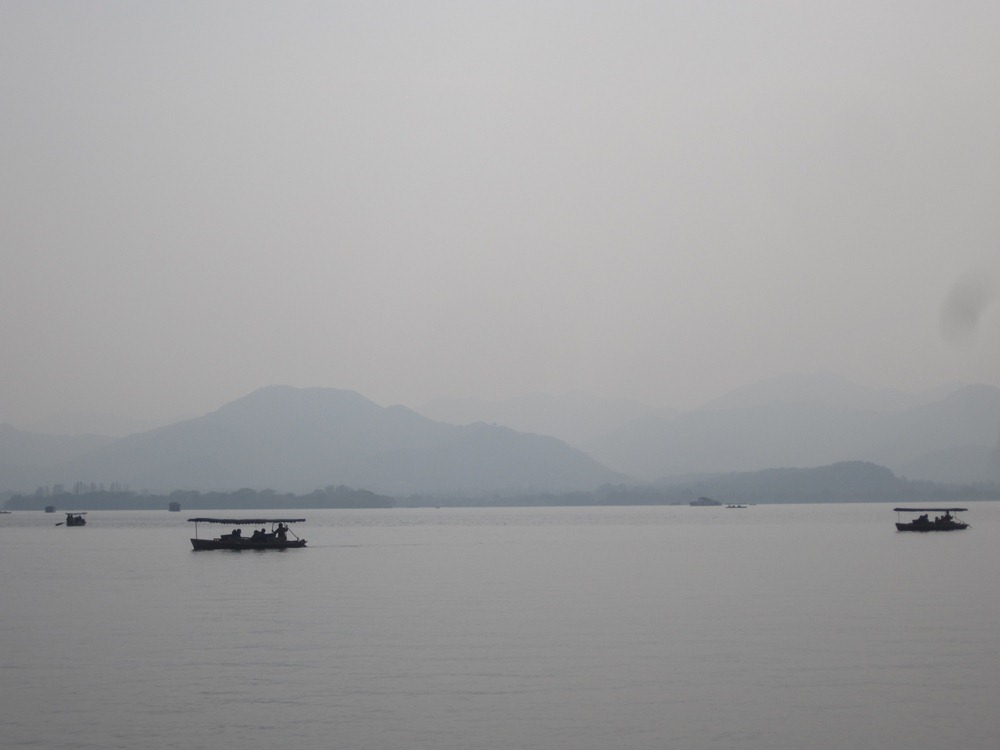
I walked around West Lake in two different occasions – in the afternoon and in the early morning.


It was lightly cloudy in the afternoon of March 21. The willow leaves were fresh green and colorful spring flowers were open. People enjoyed walking around the lake.

There are many historical spots and monuments in and around the lake. Great poets Du Bu and Li Bai (in the Tang era) made poems here. Another great poet Su Shi (in the Song era) was here as a high rank government officer and was engaged in construction works of banks in the lake.
I walked one of the banks in the early morning of March 22. It was rainy. The willow in the rain was mpressive.


People gathered to play T’ai Chi. ch'uan and other excises.


I also visited Lingyin Temple. It is in the mountain and I could walk in the nature.

There were many people. They prayed with burning incense in traditional Chinese style.


Tourists in packed tour wore same caps. Many of them are farmers from other areas.
The temple was clean and people’s manner was not bad (no garbage were found in the ground). It was a big change from decades ago, according to my Chinese friend.


2013-03-17

New Shibuya: March 17, 2013


Shibuya is one of the most popular shopping and cultural area in Tokyo. The town had a dynamic change this weekend.

Old station of Yokyu Toyoko Line, which connects Shibuya and Yokohama, located in the 2nd floor of the terminal building. It was closed on March 16. New station opened under the ground.

I found many people gathering at “closed” old Tokyu station and taking pictures.

The new station was linked to Subway Fukutoshin Line, which connects Shibuya and Wako City, Saitama Prefecture. That means Yokohama and Saitama Prefecture was linked directly. New underground station is, of course, modern.
Shibuya is the terminal of other five lines: JR Yamanote line, Tokyo Denentoshi Line, Inogashira Line, Subway Ginza Line and Subway Hanzomon Line.

Urban developments are taking place in many areas in Tokyo. Shimokitazawa starion, used for Odakyu Line and Inogashira Line, is under renovation works and new station will open next weekend.