2010-08-29

Samba Carnival @ Asakusa: August 28, 2010


Many Samba carnivals are held in Japan, half a world away from Brazil.

The biggest and the most famous one is a carnival at Asakusa.

The carnival started in 1981 and it is the 30th carnival this year.
About 4500 dancers, singers and other members from 16 Samba teams played their performances in the streets. About 500 thousands visitors (according to Japanese TV news) enjoyed the shows.

I was one of the 500 thousands.


Map: Asakusa

2010-08-22

Yokota Air Base @ Tama (western Tokyo): August 22, 2010


There are several U.S. bases in and around Tokyo. Famous ones include Yokota Air Base (western Tokyo), Atsugi’s US Navel Air Facility (Kanagawa), Yokosuka Navy Base (Kanagawa Prefecture) and Camp Zama.

I visited Yokota Air Force Base today. They held Japanese-American Friendship Festival on 21 and 22 of August and Japanese people could enter the base during the event. It was my first visit into a U.S. base in Japan.

The base is large. There is 3300 meter runway in it. There are schools, hospitals, a radio station and many other facilities in addition to military facilities. The soldiers as well as their families live there. (Total population is reported about 16,000).


There were many stalls (of drinks, foods, T shirts, caps etc.). They had music concerts and basket ball competitions. A playfield was set for children. A mini train-shape vehicle was running and the soldiers were shooting water pistols (to provide small showers to visitors).
There were thousand of visitors in the base. Tens of temporary toilets were set.

Various aircrafts were displayed. They included F22 fighter aircraft (stealth), other fighters, cargo aircrafts, and helicopters.

Many of the visitors (both Japanese and Americans) looked to be fanatics.They were taking coutless number of pictures.
Planes flow over the visitors. F18s’ flights were so fast. Japanese Self Defense Force also joined the flight (They also use the base with U.S. Air Force).


The attitude of the soldier and other staff of the base seemed to be very friendly. The U.S. government’s policy to keep good relations with Japanese people was well reflected.
It is also worthy to note that the base’s commander banned to screen “The Cove”, an controversial movie on whale catching, in the base.

Map: Yokota Air Base

Teien Art Museum @ Meguro: August 21, 2010


I visited Tokyo Metropolitan Teien Art Museum near Meguro station. The museum was originally a house of Prince Asaka (one of royal family members). It has turned into a museum operated by the Tokyo Metropolitan Government since the 1980s.


The gardens (both Japanese and western styles) are beautiful. The trees and the lawns are well cared.

The cicadas were making big sounds when I visited there.

They also have interesting sculptures and objects.


The western style house has converted into a museum building. An exhibition of a Japanese painter Yoshio Arimoto was held today. It is comfortable to watch good pictures at a museum in the green.

Many of nature-rich areas (museums, parks etc.) in central Tokyo have been developed on the lands and houses originally owned by the upper-class families (before the WW2).

The Teien Art Museum is an example.

Map :Tokyo Metropolitan Teien Art Museum

2010-08-07

Shanghai (off off Tokyo): August 4-6, 2010


Skyscrapers, skyscrapers, skyscrapers ----  I always saw skyscrapers when walking in Shanghai.

There are more than 4000 skyscrapers in Shanghai and the number has been the biggest in the world since 2004 (surpassing New York).


The scene of Pudong skyscrapers from Waitan through Huangpu river is a symbol of Shanghai today. The buildings include The Oriental Pearl TV Tower (characterized with spheres) and The Shanghai World Financial Center (SWFC), the tallest in the city


The SWFC opened in 2008 and is 492 meter high. It has observatories in the 94th, 97the and 100th floors. Many tourists including a group from Taiwan were enjoying the scene from 472 meter high when I visited the 100th floor.


Shanghai Aquarium has a 150 meter long tunnel which goes under water tanks. It is prpbably the longest such tunnel in Asia.


Nanjingxilu Street, which goes west from Waitan, is the busiest commercial street in the city. Most parts of the street are off vehicle.

Tourist trains ran and old local residents enjoyed dancing (not tai chi) when I visited there.

Roads are well arranged in Beijing. They run from north to south or east to west. Buildings stand keeping certain distances.


It is messy in Shanghai. The roads go round and old traditional houses remain at the foot of skyscrapers.

There were so many people. Thousands of people walk quickly in the subway stations. It was very hard to catch a taxi in the evening.


Constructions are under way here and there.

I did not visit Shanghai Expo (as it was expected to be too crowded). I saw the posters, billboards and the Expo characters everywhere in the city. The highays were decorated with plants and illuminated in blue.


Shanghai Map

Beijing (off off Tokyo): August 2-4, 2010


I walked around Beijing and Shanghai in the first week of August.

It was my first time to visit Beijing in about 10 years and Shanghai in about five years.

I was impressed with the rapid development of the country and the dynamic energy from the Chinese people.


All people I met in Beijing said that the city has completely changed in the last five years. What triggered the changes was, of course,  the Beijing Olympic Games.

Wangfujing, the city’s busiest commercial area (only two blocs east from Gugong and the Tiananmen Square) was crowded with shoppers as ten years ago. But the appearance of the area was quite different.

It has been modernized and cleaner. New shopping centers and department stores have been developed. Gucci and other famous brand companies have stores there.


There are also traditional Chinese shops and restaurants in the area. I enjoyed Peking Duck dinner at Quanjude.


Qianmen’s shopping street (south from the Tinanmen Square) was also redeveloped before the Beijing Olympic Games. Traditional Chinese stores, brand shops and many other shops were there. The street was off-vehicle


Some old towns are preserved.

Many old houses – most of them are traditional Siheyuan -- remain in the northern part of Gugong. Eash house has a garden inside and they grow trees (mainly jujube trees).

Many tricycles were waiting tourists in some parts of the area when I visited there. Most of the drivers are from rural areas. They are reported to be low paid and are spending hard days. The rich-poor gap problem was there. But I also saw some drivers talking by their mobile phones while driving their tricycles.

IT companies and IT shops gather in Zhongguancun, northwest part of Beijing. Is is about 45 minites by subway from the central Beijing.

Beijing University and Tsinghua University are in the area. The Founder Group, the Lenovo Group, and the Stone Grouu have grown from the area.

Electronic shops were crowded with people. Traders sell watermelons outside.

The city's scene from the Park Hyatt Hotel's bar in the 63th floor was excellent.

Beijing Map


2010-07-25

Koishikawa Botanical Gardens: July 25, 2010


Tokyo has a botanical garden in its central part. It is Koishikawa Botanical Gardens.


The garden’s history is long. It was originally developed as a physic garden of the Tokugawa government in the Edo era in the 17th century. The operation was succeeded by the University of Tokyo in the Meiji Era and it now belongs to the University.

There are about 4000 plants in the gardens. Many tall trees as well as beautiful flowers are planted. It is nature rich. I did not feel that I was in central Tokyo when I walked in the gardens.
The reason of my visit today was to see a titan arum. The plant is the largest unbranched inflorescence in the world. It opened its flowers for the first time in about 20years (since 1991) in the gardens.

The flower stays only two days. It smells so bad when it opens its flowers.

Unfortunately, the central pole of the plant fell down (which means the end of the “opening” of the flowers) about 10 minutes before my arrival to the gardens according to the staff. Still I found how large the flowers were. Many people were taking pictures. It did not smell bad as the peak of the opening of the flowers was over.


Another famous plant in the gardens is Newton’s apple. The tree has been raised from the branch taken from the original Newton’s apple in the U.K.
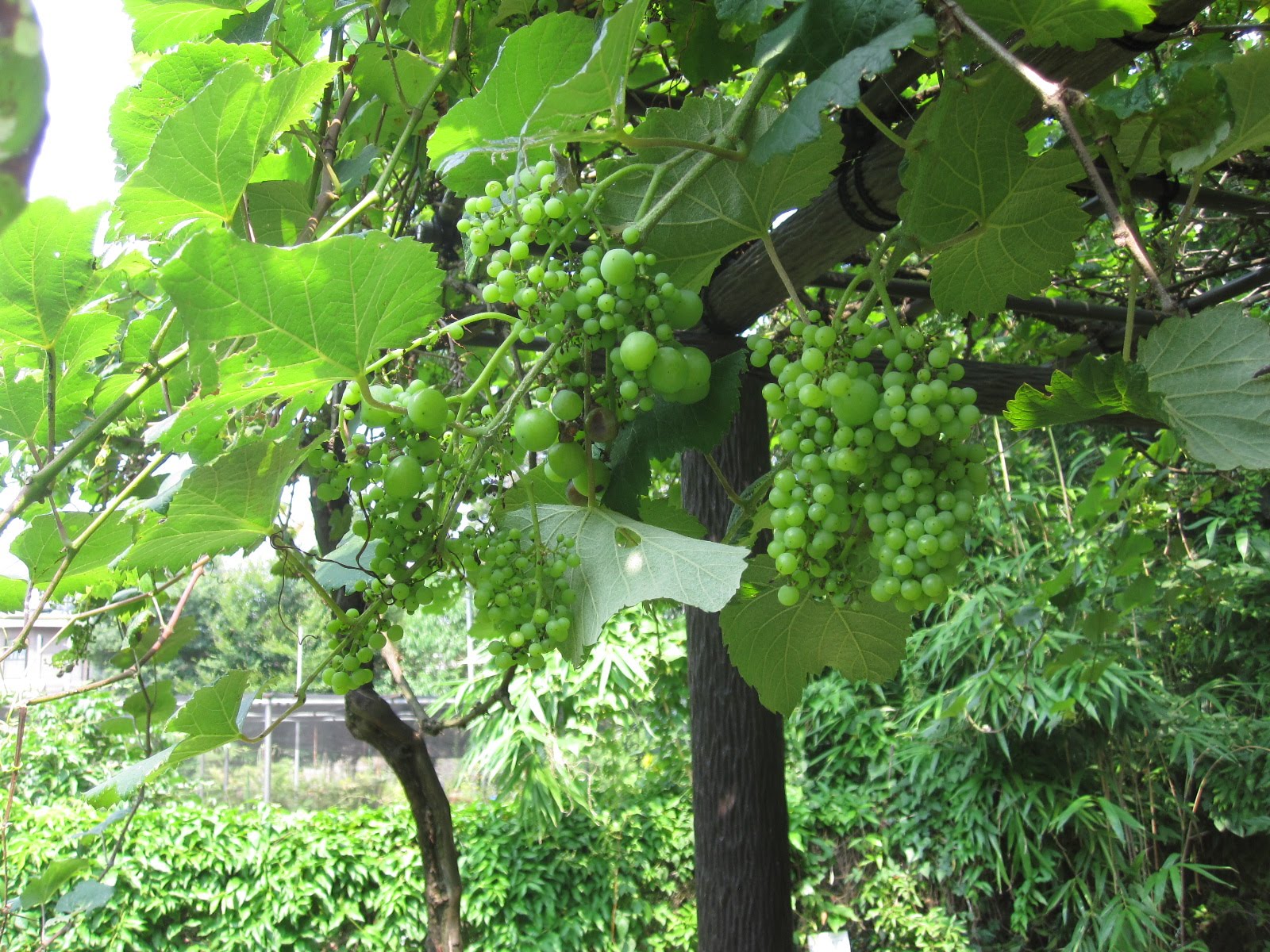
Mendel’s grape trees are also in the gardens.


Map: Koishikawa Botanical Gardens

Epson Aquarium @ Shinagawa: July 24, 2010


The aquariums develope rapidly in Tokyo (and other parts of Japan). We can expect more interesting experiences every year than before. That is why I sometimes visit aquariums.

Today, I visited Epson Aqua Studio in Shinagawa. The aquarium is only 5 minutes walk from Shinagawa Station. It opened in 2005 and it is Tokyo’s newest aquarium.

The dolphin pool is especially popular.

The dolphins showed excellent performances. They jumped high. They lifted their trainers up to the air. The trainers enjoyed surfing over the dolphins’ backs and forwarded moved forward more than 15 meters.
More than 70% of 1350 seats were full. Children and families looked so happy.

At the Sea Lion’s pool, the sea lions showed funny performances.

They received the rings thrown from the audience seats. They held fans and dolls on their noses. They waved their hand to say (?) good-bye.
There is a 20 meter-long tunnel which goes under a huge water tank. I could see sharks, rays and other fishes swimming over me.


Map: Epson Shinagawa Aqua Stadium

2010-07-19

Minato Mirai 21@Yokohama (off Tokyo): July 19,2010


Yokohama is the second largest city in Japan (after Tokyo) and locates about 30 kilometers south from central Tokyo. It is famous for its port. I visited the city's Minato Mirai 21, an urban development area in the Yokohama Port district.

Minato Mirai 21 has been developed after the 1980s. There are convention centers, shopping facilities, cultural facilities, amusement parks and many other facilities in the area. 

There are two Red Brick Warehouses in the waterfront. The warehouses were originally built in the Meiji era (late 19th century). They were converted into modern commercial and cultural facilities in the 2000s. The original bricks and other materials are reused.
There are many stalls and restaurants in one of the warehouses (the other one is a cultural center). I felt retro-flavored mood when I walked in it. 

Yokohama port is the biggest port in trade volume in Japan. The main imports include LPG, iron ore and coal while main exports are automobile and mechanical goods. The passenger ships also arrive in and leave the port.

I saw only passenger ships in the Minato Mirai 21 area today. The sea and the sky were blue and beautiful.

I also walked Yamashita Park, which spreads along the seaside. Many families and tourists were enjoying the beautiful day.

I walked forward to a small hilltop park nemed "Minatonomieru Oka Park", which means "a park of good viewpoint to see the port".

I saw Minato Mirai's famous facilities over the port. The facilities include: The Cosmo World, an amusement park, and a Giant Ferris wheel called “Cosmo Clock”; the World Porters—a shopping and trade center; the Queen’s Square – business and commercial complex; the Pacifico Convention Center.

I could also see the Bay Bridge, which links both side of the port.

Ueno Zoo; July 18, 2010


I like visiting  zoos and aquariums. Today, I visited Ueno Zoo.

It is the nation’s oldest and most famous zoo. It has about 500 species and 3000 individual animals and birds, according to its pamphlet.

It was my first visit of the zoo in about four years. Many things have changed.
Good developments:


(1)The cages of sea lions, hippopotamuses, pigmy hipos have remarkably improved.

The front walls of the cages have been changed from concrete walls to transparent plastic boards. Visitors can dirctly watch how the animals swim in the water.

Many children as well as their parents were enjoying observing the motions of the animals.
(2) New exhibition facilities have been built.

They include a house for aye-eyes and small mammals (tarsier, mice etc.). A new house for crocodiles, turtles, frogs ana other animals in the water area has also been built.
Animals such as giraffe, rhino and monkeys were popular as usual. Meerkat also attracted many visitors.
There were many water birds in the Shinobazu Pond, which is also a part of the zoo. The pond was covered with large leaves of lotus. It was amazing.

Map: Ueno Zoo

2010-07-17

Shimokitazawa; July 17, 2010


Shimokitazawa is known as one of the sub cultural centers in Tokyo.

It has several off-broadway theaters. There are many shops, drinking bars and restaurants for young people.

The town is a bit messy, but the atmosphere attracts many young people as well as foreigners.

Students, couples and many other young people were walking in the streets when I visited there.


I found a queue in front of a traditional eel (unagi) restaurant. It is JApan'S tradition to eat eel in the mid-summer. It is to survive the country’s hot summer with the fish's nourishment.

Shimokitazawa station (of Odakyu Line) is under renovation. The railway company plans to increase the number of the rails to ease the congestion.

The front area of the station is also planned to be redeveloped.

The town may be more convenient and cleaner when the renovation is over. But it may lose its unique (subcultural) mood.

Imaging that the town will be different, I took many pictures to record today's scenes.