2018-05-08

Nakasendo Walk(28)Kano(53/69)-Godo(54/69)-Mieji(55/69)-Akasaka(56/69): May 5, 2018


Today's walk started at Kano, the 53th shukuba station. It is quite near from JR Gifu Station.

Old buildings related to Nakasendo have disappeared hear. Residential and commercial areas spread along the street. The JR Tokaido Line runs along Nakasendo.

Today’s Gifu is famous for Oda Nobunaga, one of most popular heroes in Japanese history, and Gifu Castle. See also the top photo)


A golden statue of Oda Nobunaga stands in front of JR Gifu station.


(See Gifu and Ogaki: May 4, 2018)

I had about an hour walk and arrived in Nagara River.

It took a few minutes to cross the river and I entered into Godo shukuba, the 54th station from Nihonbashi. The station lies at the side of a huge river bank of Nagara River.

There have been many flood disasters in the area. People built special banks which surrounded the residential areas to protect themselves from the floods. The areas were called waju.

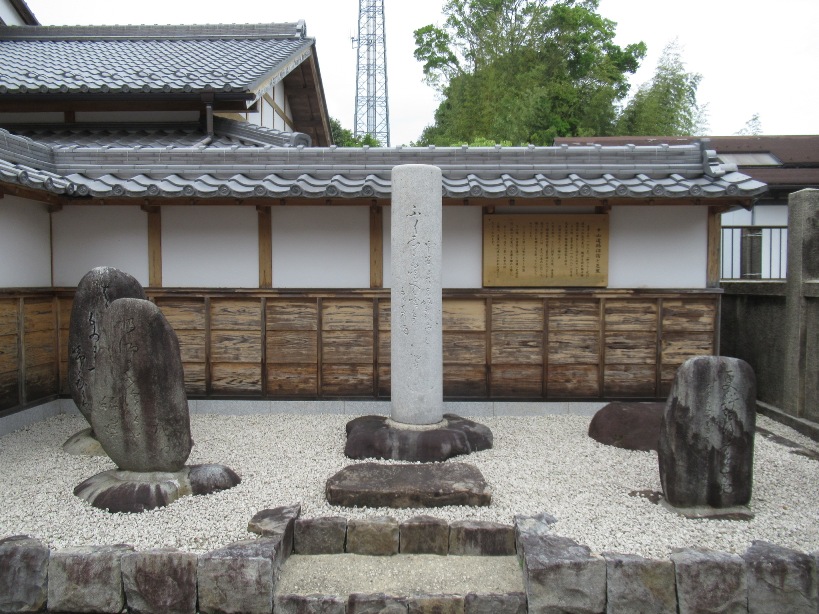
The buildings of shukuba station were destroyed after the Meiji Revolution and were rebuilt. Some monuments remain.

I walked westward and entered into Mizuho City. The signboard said that it was a city of persimmons and flowers.

I found many greenhouses of cactuses along the street. Mizuho City is one of the biggest cactus producing areas in Japan. (See also the 3rd photo from the top)

I moved forward and arrived in Mieji shukuba station, the 55th from Nihonbashi. It was a small station. The area lies between Nagara River and Ibi River.

The Mie Shrine locates in the center of the area.

I found many persimmon trees around here. 


The water was calm and beautiful today.

The situation should quite different when there is a flood. I found a signboard places at the side of a rice field. It showed how high the water flood reached in 1976.

I moved westward and crossed the Ibi River. 


Old housed remain in the western side of the river or Roku area.  Many houses here are built on the lands lifted with stone walls. It tells the history of the battle with water flood.

Nakasendo goes through Godo Town with about 1000 people and entered into Ogaki City.

There is a pond where small fish hariyo, one of endangered species are alive at the side of the street.

It is not far away from Akaasaka, the 56th station.


2018-05-07

Gifu and Ogaki (off Tokyo): May 4, 2018


I walked around Gifu City during my Nakasendo walk.

Gifu is famous for Oda Nobunaga, a hero who ended Japan’s medieval period and opened a way to the early modern period in the 16th century. He is often seen as the greatest figure in Japanese history.

The Gufu castle was built on the top of Mt. Kinkazan (Mt. Inabayama). It is 329 meters high. (See also the top photo)


The castle was originally built as in the 12th century. Oda Nobunaga took the castle in 1567 and developed the castle as a symbol of his power.

The castle was later destroyed in the early 17th century. A modern concrete castle was made in the 1950s.

There were so many visitors in the area as it is the golden Week holiday season. People needed to wait more than an hour to take a ropeway to the top. I walked up a steep mountainous way.

There was a house of Oda Nobunaga at the foot of the mountain. It is now a park.

The Nagara River flows in the city. It is one of the three large rivers which flow into Ise Bay.

The scene from the top of Gifu Castle was beautiful. (See the 2nd photo from the top)


There is a tradition of catching fish using trained cormorants in the river. It is now performed for tourists.

Old buildings remain along the river near the castle.

Yanagase used to be the busiest shopping areas. It is now less busy. I saw small number of shoppers in the streets.

I found that the buses were painted with Oda Nobunaga.

I also visited Ogaki City, the second biggest city in Gifu Prefecture. It is known as a city of water, Ogaki Castle and haiku poet Matsuo Baho.

The city was surrounded with canals. They used to be the moats of Ogaki Castle.

They operated tub boats for the tourists. The water was clean. (See also the 3rd photo from the top)

Matsuo Basho finished his Oku-no-hosomich travel here. Basho traveled from Edo (Tokyo) through Tohoku and Hokuriku areas to Ogaki in 1689 and created many haiku poems. It was about 2000 kilometer distance.

The statues of him and his supporter stand at the side of a moat.

Some of his haiku poems were curved in the stones.

Ogaki Castle was one of the important castles as strategic points in the 16th century. 


We can see Sekigahara, a famous battle fields, from the top of the castle.


Nakasendo Walk (27) Unuma(52/69)-Kano(53/69) (off Tokyo): May 3, 2018


The Golden Week holidays started. I resumed my Nakasendo Walk. The starting point was between Ota, the 51th shukuba station from Nihonbashi, and Unuma, the 52th station.

Leaving Kiso River, Nakasendo goes into a hill covered with forest. It is called Unuma-no-mori forest. The walkway continues through the Utoh Pass. It is only 140 meters high. (See also the top photo)

The leaves were fresh green and the air was beautiful there.

There is a park near the peak of the hill. They have a public library in the park. “Library in the forest” is the facility’s name. I found kids enjoying their times in the playrooms.

I moved for Unuma shukuba station. I enjoyed a view of the town from the hill. 

The original buildings of Unuma were completely destroyed by the 1891 Mino–Owari earthquake, but they were later rebuilt.

The monuments of Matsuo Basho, a famous haiku poet in the Edo era, stand along the street.

Unuma locates in the eastern part of Kakamigahara City. There is air base of Self Defence Force in the city.

They also have the factories of defense and aerospace industries there. Kawasaki Heavy Industries is one of such companies.

A rest area was placed in Shin-Kano between Unuma and Kano, the 53th shukuba station. People worshipped frogs in the area as they brought good fortunes. The flog sculptures are placed there.


There spread poor fields in the old days in the area. Bamboo was one of the plants which covered the areas. They still have bamboo fields there.

It was the season of bamboo shoots (See the third photo from the top)


I walked into Gifu City, the capital of Gifu Prefecture. There are houses and fields along Nakasendo here.

I arrived Kano station in the central part of Gufu City. It was about 17 kilometers from Unuma to Gifu. I found tall apartment buildings there.


2018-04-22

Azalea Festival @ Nezu Shrine: April 22, 2018


Where is the best place to see azalea blooming in Tokyo? Nezu Shrine in Bunkyo ward is probably one of the places to be answered.

I visited the shrine.

There are about 3000 azalea shrubs in the shrine. They include about 100 kinds of azalea.

The flowers are pink, red, white, orange, yellow, purple and many others.

There were many visitors, including foreign tourists, there.

The azalea garden was first developed about 300 years ago in the Edo era.

The flowers opened earlier this year than usual because of warm spring. What I enjoyed today were late-open flowers. Early-open flowers were already over.


Azalea and fresh green : April 21, 2018

We have warm spring days this year in Tokyo. The temperature sometimes went up to more than 25 degrees.

Leaves grow faster than usual. Some flowers started to open earlier.

I confirmed the circumstances while I was walking in Setagaya ward.

The leaves of tulip trees are growing day by day.

Ume (Japanese apricot) and cherry trees are now coved with fresh green leaves.

We have cherry blossom about a month ago in the end of March (earlier than usual). Now, we have azalea blossom in many part of Tokyo
.
I enjoyed various types of azalea flowers in Hanegi park.

I also found azalea trees in the walking paths.

The season is turning to early summer.


2018-03-24

Cherry blossom @Kitazawagawa footpath: March 24, 2018


Tokyo declared full open of its cherry trees today.

It is 10 days earlier than usual.

I walked around some places in Setagaya ward including Kitazawagawa footpath and  Hanegi Park  to enjoy cherry blossom.

There were many people there. People enjoyed drinkng and eating in the Hanegi park.

The creek of Kitazawagawa footpath was covered with fresh green.

Pussy willow was also open.

They had the Vernal Equinox Day two days ago (on March 21)

It is spring.