2018-03-12

Rapeseed flower @ Hama-rikyu Gardens: March 11, 2018


Rapeseed flower is seen as one of the symbols of spring in Japan.

It has been described in various poems and novels. Old painters drew the yellow flower. Songs covered them.

I visited Hama-rikyu Gardens to see the flower.

There spread a yellow field of rapeseed flower in the garden. I saw skyscrapers stood behind it. (See als the top photo)

Many visitors enjoyed the season.

There are ume (Japanese apricot) trees outside of the rapeseed field. fUme flowered remained.

The Gardens were originally built by one of the Tokugawa Shogun families in the 17th century.

The pond is filled with the sea water. I found many water birds.


The surrounding areas were re-developed in the last 30 years.


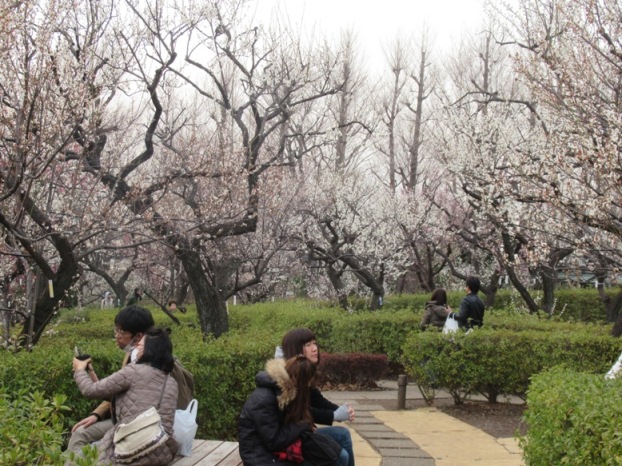
Ume Blossom@Hanegi Park: March 3-10, 2018


Beginning in late January, the ume (Japanese apricot) blossom continues through March in Tokyo.

I made several visits to Hanegi Park in Setagaya Ward.

Many people – men and women, the young and the old, Japanese and foreigners – enjoyed red and white flowers.

Dogs were also enjoying their times.

The sunshine is getting brighter. The season is turning to spring.


2018-02-19

Life and economy in India (off off Tokyo): Feb. 16-20, 2018


I visited India for the first time in 20 years. There are so many and big changes during the period. There also remain many things unchanged.

Most roads were ultra crowded in Old Delhi. I saw countless people there.

The roads were full of passengers, cars, three-wheel auto-rickshaws in yellow and green, cycle-rickshaws, bikes and dogs. Cows, horses and elephants sometimes joined. (See also the top and 2nd photos)

People as well as dogs were sleeping everywhere. It was not only at the sides of the roads, but also at the intersections.

Chandoni Chowk is a main commercial street of Old Delhi.

It starts from the Lal Qila (Red Fort) toward the west.

Thousands of shops are open along the street.


I saw the scene of Old Delhi from the top of Jama Masjid's tower.


The towns are massive, crowded, full of histories and gods and noisy.

There are many public toilets in the towns. The government says that improvement of toilet is one of essential challenges for people's better lives. I recognized it was correct.

The main bazar street near the New Delhi railway station was also crowded. (See also the top photo. It was taken here)

The situation in New Delhi, south of Old Delhi, is somewhat different. There are many messy places there, but there are also modern places.

The roads are wider in many places. There are many big buildings.


They have a wide road which connect the Indian gate and the President office. There is no congestion there, I found.


I saw people enjoying their times in the parks in New Delhi. Young couples as well as families enjoyed their holidays in a park in Connaught Place. Many women wore jeans and other modern clothes rather than traditional sari. I felt a rise of middle class from the scene.

I also saw people relaxing on the lawn between the Indian Gate and the presidential office. (See the 3rd photo from the top)


Gurgaon is a city which lies 30 kilometers southwest of Delhi. The city has developed as a new business and residential areas in the last two decades.

There are many big business buildings as well as residential apartments. There also run modern mass rapid transport systems.

Still, animals walk along such modern facilities. I saw camels walking under the MRT with cars and rikishaws.

Delhi's metro is modern and functional. The trains have electrical outlets inside. Many people were charging their smart phone batteries.

The airport line, which connects Indira Gandhi International airport and the city center, was comfortable.

The highways are also rapidly developing. I found big jams in the highways in and around Delhi.

The road was almost empty when I moved between Delhi and Agra on Sunday. The highway is huge.  

Agra, the city of Taji Mahal, lies about 250 km southeast of Delhi and is estimated to have more than 2 million people. There remain more old aspects there than in Delhi.

I found cows living with people even in the center of the city.

I also saw many open-air stalls along dusty roads.

I only visited Delhi and surrounding areas. The situations in other parts are surely to be quite different.

I felt just a little bit of India’s diversity and changes.


Historical places in Delhi and Agra, India (off off Tokyo): Feb 16-20, 2018


I visited Delhi and Agra for the first time in decades. There are many historical places there.

Lar Qila or the Red Fort was a place where the Mughal Emperors lived. It was built by the 5th Emperor Shar Jahan between 1639 and 1648. 


The fort is surrounded with long red walls.

There is a shopping arcade between the entrance gate and the main buildings.

Jama Masjid lies in the center of Old Delhi. It is one of the largest mosques in India.

We can see the scope of Old Delhi from the top the tower. 

Jantar Mantar is an observatory build in the 18th century by a Jaipur maharaja. It locates in the center of New Delhi. Tall buildings surroun the observatory.

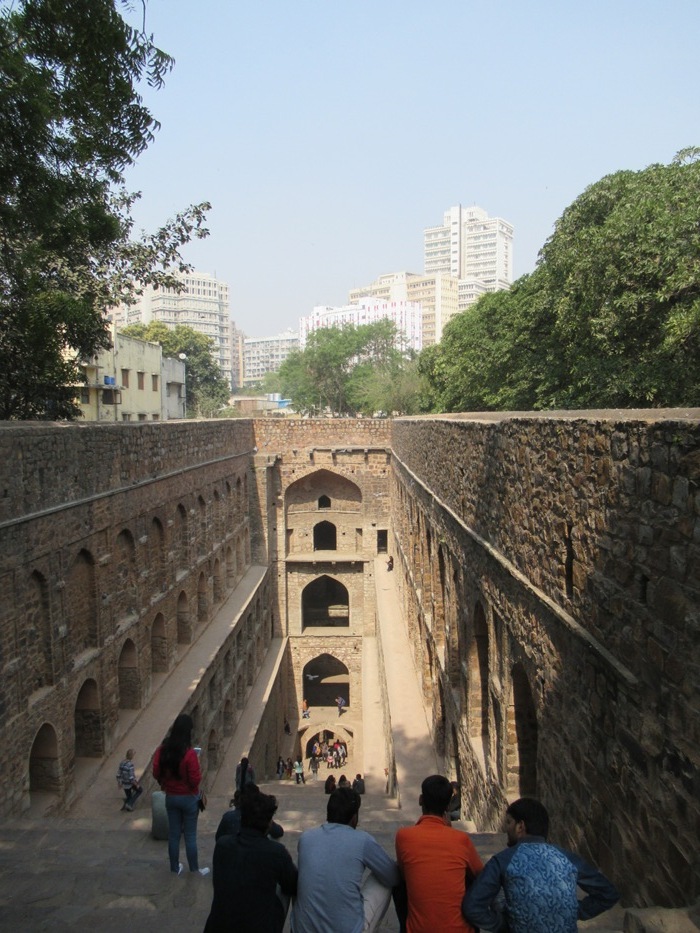
Agrasen ki baoli is a historical step well rebuild in the 14th century. It was used as a reservoir. The stone architecture is 60-meter long and 15-meter wide. It has 108 steps. (See also the 2nd photo from the top)

It locates in the center of New Delhi.

The Indian gate was built between 1921 and 1931 as a memorial of 70000 Indian soldiers died in the First World War.


Qutub Minar locates in the south outskirt of Delhi. It is a Islam minaret built around 1200 by India's first Islam dynasty. The tower is 72 meter high, the tallest in the world. It was built in Islam and Hindu designs.

There is an iron pole near the minaret.  It was made in the 5th century. The pole is famous for its high resistance to corrosion.

In Agra, I visited Taji Mahal and Agra Fort, two must-see places.

I reaffirmed the beauty of Taji Mahal.

It was build by the 5th Mugahal Emperor Sha Jahan for his dead wife Taji using 22 years (between 1631 and 1652). It was designed and made by Persian experts, not Indians, according to my tourist guide. (See also the top photo)

There were so many visitors from around the world. The ticket prices are different between foreigner and Indians. The queue was longer for Indians.

Agra Fort was built by the 3rd Mughal Emperor Akbar. I felt it was majestic.

Part of the fort is used by the Indian force.


2018-01-29

Ume and Snow: Jan 28, 2018


The flowers of Ume (Japanese apricot) started to open.

I walked in the Hanegi Park in Setagaya ward and looked the scenes at the beginning of the Ume blossom season.

Tokyo had a snow about a week a go (Jan 22). It remained on the ground.

The combination of Ume and snow has been often described in the poems, drawings and other art works in the country. It is very Japanese.


2018-01-23

Sow scene @ Imperial Palace: Jan. 23, 2018


It snowed yesterday (Jan. 22nd, 2018) in Tokyo.

The transportation system was paralyzed in the evening. Many people faced difficulties in returning their homes.

The weather was find in the following morning on Jan. 23rd. The snow stated to melt.

I walked around the Imperial Palace.

The Imperial Palace Square in Front was covered with snow. (See the top photo)

Snow remained on the sidewalks around the palace and on the bridge. (See also the 2nd photo from the top)


People were working in wasting the snow to open the walking places.