2017-05-05

Nakasendo Walk (21) Okuwa-Nojiri(40/69)-Midono(41/69): April 29, 2017


I resumed my Nakasendo Walk from Okuwa, between Suhara, the 39th shukuba station from Nihonbashi and Nojiri, the 40th station. It is about 20 km walk.

I saw various beautiful flowers during my walk. I also found dams and hydropower stations in and along the Kiso River. The signs of flood disasters were also notable in the area.

The hana peach flowers were beautiful when I got off the train at Okuwa station. The tree was originally imported from Germany about one hundred years ago by Momosuke Fukuzawa, a famous businessman who developed hydroelectric industry in this area in the Maiji period. I found the flowers in many places -- along the roads, the river banks and in the house gardens – in the Kiso Valley.

Nakasendo goes along the Kiso River. I saw the mountains of Chuo Alps behind local mountains. The scene was beautiful.

I arrived in Nojiri shukuba station. There remain several old houses.

There stood a bord sign of “west end” in front of a house at the western end of the streets.

There is a cow shed along Nakasendo near the sukuba station.

I also found tea fields here. Farmers pick up the fresh tea leaves in May in Shizuoka and neighboring areas which face the Pacific Ocean. Here in Kiso, they pick up the tea in June, a month later.
.

There is a big dam named “Yomikaki Dam” near Nojiri station.

I walked along the river. The river, the road and the railway go together in a narrow valley. (See also the third photo from the top)

I arrived in Midono station. They had a big fire in the Meiji era and most houses were burnt. There is an office of the forestry association at a place where the main inn, or honjin, located.

There remain memories of Momosuke Fukuzawa in the area. A bridge was built when he was here about one hundred ago to carry materials necessary to build dams. It is preserved well.

It was just before the May festival. Tens of carp-shaped streamers were flying at the side of the bridge.

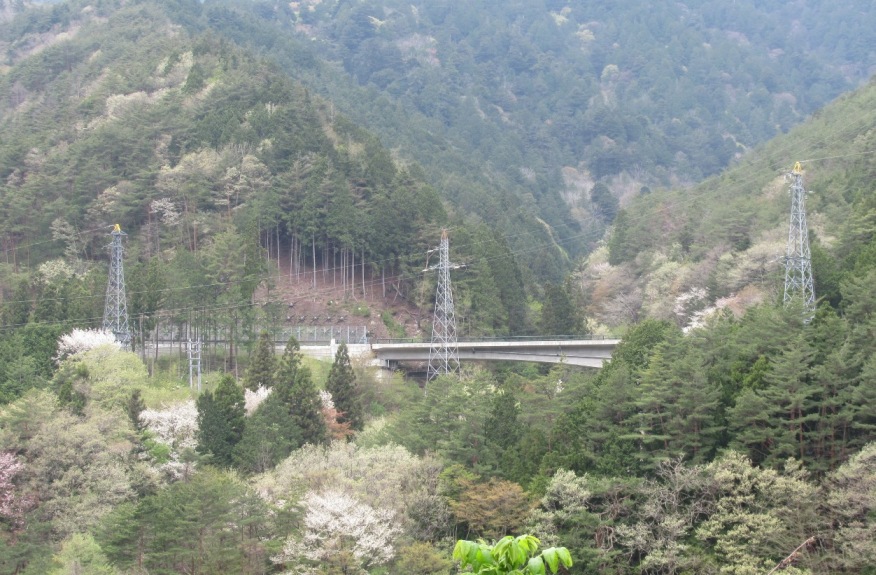
I crossed the bridge.


Fukuzawa built seven dams in the Kiso River in the Meiji period. We have now more than 30 dams. They transmit the electricity to the Kansai area.

His house has turned to a museum.

There are big rocks and stones around the museum and neighboring houses. The rocks were brought from the mountains when they had flash floods.


2017-04-21

Fresh green and spring flowers in Tokyo; April 15-16


The cherry blossom season is finishing. Now, it is the time to enjoy fresh green and various spring flowers in Tokyo.

I had walks in several places in western Tokyo.

The ume (Japanese apricot) trees and the gingko trees now have very fresh leaves in Hanegi Park in Umegaoka. They grow so rapidly. The scene changes day by day. (seee also the top photo)

The tulip trees open new leaves in Kitazawa walking paths. (See the 2nd photo from the top)

The maple trees and others show fresh green at Gotokuji Templs.

There are Japanese zelkova trees in Setagaya Shrine.

There are new grasses grow in the ground. Moss phlox flowers were open in some walking paths.

Various colors of tulip flowers were open at Gotokuji railway station.

Some cherry flowers are still open.

People enjoyed picnic at the side of green grasses and under a cherry tree.

The season is changing from spring to early summer.

I found ducks moving in the creek along a walking path. The fallen cherry flowers were flowing on the water.

The azalea flowers were open around a pond in Enjoin temple.


2017-04-13

Cherry blossom@ Chidorigafuchi, Off Imperial Palace, April 6, 2017


The cherry blossom is extraordinary this year in Japan.

Cherry usually opens from southern part of Japan, usually Kyushu and/or Shikoku; and the cherry blossom front moves up to north. This year, however, Tokyo’s cherry opened earliest in the country.

It is explained due to unusual weather this winter, including warm winter and cold March in southern Kyushu area, throughout the nation.

Tokyo’s cherry became full open on April 2nd.

I visited Chidorigafuchi, one of the most popular cherry blossom spots in Tokyo. It is a part of moats of old Edo Castle, which has turned to the Imperial Palace.

Hundreds of cherry trees were fully open.

Thousands of people were enjoying hanami or flower watching.

They walked along the street. (See also the 2nd photo from the top)

They watched the scenes from the observatory.

The visitors included the old, the young, kids, Japanese and foreign tourists. (See also the 3re photo from the top)

People made a long queue to ride the boats. The boats moved slowly under the pink flowers. (See also the top photo)


With the cherry blossom, we recognize that "it is spring." 


2017-03-15

Japanese walnuts products from Iwate: March 15, 2017


Six years have passed after the Great East Japan Earthquake. People in the quake-hit areas -- Iwate, Miyagi and Fukushima Prefectures -- continue to struggle to recover from the damages. Many efforts are being made by NPOs, companies, local communities and individuals.

One of these efforts is Japanese walnuts (wagurumi) project carried out by Save Iwate, a NPO in Iwate Prefecture. I attended an event held in Mejiro, Tokyo, to promote the project.

The project started just after the quake in 2011. There are many Japanese walnuts trees in Iwate Prefecture and people can easily pick up the nuts even if they do not have special tools and skills. It was possible six years ago for those who were severely hit by the quake and tsunami disasters to collects the nuts.

Save Iwate organized a network to buy the walnuts from them.

The question was (is) how to sell the nuts. Japanese walnut has good taste and is believed to be healthier (than western walnuts). However, it is smaller and tougher. It is harder than western walnuts to crack the shell, which leads to be more costly.

One possibility to overcome the problem is to develop more attractive products from the nuts. Save Iwate has developed various products. They include:

Walnuts sweets, Walnuts soft cream,

Walnut liqueur (kurumi no osake)

and many others. The NPO is trying to develop more.


A lunch was served at the event. Japanese walnuts were used in all dishes. (see also the top photo)

Attendants to the event include specialists of the foods, those who are active in the activities to reactivate the local communities, consultants, media persons, and activist in Tohoku reconstruction activities. (see als the second photo from the top)


Please also visit
Six yeras after the quake (March 11, 2017)
Save Iwate @ Morioka, Sanriku Coast
3 years after the quake @ Iwate
Four and half years after the quake (Oct. 31- Nov.1, 2015)
Autumn scenes @ Iwate (Oct.31-Nov.1, 2015) 

6 years after the quake @Ginza: March 11, 2017


Six years have passed after the Great East Japan Earthquake.

Nearly 20 thousands of people were killed or went missing by the disaster. More than 400 thousands of people were forced to live in temporary houses away from their hometowns.

Today, 123 thousands people still live in temporary houses. No concrete plans are made to decommission the damaged nuclear reactors at Fukushima Nuclear Power Station 1.

There appeared a display on the building in Ginza to commemorate the disaster.

A red line is drawn horizontally at 16.3 meter high. It is the highest level of the tsunami which attacked Ofunato city in Iwate Prefecture six years ago.


Please also visit
Save Iwate @ Morioka, Sanriku Coast
3 years after the quake @ Iwate
Four and half years after the quake (Oct. 31- Nov.1, 2015)
Autumn scenes @ Iwate (Oct.31-Nov.1, 2015) 

2017-02-12

Ume Blossom: February 11-12, 2017


Ume (Japanese apricot) stated to blossom.

I visited Hanegi Park in Umegaoka. There are more than 600 ume trees in the park.

They opened white and red flowers. It smelled well.

There were lot of visitors. They took photos of the flower.

The Ume festival was held at the season.

Families enjoyed picnic there.

I also visited Gotokuji temple.

Several ume trees opened flowers in the garden. (see also the top photo)