2016-08-14

Prague: August 2-4, 2016 (off off Tokyo


It was my first visit to Prague in about 20 years.

I found many changes which took place in the last quarter of the century. The political system has converted from the communist regime to democratic system. The economy has integrated into the EU economy. Many companies have come to the Czech Republic from western European countries.

The Old Town Square is the center of the old city. The Town Hall, churches, palaces and other buildings stand around it. There is a statue of Jan Hus in the center of the square.


Musicians were playing musics and tourists were enjoying their days.

The astronomical clock of the town hall is especially famous.

The Charles Bridge over the Vltava River links Prague’s old city and the Prague Castle. It is more than 600 years old (It was built between 1357 and 1402). It is 515 meters long and there are 30 statues at the sides of the bridge.

The bridge was full of tourists. There were many painters: some of they were drawing the landscapes; others were drawing the facial cartoons of the tourists. (see the top and second photos). 

The Plague Castle is a huge complex of buildings including the palaces and churches. It is more than 500 meters long.

The buildings are in various architechtual styles.

The St. Vitus Cathedral is in the Gothic style.

There are buildings of the Romanesque, Gothic, Renaissance, Baroque, and Art nouveau styles.

One of the buildings was used as a regional headquarters of the Nazi SS and is now used as Foreign ministry.

Prague is the home town of Franz Kafka. His birthplace is now a coffee. I enjoyed a meat there. (see the 3rd photo from the top)

There stands his sculpture in front of Spanish synagogue in the Jewish area. It is in mysterious design. 


It is banned for buses to go into the central part of the city. Instead, trams are popular.

The Václavské náměstí (Wenceslas Square), in the central part of the new city, was a stage of the Prague Spring in 1968 and the Velvet Revolution in 1989.

The square was crowded with business persons and tourists in the evening. I found a monument of the victims.

The Czech's history is full of glory and tragedy. The country is cultural rich -- these are parts of what I have learned in Prague.


I watched the Mochovce nuclear plant in Slovakia when I flew from Prague to Budapest. 

It was so impressive that I post the photo in the blog.


2016-08-13

Warsaw: July 31-August 2, 2016 (off off Tokyo)


I visited Warsaw for the first time in about 20 years. My last visit was just after the end of the Cold War. I found many changes which took place in the last quarter of the century. I was also struck with Poland’s complicated history and culture.

Poland was practically ruled by other countries most of the time after the late 18th century. It was divided into three parts and ruled by Russia, Prussia and Austria from late 18th century to the end of the World War 1 (1918). The country was invaded by Nazi Germany in 1939. It was controlled by the Soviet Union after the World War 2 under the Communist regime.

It is famous that Warsaw’s old town was completely destroyed by Nazi Germany in 1944 after the Warsaw Uprising and reconstructed as it had been after the World War 2.

The Old Town Market Place locates in the center of the area. Medieval-style buildings are built around the square. There stands a mermaid sculpture in the center of the stone-covered square. 

I saw there were many tourists enjoying their days in the place. Kids were bathing in the fountain around the mermaid. (see also the top photo)

The Castle Square in front of the Royal Castle also attracted tourists.


Some enjoyed cycling there.


I saw many shopping stores and coffee shops from western Europe countries. H&M and Zara were crowded with shoppers. Costa Coffee, Café Nero and Starbucks Coffee are in many places in the city.

They use ATM machines which have same functions with those in Western European countries. The prices were written in both Zloty and Euro in many shops. These examples tell the reality of economic integration with the EU. 

Anxiety for the national security seemed to be strong.


August 1 is the 72th anniversary of the Warsaw Uprising in 1944. People prayed for the victims of the events and put flowers for them.

There was a demonstration.


At the President Office, I found the NATO flag flying with the EU's at the sides of Poland's flag. (see the second photo from the top)

Special exhibitions were held at the Krakowskie Przedmiescie (Krakow Suburb) Street, near the Castle Square.

There is a statue of Nicolaus Copernicus at the side of the Nowy Swiat (New Street) in the center of the city.

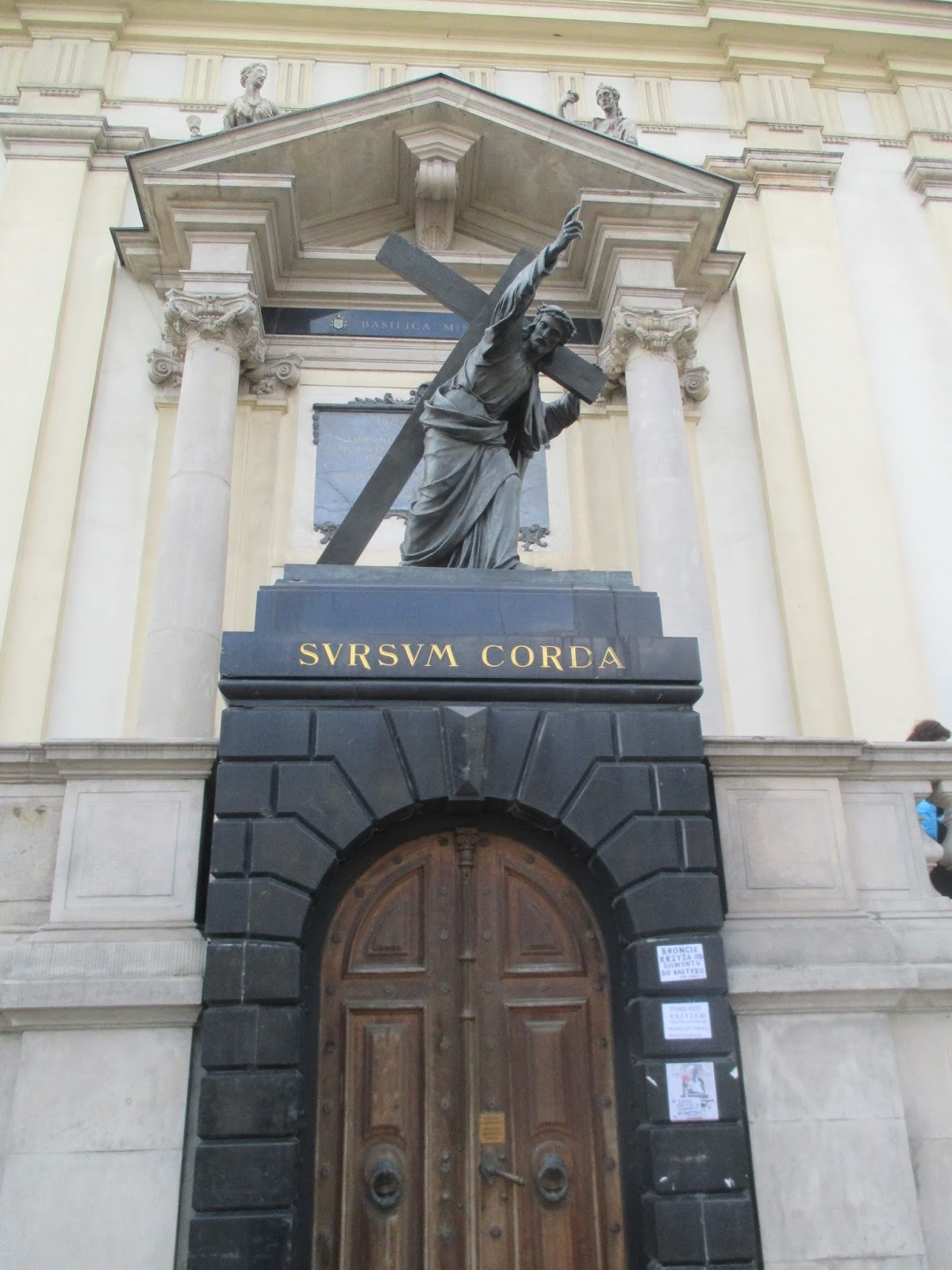
The Holy Cross Church locates about a hundred meters from Copernicus statue. Frederic Chopin’s heart is placed in the church. 

The influence of the Catholic church looked strong. The pictures of Pope John Paul 2, who serves from 1978 to 2005, were found in many places. He was born in a city of Wadowice, near Krakow, in 1920.

Nearly 400 thousands Jewish people lived in Warsaw before the World War 2. It was the second largest Jewish town after New York. The Jewish people were forced to move by the Nazi Germany to a narrow space, known later as the “Warsaw ghetto”. Most of them were then sent to the concentration camp (including Auschwitz) and were killed.


I joined a free walking tour in the old city. The guide told us various aspects of history, culture and life of Poland. It was so good. 


2016-08-11

Brussels: July 29-31, 2016 (off off Tokyo)


Brussels had a series of shocks this year.

In March, it had a serious terrorist attack. In June, the "EU capital" city was politically shaken with the UK’s decision to leave EU, known as “Brexit”.

I visited the city for the first time in seven years. I found various changes.

They introduced stricter security -check measures the attack. I found soldiers and policemen in many places, including at the South Station and in the airport building. It was not often seen before the terrorist attack.

At the airport, we cannot access by cars to the entrance of the departure floor. I needed to carry my travel bags from the parking space through concrete block walls to the check-in floor.

I visited Molenbeek-St.-Jean district, where members of terrorist attacks in Brussels in 2016 and in Paris in 2015 had stayed.

The Schuman district hosts many European Union institutes including the headquarters of European Commission. There are 28 flag polls in front of the building. I wondered when it would become 27, instead of 28, with the UK's leave from the EU (see the top photo).

The Grand Palace was elegant as usual. The place was full of tourists. Some of they were sitting on the ground made of stones. Some were lying themselves down on the ground and using their smart phones. (see also the 2nd photo from the top)


Other attractive places include:

Manneken Pis

The Magritte Museum

Art Nouveau buildings

Brussels as well as Belgium is famous for its cartoon culture. There are various cartoons painted in the walls of the buildings.

Like other major cities in Europe, Brussels introduced pubic bicycle sharing scheme. I happened to see an officer moving the bikes from a station to others.

There are many restaurants of the mussel and other Belgium sea foods. I enjoyed it at a restaurant near Grand Place.


London (after Brexit): July 27-29, 2016 (off Off Tokyo)


I visited London for the first time in seven years. It was about a month after the referendum which supported to leave EU, known as Brexit.

The metropolis looked as it had been. The towns were crowded and busy. The streets were full of foreign tourists. The river Themes was full of tourist boast.

The hotels raised the EU flag with other nations’ flags. The Financial Times raised the EU flag, not the UK flag, with the company’s flag.
People enjoy the summer evening in the Primrose hills. (see the second photo from the top)

There were some changes behind. The business persons I met worried about the negative impacts of the Brexit in the future. They also made complaints about additional tasks they have to do because of Brexit.

The bookshops displayed various kinds of European books, including a book titled “EU Obituary".

There were more bicycles than several years ago. There is a bicycle lane in the Victoria Embankment, which runs along the Thames River. I found many cyclists enjoy cycling there.

The cyclists were waiting a green signal in front of the Big Ben (see the top photo).


I also found bicycle lanes in the Bloomsbury, near the British Museum and University College London.

There are many bike-share stations in the towns.

The number of joggers are also increasing. Some business persons were running to with their business suits in their backpacks to their homes.

The East end of London used to be a rough are. The 2012 London Olympic Games were hosted there and the area was redeveloped.

The Olympic site has turned to a memorial park. Kids were playing in the summer wind.


A shopping center opened around the the Stratford station. There were various shops along the road to the park. 

I felt the towns were full of energy. The residents include many Asian, Arabic and African immigrants and there are many children.