2016-02-07

Winter trees & Ume Blossom; February 7, 2016


It is the coldest season of the year in Tokyo. The temperature sometimes goes down under zero, and people wear heavy overcoats. However, the daytime is getting longer.

Today was a fine day and I had a walk around Setagaya ward, western Tokyo.

I saw tulip trees, ginkgo trees and other deciduous trees stood along the walk paths and in the park. The sky was very blue behind the trees.
(see also the second photo from the top).

The Ume or Japanese apricot flowers began to blossom in the Hanegi Park.
(See also the top photo)


They were in some temples and shrines, too.

I found a cat and parrots enjoying the sunlight.

It was a nice walk.


Sanriku Food Fair@ Shimokitazawa: Feb. 7, 2016


We will soon have the fifth anniversary of the Great East Japan Earthquake on March 11.

They held an event in Shimokitazawa, Setagaya ward, to sell the foods of Sanriku coastal areas. The areas are in Iwate and Miyagi Prefectures and were seriously hit by the tsunami disasters in 2011.

The areas included Rikuzentakata City, Ofunato City and neighboring areas. I visited there last October and November. There experiences there were so impressive. 

Please visit: 
Four and half years from the quake:Sanriku, Iwate; Oct. 31-Nov.1, 2015
Autumn Scenes @ Iwate Prefecture: Oct 31- Nov. 1, 2015

Oysters, noodle, and other local products were served. I remembered my travel, the scene of the region and the day of the earthquake and tsunami.


2016-01-03

Thailand: Dec. 27, 2015 - Jan.1, 2016


I was in Thailand in the year-end and new-year days and walked in Bangkok, Ayutthaya and Chiang Mai cities.

I visited Bangkok for the first time in about 15 years. I found big changes. There are many skyscrapers now. Construction works are under way in many places.

The traffic jam is still heavy, but the BRT (Skytrain) has been expanded in this 15 years and the subway (MRT) has been introduced. The Buses, taxies as well as three wheelers (tuk-tuk) and bike taxies ran on the roads.

There are many historical places to visit. I enjoyed the scenes from Chao Praya River. Mandarin Oriental Bangkok and other hotels stand along the river (second photo frome the top). The scene of the Royal Palace from the river was impressive. 

I visited several temples on foot including Wat Phra Kae and Wat Pho. Chinese tourists were everywhere. At Wat Pra Kae, the tourist groups took pictures in every two minutes.

The reclining Buddha was impressive in Wat Pho. The scope from the temple was also wonderful. (the top photo)

There stands a big red gate in front of Wat Suthat. They have many shops of Buddhist objects around the templs.

I enjoyed local cultures, too. Thai boxing is very popular here. I visited a boxing stadium and was excited with the matches.

Ayutthaya is about 80 kilometers north from Bangkok. It is a historic city. The capital of the Ayutthaya Dynasty was here and it was severely destroyed when the country of the Thai people was conquered by Myanmar in 1767.

The ruins of the castles and temples remain. (see also the third photo from the top)

The city was registered as a Cultural World Heritage site.

Elephants attracted tourists.

The city is about seven meter high from the sea level. It was suffered seriously by the flood in 2011. The signs of the flood remain in many places.

Chiang Mai locates in the northern part of the country. There are many temples in the city. I met many monks in Wat Chedi Luang and other temples.

The city was full of tourists (as Bangkok). There are shops and facilities for foreign tourist. I visited a second-hand bookshop of English books.

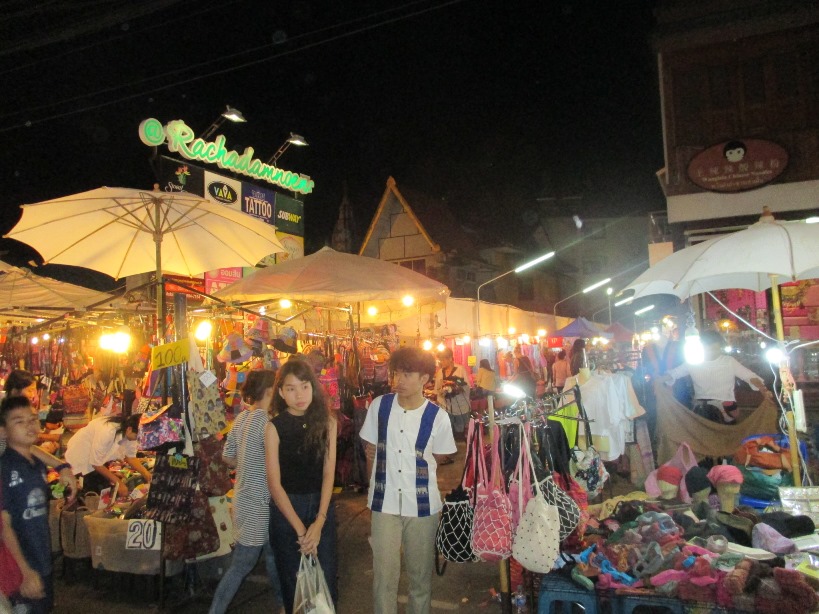
I also enjoyed the Sunday market held in the main street of the old town.


2015-12-16

Gala Event of Shizuoka City in Tokyo: Dec.16, 2015


I attended a gala event held by Shizuoka City. It aimed to promote the city in Tokyo. More than 300 people gathered.

Famous animation (manga) character chibimaruko-chan, along with the mayor, politicians, and the local government’s staff members, welcomed the guests(top photo).

Local foods were served. They included oden (ingredients such as daikon vegetable and processed fishcakes boiled in soy-flavoured soup), motsu curry (curry with organ meats), sakura-ebi shrimp, shirasu (whitebait), oranges, green tea, local sake (rice wine), and many others.

They promoted local products, too. They included plastic model toys, canned foods, and cookies. Tourism and local events were also campaigned.

The information for those who want to move to Shizuoka and work there was offered. The city is keen in attracting companies as well as people.

Revitalizing the local communities is one of the most important topics in Japan now. They face problems such as the decrease of population, aging, the decline of traditional industries, and the deterioration of public finance. The local problems are partially linked with the concentration of population and economic activities into Tokyo area.

The local governments make their own plans for .reactivation of the areas. Most of them are similar. They include the policies to invite companies, promote tourism, to offer better social security services, and to support raising children. Shizuoka City is same in the points.

The meeting was useful for me to expand my human network. I heard interesting stories in the region. I tasted good foods, too.


The articles of my walks in Shizuoka area in this blog are posted at:

2015-12-10

Singapore: Dec. 5-10, 2015


I had my first visit to Singapore and walked many streets and places in the city-state.

It was 1819 when Sir Thomas Raffles of England landed the island. It was a small village of fishermen. Now, skyscrapers of financial building stand along the Singapore River behind Ruffle’s statue.

Singapore separated from Malaysia and became an independent state in 1965. It celebrates its 50th anniversary this year. The logo of “SG 50” is displayed everywhere.

The new buildings have the facilities with latest technologies. The buildings at the Marina Financial Center do not have the buttons of floors in the elevators. Instead, the operation is controlled through ID cards and instructions at the elevator halls.

The Merlion has been ill-spoken as one of three big disappointments in the world. It was not so bad for me (partially because the expectation was not so high). Many tourists enjoy taking pictures with it. (see also the top photo)

There stand the buildings of the “Marina Bay Sands” in front of the Merlion. The three hotel buildings have about 2500 rooms. 


The famous ship-shape sky deck is on the buildings. I enjoyed a skywalk at about 200 meter high.

“The Gardens by the Bay”, which lies between the sea and the Marina Bay Sands, has the features of both public park and amusement center. The Super trees were especially impressive for me. There are 18 trees and they are 25-50 meter high. The scene gave me the impression of the future city in the SF movie (See also the photo second from the top).


I found interesting objects and monuments in the garden.


Hundreds of ships were anchored off the shore. It is probably possible because Singapore does not have big typhoons. The city-nation competes with Shanghai and other ports for the largest container port in the world (see also the the third photo from the top).

The country’s size is as large as Tokyo’s 23 wards. It has about five million people. With its success (so far) in financial service and high-tech industries, Singapore enjoys economic prosperity. Its GDP per capita is the highest in major Asian countries.

The Orchard Road, one of the busiest commercial areas, was decorated with Christmas goods. Huge commercial buildings including the Ion and Takashimaya were crowded with shoppers.
The city was clean and artificial as is often reported. Still, there are some messy areas, too. I felt people's energy when I visited the hawkers (open-air stools) at the Bugis Street.

The combination of traditional houses and tall buildings were found in many places.

The ASEAN paragames (ASEAN version of Paralympic) were held when I visited there. The players as well as the officials looked happy when they moved around the city.

I found no ASEAN flags in the city (it is quite different from EU member countries), but I felt the ASEAN integration proceeding (slowly) at the paragames scenes.

2015-12-06

Johor Bahru, Malaysia: Dec.6, 2015


I had a short trip to Johor Bahru, Malaysia, during my stay in Singapore.

There were many things to talk about. What was most impressive for me was “co-existence” of different cultures, religions and lives in the city.

They have a Hindu temple in central Johor Bahru (top photo) There are shops around the temple to sell flowers and other decorations (to offer them to the temple).

There stands a Sikh temple next to the Hindu temple. 
Then, there is a Buddhism temple in the next corner. The Koran announcement began when I was walking in the area. 

At least four religions, Islam, Buddhism, Hinduism, and Sikhism, live together there.

I also found the co-existence of the old and the new. Modern high buildings stand behind the temples and old stores.

Old traditional houses and stores remain in many places. 
The area around Jalan Dhoby (Dhoby Street) is now famous as a place with many old buildings. I found tourists walking there. 

Constructions were taking place in many places. I found many roads in the map of my tourist guidebook no longer remained because of recent developments.

The City Square shopping mall in the central city was crowded. Unlike the shopping centers in Singapore, they do not have luxury-brand shops such as Hermes or Gucci. 
Instead, they have H&M, Uniqlo, and other popular stores. The restaurants were crowded with families. Snoopy, Hello Kitty and other characters were used for the Christmas sales.

I saw some women in Islamic cloths, but I also saw ladies in miniskirts and in hot pants. I found many mobile phone shops in the city like many other cities in the world.

It took only about 30 minutes by bus from central Singapore to Johor Bahru. However, it also took another 30 minutes to wait the bus in a long cue. I was also in long lines at the border controls of both Singapore and Malaysia. The situation on the way back from Johor Bahru to Singapore was worse in the evening. The border scenes are always interesting.