Showing posts sorted by date for query meiji Shrine. Sort by relevance Show all posts

2025-12-07

Asuka, center of ancient Japan: Dec. 3-4, 2025


I visited the Asuka region in Nara Prefecture  (
near Osaka and Kyoto). This area was Japan's political and cultural center from the 6th to 7th centuries, and the basic frameworks of Japan's current national system, including the emperor system, people’s mindset and community structure, was formed in the period. This was my first visit there in about 50 years, since my youth.

The Asuka region is about 20 kilometers south of Nara City, the prefecture’s capital. Its current administrative districts include Asuka Village, Kashihara City, and Sakurai City.


Houses and farmfields spread in the region today. Many kofun or ancient tombs, temples and other historical monuments are scattered in the area.  


Japan's imperial system was established around the 6th century, and several palaces were built in the Asuka region. Power struggles took place between the imperial family and powerful clans.

During this period, many immigrants arrived in Japan from the Korean Peninsula. Buddhism was introduced  in the 6th century.

Many aspects of ancient Japanese history remain unknown, and many debates are being made.


One of the most famous 
kofun is Ishibutai Tomb (See the top and 2nd photos). This tomb was believed to have been made in the early 7th century. It was once covered in soil, but this was later lost, revealing a horizontal stone chamber. 

It is believed to be the tomb of Soga no Umako, a powerful figure at the time.


Kengoshizuka Tomb was built in the 7th or 8th century and is octagonal. It is likely to be the tomb of Empress Saimei in the mid-6th century. (See the 3re photo)


Kofun
were constructed throughout Japan between the 3rd and 7th centuries. There are various shapes, including keyhole-shaped, circular, square, and octagonal. 

In the 4th and 5th centuries, large keyhole-shaped tombs were built in the Kinki region (present-day Osaka and Nara), Kyushu, and Hokuriku. (Visit a story of Mozu tombs in Sakai, Osaka Prefecture)


Asukadera Temple was Japan's first full-scale temple, built at the end of the 6th century.


The Asuka Daibutsu, the principal image or Honzon of the temple, is Japan's oldest Buddhist statue, built in 609 and standing approximately 3 meters tall. It underwent extensive repairs following fires and other damage during the Heian (794-late 12th century) and Kamakura (late 12th century-1333) periods. However, it still conveys the distinctive features of Asuka sculpture.


The Asuka Historical Museum displays numerous relics and cultural assets from the Asuka period. The garden displays numerous replicas of stonework, including a stone fountain.


Shintoism has been accepted by people in Japan since ancient times. After the introduction of Buddhism in the 6th century, shrines and temples coexisted. In Shinto, it is believed that gods reside in various objects and people worship them.

Omiwa Shrine in Sakurai City enshrines Mount Miwa, which lies behind it.


Kashiwara Shrine in Kashihara City was built in the Meiji period to enshrine Japan's first emperor, Emperor Jimmu. According to Japanese mythology, the first emperor died in Kashihara in the 6th century BC. 

His tomb lies nearby.


In 710, the emperor moved the capital to Heijo-kyo in Nara City, marking the transition from the Asuka period to the Nara period.

2025-03-29

Tokaido 57 Walk (3) Yodo-Iwashimizu Hachiman: Mar 29, 2025


I started today’s walking from Yodo shukuba station and proceeded to Iwashimizu Hachimangu Shrine.


It is said that a castle was first built in Yodo around the 15th century and many rulers used it as their base. At the end of the 16th century, it became the residence of Chacha (Yodo-dono), one of the wives of Toyotomi Hideyoshi. In the first half of the 17th century during the Edo period, a new Yodo Castle was built and existed until the Meiji period.


The castle ruins are now preserved as a park. Some stone walls remain.

A shrine has also been built on the site.


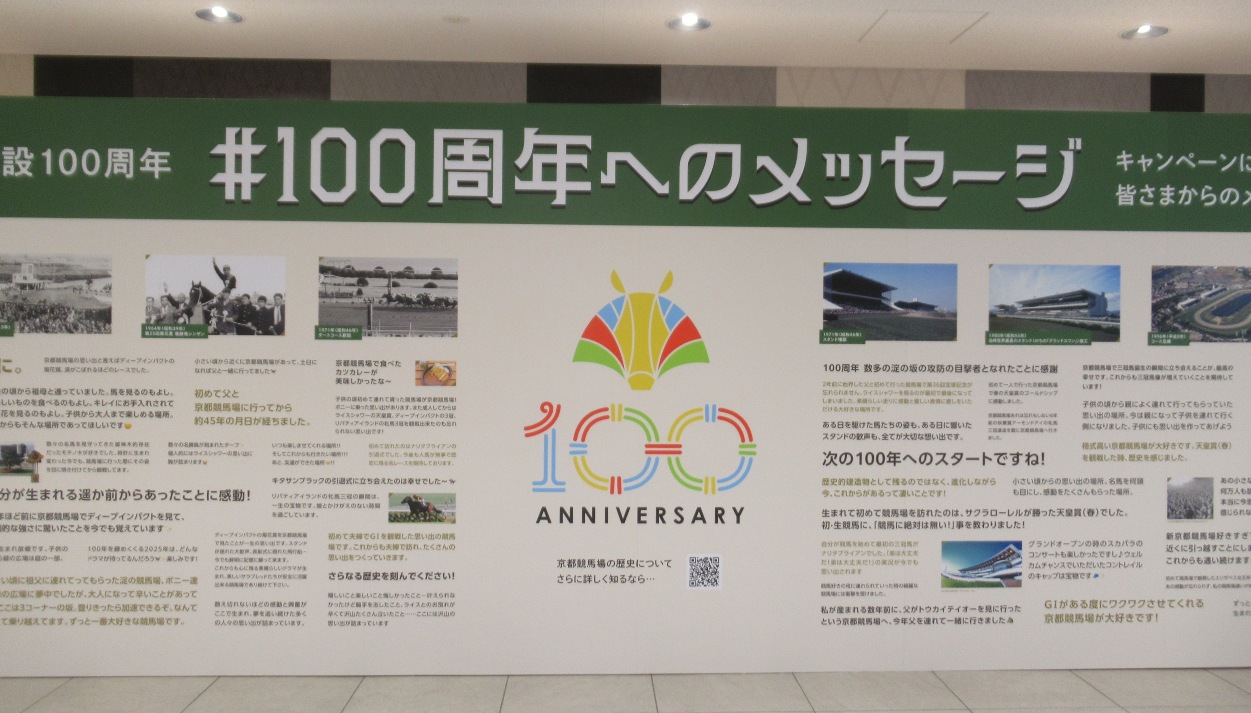
Part of the area where the shukuba station once stood is now the Kyoto Racecourse. It opened in 1925 and is celebrating its 100th anniversary this year.


It is one of Japan's leading racecourses.

It has huge studium seatings, betting booths, theater rooms, restaurants, shops and many other facilities in addition to a horserace course. It can accommodate more than 100,000 spectators.


There were no races today, but quite a few people gathered. Some of them were buying betting tickets for the horse races. Here, horse races from all over the country were broadcast in the form of a public view, and people enjoyed betting while watching.

Others were visiting with their children. Families were enjoying meals, while kids were running around on the grass. (See the 2nd photo)


Many early-blooming Kawachi cherry trees were planted near Yodo, and it is good time to see them. About 200 cherry trees were planted along the waterway, about a 10-minute walk from Keihan Electric Railway Yodo Station. (See also the 4th photo)


The Yodo River (Uji River) and two tributaries (Katsura River and Kizu River) flow close together in this area. The Tokaido road runs along the right bank of the Yodo River, sometimes through towns.


Then, it goes sometimes through fields.


Walking about 3 kilometers from Yodo shukuba, I crossed the Yodo River.
 

Then, I arrived at an observation tower. From there, I could see the view of the Yodo River and the Kizu River merging. (See the top photo)


The Tokaido left Kyoto City (Fushimi Ward) and entered Yawata City when I crossed the Kizu River.


Iwashimizu Hachiman Shrine here was built in the 9th century and is one of Japan's leading Hachiman shrines. It stands on Mt. Otokoyama, which is 143 meters above sea level. Many of its buildings are registered as national treasures. (See also the 3rd photo)


I went up the mountain in a cable car. The panoramic view of Kyoto City was impressive from the observation deck.


2025-03-28

History and sake of Fushimi: Mar. 28, 2015


Fushimi, which locates in the southern part of Kyoto City, has played an important role in many historical events in Japan. It is also famous for sake brewing.


Following yesterday's visit to Fushimi Inari Shrine, I visited important sights in Fushimi today. Many of the places I visited were located in or around the area where Fushimi shukuba station, one of the Tokaido’s 57 stations, was located.


Fushimi Castle was the political center of Japan at the end of the 16th century. Toyotomi Hideyoshi, who became the ruler of Japan, built his first castle here in 1592. After it collapsed due to an earthquake and was rebuilt, Hideyoshi died in Fushimi Castle in 1598.


Tokugawa Ieyasu also stayed in Fushimi Castle before establishing his shogunate in Edo in 1603. Fushimi Castle was abolished in the 1620s due to the policy of the Tokugawa shogunate.

In the 1960s, a concrete castle that imitated the castle at that time was built in a part of the area where Fushimi Castle was located. Cherry blossoms were beautiful around the castle today.(See also the top photo)


The tomb of Emperor Meiji (1867-1912) was also built in the area where Fushimi Castle was located.


The approach to the tomb goes through the forest.


Along the approach, stone walls that were once used in Fushimi Castle are displayed.


Many important events took place in Fushimi during the turmoil period at the end of the Edo era. The Edo Shogunate and anti-Shogunate forces such as Satsuma and Choshu fought each other. The control power was returned from the Shogunate to the Imperial power in 1967, but the Battle of Toba-Fushimi took place between the new government forces and the Shogunate forces in 1968.


Sakamoto Ryoma, who contributed to the establishment of cooperation between the anti-Shogunate forces, is one of the most popular figures in Japanese history. Teradaya, where Ryoma used as his base of activities and where he was injured in an attack by Shogunate forces in 1866, remains as it was. (See also the 2nd photo)


The nearby shopping street was named Ryoma Street, reflecting his popularity. (See also the 3rd photo)


Many of Fushimi's towns were burned down and damaged during the Battle of Toba-Fushimi. Bullet marks from the battle remain on the lattice doors of Uosaburou, a traditional Japanese fish restaurant near Fushimi-Momoyama Station of the Keihan Line.


During the battle, government forces led by Saigo Takamori and others established their base at Gokonomiya Shrine, near the shukuba town.


Fushimi is rich in clean water and is a major producer of sake. 

There are springs in Gokonomiya Shrine.


Nationally famous brewers such as Kizakura and Gekkeikan have their headquarters and breweries in Fushimi. The photo on the left shows Gekkeikan's museum. Kizakura also has an exhibition room and a shop, attracting visitors.(See the 4th photo)


There are also many foreign tourists here. The tributaries of the Uji River run through the chity, and many tourists were enjoying the scenery on cruise boats.


2024-04-21

Yamagata and Yonezawa; April 17, 2024


I visited Yamagata City and Yonezawa City in Yamagata Prefecture.

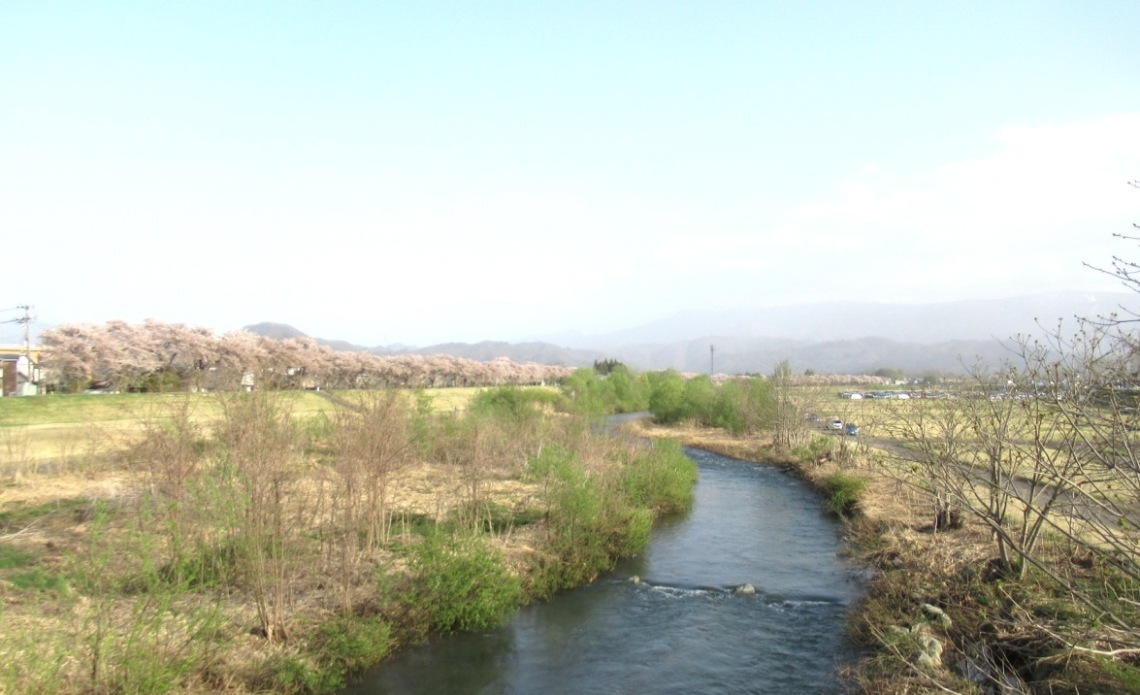
Both cities locate in basins surrounded by mountains. Cherry blossom was its peak when I visited the cities.


Yamagata City is a capital of Yamagata Prefecture. It developed as a castle town in the pre-Meiji era.

Cherry, dandelion and other flowers were beautiful in Kajo (Yamagata Castle) park.


There were creeks in the town in the Edo era. One of them is now used as a part of a shopping district.


Traditional houses remain and are used as shops and other commercial facilities.


There is a bus terminal in front of JR Yamagata Station. Many people use buses to commute to Sendai. It takes an hour between Yamagata and Sendai.


Yonezawa was a capital of Yonezawa domain (han) in the Edo era. Uesugi family was a ruler of the area.


Uezugi Kenshin, the founder of renewed Uesugi family in the 16th century, is popular among people for his strength at wars and his deeply religious attitude.


Uesugi Yozan in 18th century famous for his management of the domain. He had contributed in restructuring the domain’s expenses and in developing new businesses. Former U.S. President J.F. Kennedy named him as “the most respectful Japanese politician.”


The site of former Yonezawa Castle is now converted into Uesugi Shrine. We can see the statues of Uesugi Kenshin as well as Uesugi Yozan.


Mogami River flows in many part of Yamagata Prefecture. The cherry blossom was beautiful in Yonezawa.


I


took Yamagata Shinkansen bullet train to move between Yamagata City and Yonezawa.